Context
Mental health problems are on the rise. Yet, access to specialised support and self-monitoring tools for cognitive and emotional well-being remains limited. Emerging neurotechnologies offer new opportunities: from helping prevent burnout to facilitating healthy ageing through cognitive training, supporting self-reflection and overall wellbeing, or helping neurodiverse individuals understand the cognitive demand of their daily routines. Despite their potential, integrating these technologies into our everyday lives raises many questions and challenges: how would quantifying our cognitive states impact us? With whom would we want to share this information, and what would we risk doing so? What could we learn by viewing the cognitive states of others, and how could we do this in a privacy-preserving and responsible way?
Our approach
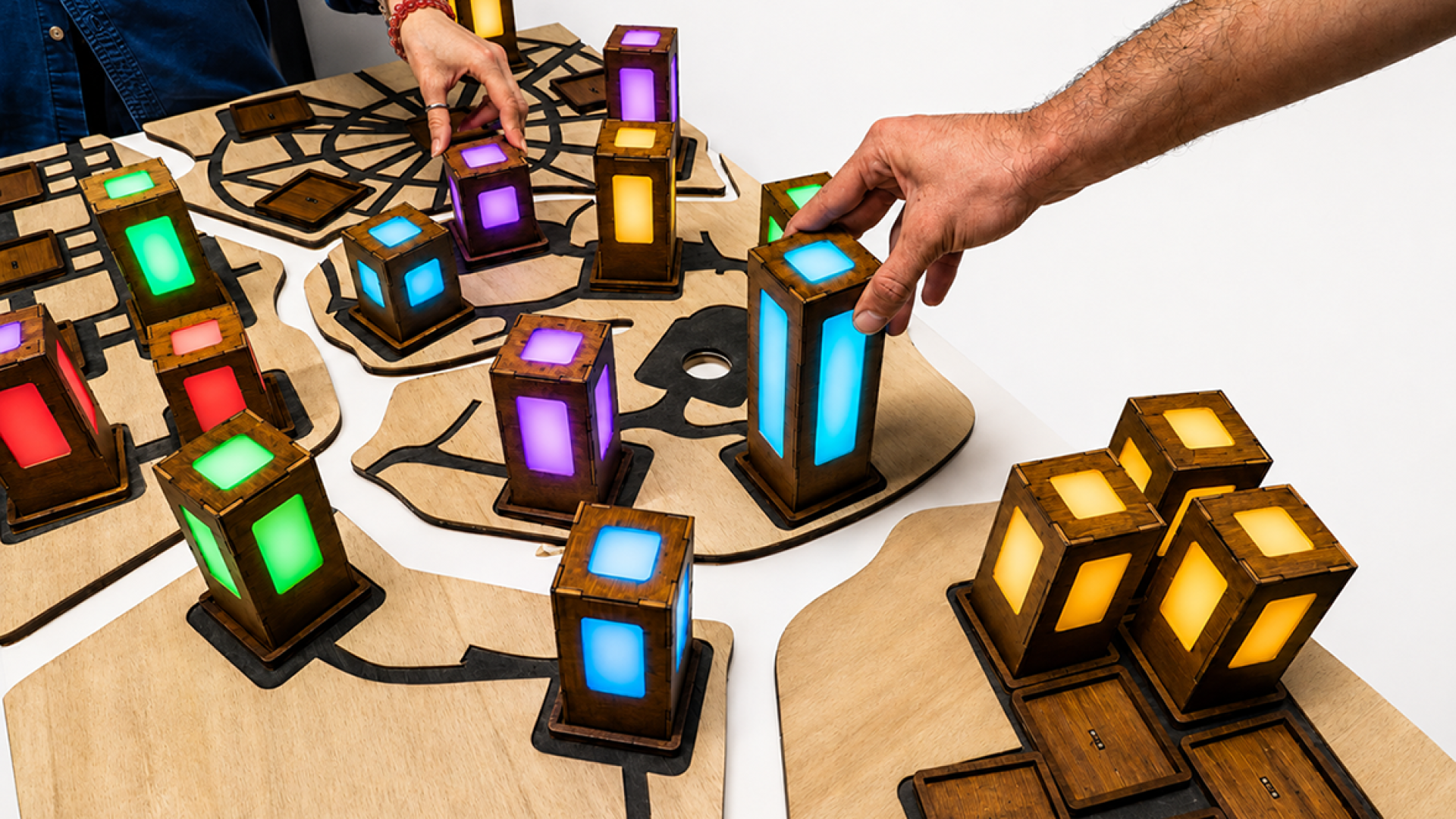
The project explores these questions using collaborative data physicalisation as a probe for imagining futures where cognitive data tracking is embedded in everyday living. The exhibit creates a living collaborative data physicalisation, prompting speculative thinking about a future where abstract cognitive and mental health data is made visible. A visitor self-reflects on their cognitive state during the DDW. An individual cuboid-shaped sculpture visualises their self-rated state. The visitor then joins their cuboid with the other visitors’ cuboids, forming a cityscape-like collaborative sculpture, which shows the evolving cognitive states of DDW visitors. In parallel, a reflection wall collects visitors’ opinions on speculative questions on cognitive data-enabled futures in different scenarios.
Connection to Health and Wellbeing
Within the theme of Health and wellbeing, our project bridges the research areas of cognitive tracking and neurotech with personal informatics, and human-data interaction. The questions we discuss are relevant for various health-related domains, from healthy aging to handling long covid or chronic fatigue. Through stimulating discussion on the benefits, barriers, and potential fears of externalising and sharing cognitive data, we aim to stimulate the audience to think about the implications of futures where cognitive data monitoring is as ubiquitous as physical activity tracking.