An example of Research through Design
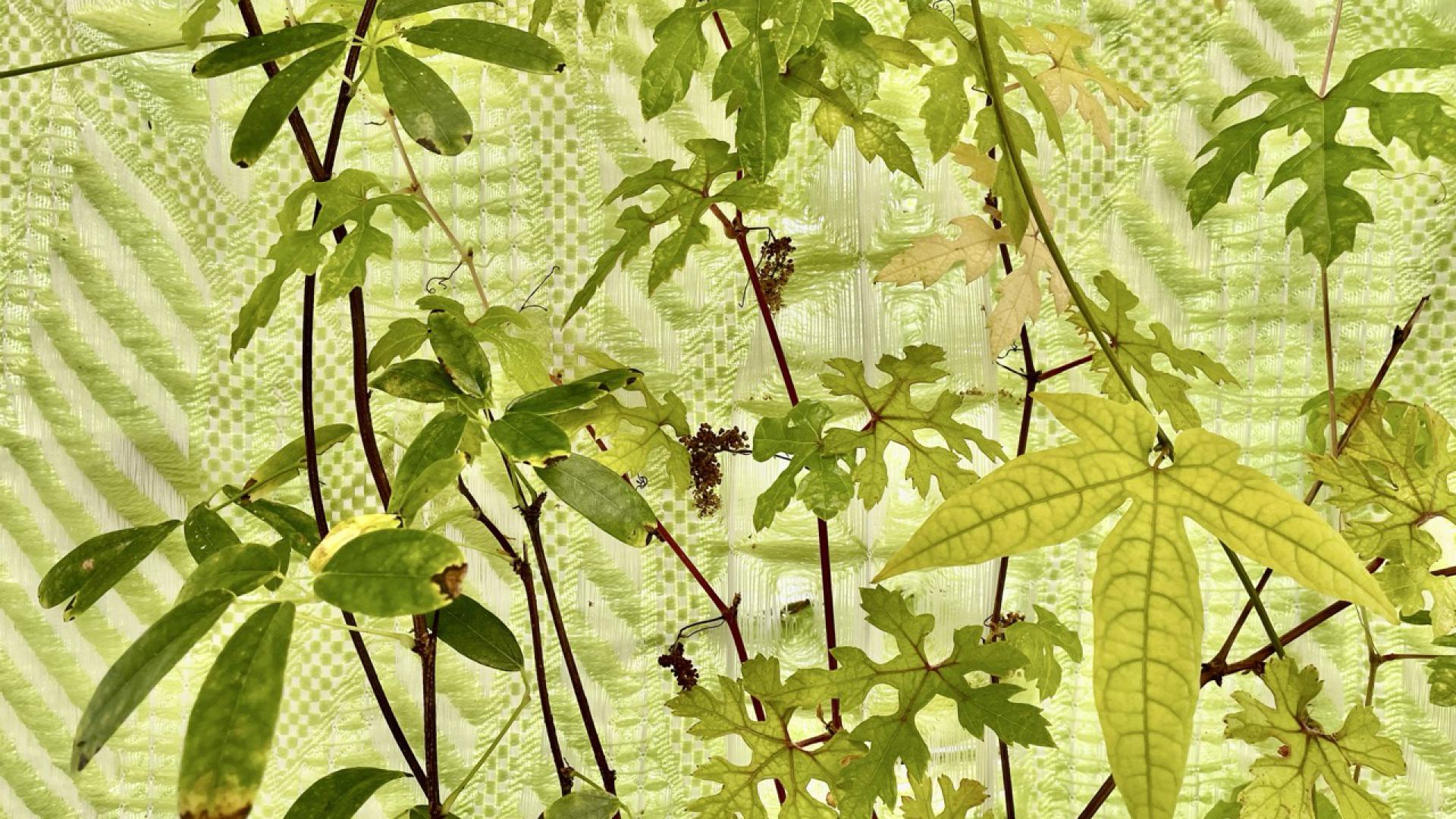
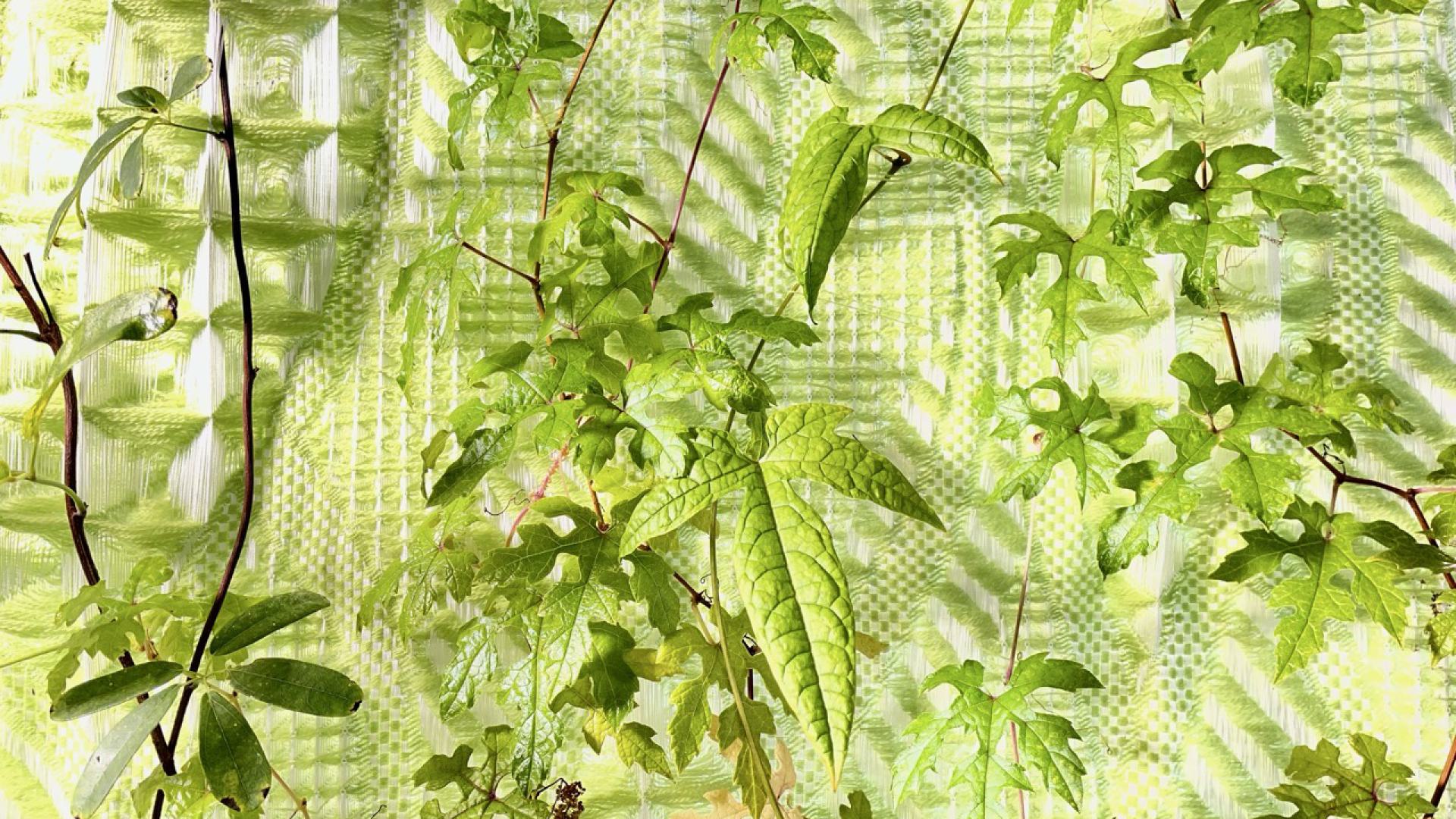
Crafting textiles for plant-human interactions included photo studies of plants, weaving multiple textile samples, and habitability studies in Eindhoven. Photo studies of climbers in balconies, backyards, public spaces, and gardens enabled the observation of diverse plant-climbing mechanisms. The sample explorations, carried out alongside the photo studies, developed textile structures that support entanglement with hooks, glue pads, tendrils, and twining stems by reinterpreting and repurposing existing textile bindings such as waffle, tabby, huck lace, twill, and basket weave. Habitability studies supported the selection of climbers and the integration of diverse textile patterns into designs for hybrid space dividers. Since 2023, hybrid prototypes have been deployed every year. Each textile design iteration is based on co-creation workshops with people who supported the project by regularly checking, watering, guiding, and photographing the hybrid space dividers.
A more-than-human take on sustainability
Crafting bioreceptive textiles for plant-human interactions rethinks sustainability research in design by taking a more-than-human perspective, broadening cohabitation practices, and promoting biodiversity through multi-scale and multi-species textile design. The project focuses on textile sampling and prototyping with living beings (plants) over 3 years. Designing and living with plants troubles the iterative design process and advocates “again” for slowness in Research through Design when taking a more-than-human perspective.
Living Hybrid Space Dividers
The piece on display was created in collaboration with the textile designer Maud Zonneveld and has been deployed at TUe Industrial Design since October 2025. In its current form, the 2-meter-by-70-cm woven cotton textile is mounted in a mobile white frame that includes watering and lighting support systems. 4 climbing plants with edible fruits, leaves or tubers are growing on it: Passiflora Tarminiana, Aquebia Quinata, Amphicarpaea Bracteata, Humulis Lupulus, Anredera Cordifolia, and Lathyrus Tuberosa. Each plant has a different climbing mechanism (thorns, adhesive pads, twining stems, or tendrils).