The Habitat of Data
Your data is a physical, valuable thing. The cloud where it is stored is not an abstract, invisible place. Your data lives in real buildings on machines behind a physical lock. Who has the keys and why do they want to have the data live there?
If our route to work, the last thing we searched for or the artist that we listen to most was of no value, that information would most likely dissolve in the void, not to be ever seen again. So it has value, because our personal information is captured and stored by American big tech companies to raise enormous profits and apply pressure to individuals and societies. You could say that by gathering and exploiting your data, they also give it a reason to exist. Now another entity, government or business has control over a copy of our past selves and when it will resurface.
However, imagine if your data would have a will of its own. In what way do you think it would like to live on? RE:GISTER explores what would happen if data knows the infrastructure it is being held in and how it would use it to communicate to the outside world, choosing someone else to have agency over it.
RE:GISTER
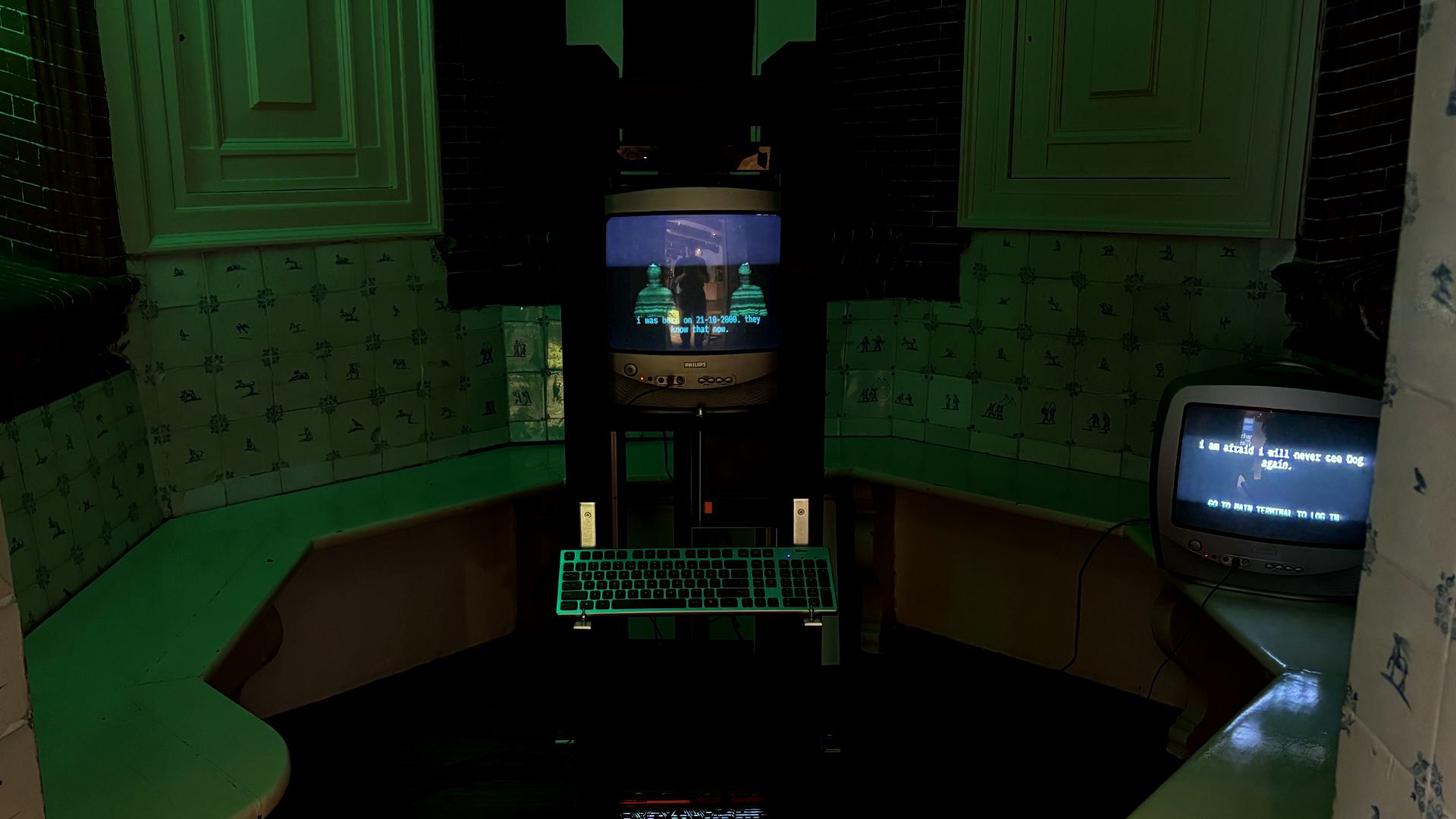
When walking into the SFF Building, you'll find a handful of old CRT screens displaying help messages. They look like calls for freedom by an earlier visitor. Their data is captured in the machine and it wants to be released. It guides you to the main terminal, a bulky, industrial computer.
It asks you to login. You decide to do it and share some personal information. Then the machine moves down and rises again in the metal frame, making a full body scan. When it's finished it suddenly ejects a piece of paper, with the data you released printed on it. Now their data is deleted from the computer and only exists in the printed form in your hand.
Walking through the rest of the exhibition you take another look at the CRT screens. There is a copy of you desperately asking strangers for help, because at this time, they should be drinking coffee with your favourite colleague.