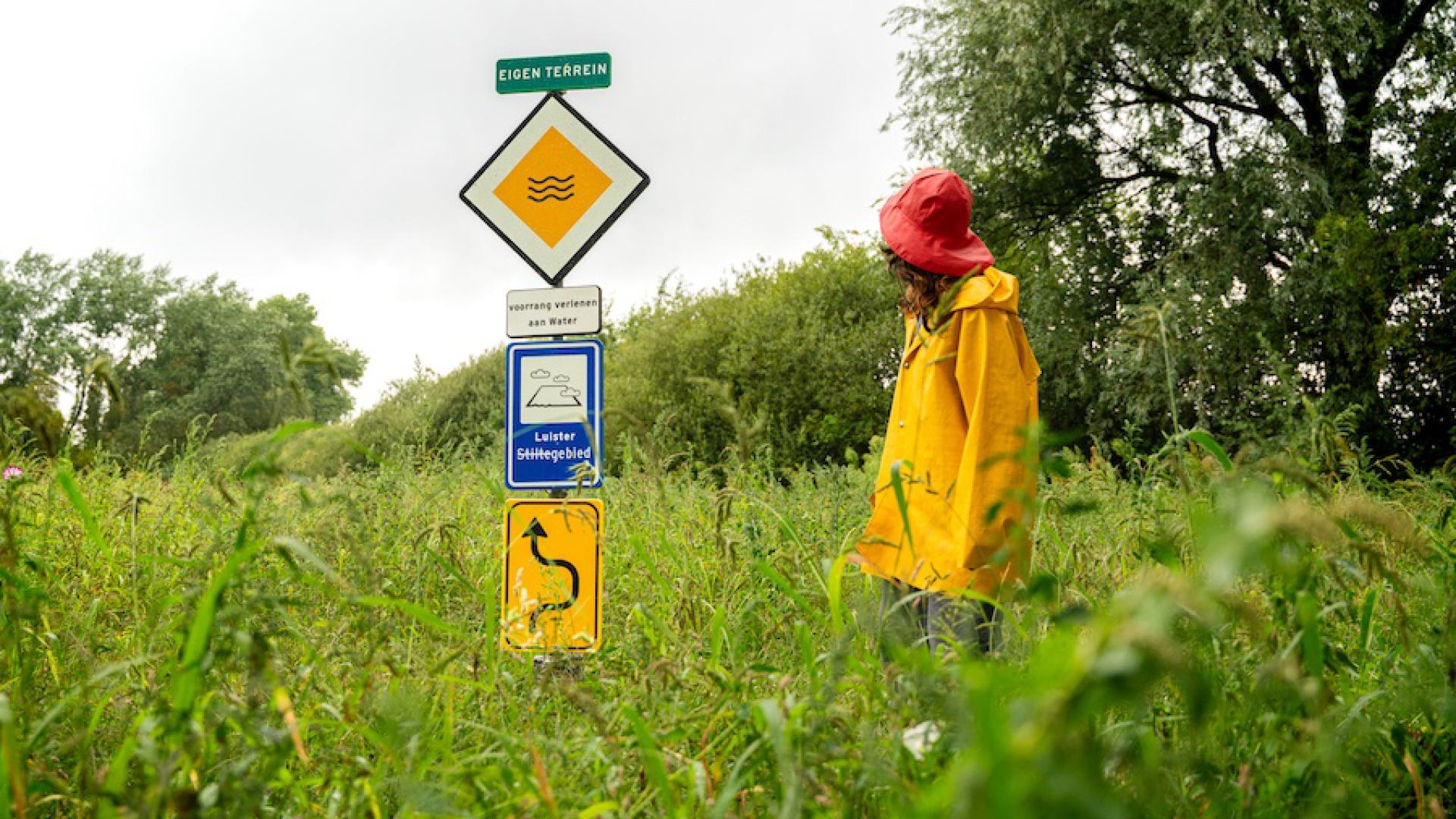
From landowners to stewards of the land
For centuries, people in the Netherlands have shaped water and land to suit their needs. Dikes, canals and reclamation created land to live, work and grow food on. Over time, we came to see ourselves as owners, and the land as something that belongs to us.
But there is a downside. Soil and water don’t follow the boundaries we draw. Drought, flooding and declining water quality make clear just how much we depend on them.
Declaration of Dependence invites landowners to see themselves not as owners, but as stewards of the land. To ask not only what we want to do with soil and water, but also what they need from us. After all, healthy soil and water systems do not stop at property boundaries.
Giving the land back to itself
The Akte van Doorhaling (Deed of Release) makes this new relation to land ownership tangible. You can symbolically cut your garden, plot or one square metre of land out of the land registry. In doing so, you give the land back to itself and shift from owner to steward.
For Heijmans, this directly affects the development of homes, neighbourhoods and infrastructure. Soil and water are not technical issues to deal with afterwards: they should help determine what is possible and desirable in a place from the very start.
During Dutch Design Week, the Declaration of Dependence grows with everyone who joins. Rather than offering a ready-made solution, it invites us to reconsider our relationship with the land. What happens when we truly acknowledge our dependence on soil and water?