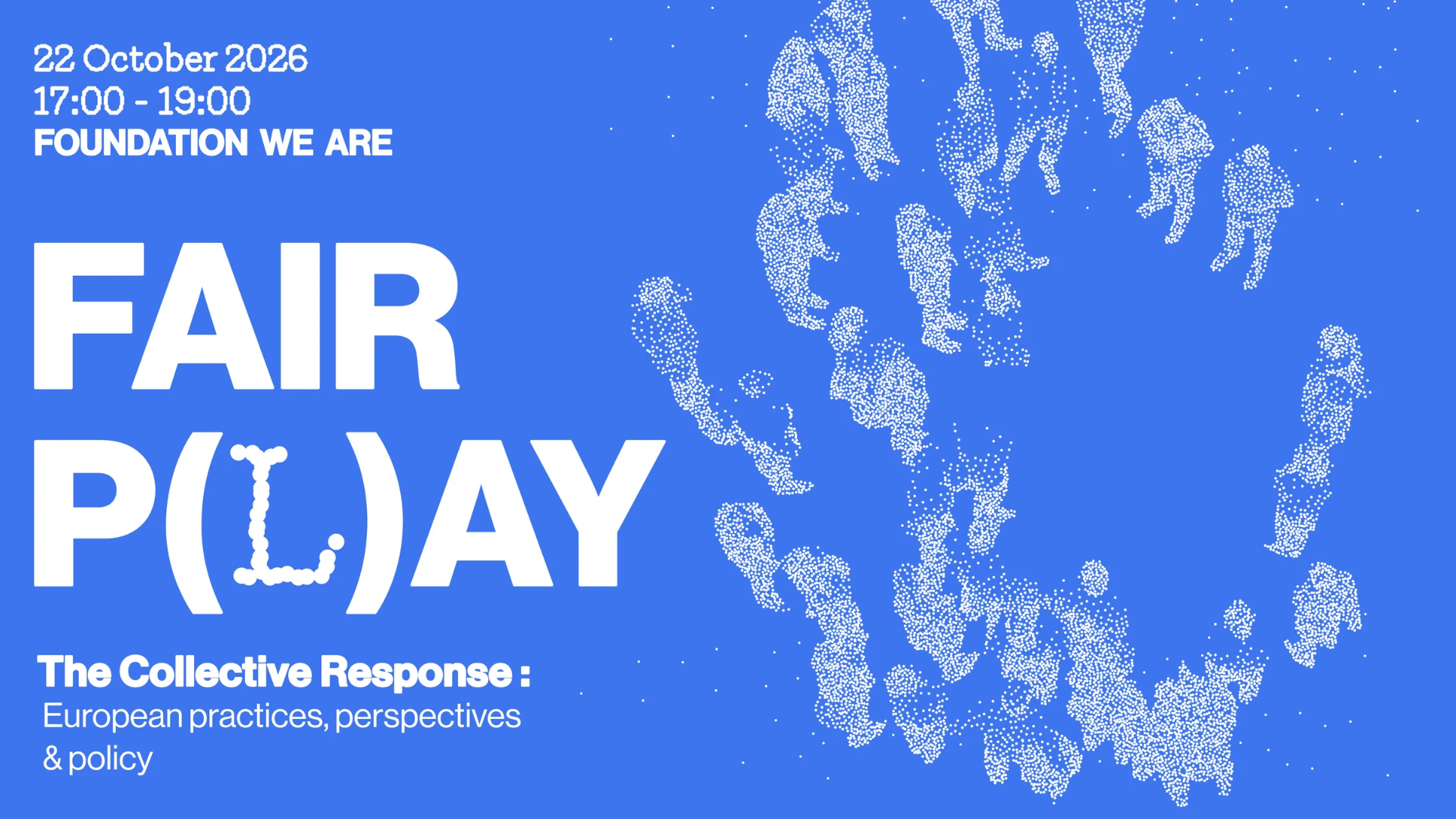
FAIR P(L)AY takes place within the context of The Collective Response — Design for Shared Action, the exhibition at Foundation We Are exploring how creative practices can build collaboration, community and collective action.
Across Europe, artists, designers and cultural practitioners are experimenting with ways of sharing resources, risks, responsibilities and knowledge. FAIR P(L)AY brings these practices into conversation with perspectives from education, policy and different European contexts, asking what collective action might mean for the people doing creative work — and what it could change about the systems around them.
Into the Income Pool — Extra Practice
We open the evening with Extra Practice, a workspace and learning hub in the north of Rotterdam, shared by six friends active in art and design.
After five years of sharing a creative workspace, Extra Practice found that working together can provide what today’s working culture often lacks: support, connection, care, resilience and purpose. But collective support also takes time and effort. How do we keep supporting one another when everyone is preoccupied with keeping their own one-person company afloat?
This year, Extra Practice took the plunge with The Pool: members pour their income into one shared bank account and redistribute it as a stable monthly wage.
The Pool raises practical and deeply personal questions about money, trust and independence: what does it mean to share income? What happens to our fear of not having enough, our guilt about receiving, or our instinct to save our own skin?
For FAIR P(L)AY, Extra Practice shares the story of The Pool as a starting point for a broader conversation about fair pay, collective practice and alternative ways of organising creative work.
From Practice to Policy
From this concrete experiment, FAIR P(L)AY opens out to European perspectives on work, productivity, precarity and the conditions in which creative practices are sustained.
Contributors working across design, education, artistic practice and policy explore how we might organise creative work differently: how we share risk, income, resources, knowledge and care; what we need to learn or unlearn; and what might need to change in institutions, funding systems and policies to make alternative ways of working possible.
The programme brings together concrete practices, different European contexts and futures-oriented perspectives, connecting individual experiments to wider questions about how creative work is valued and supported.