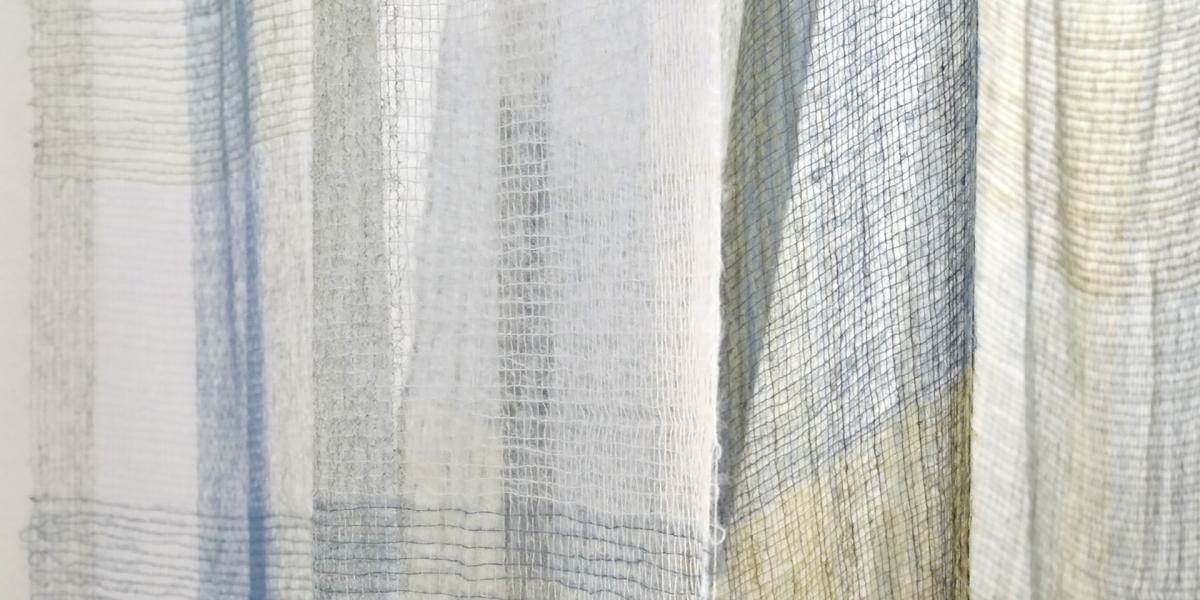
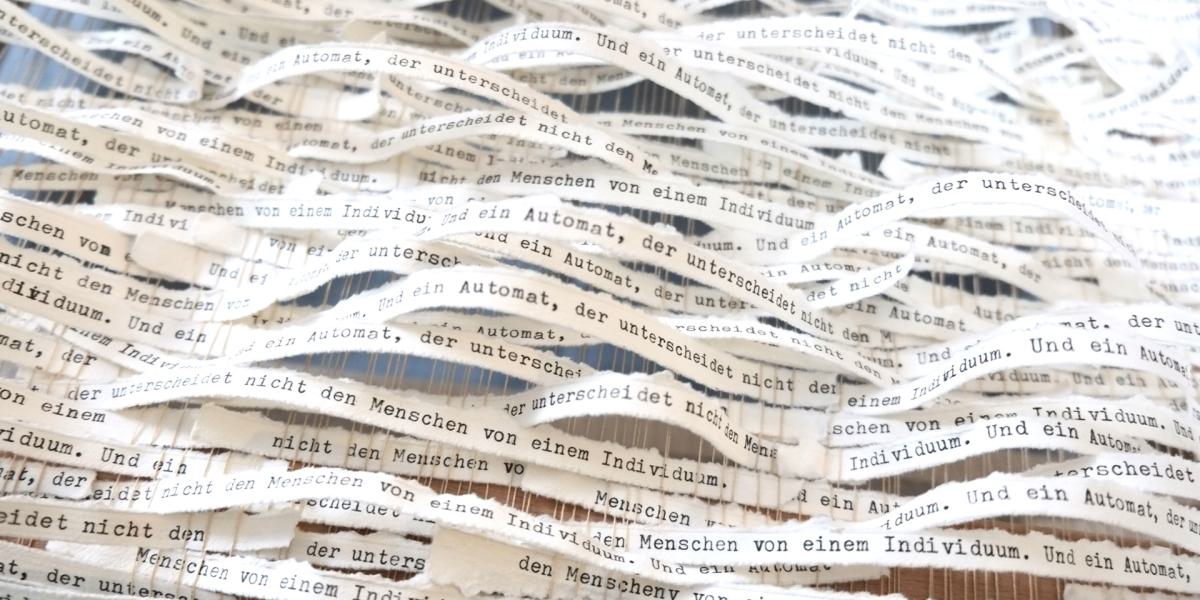
"The Voice from the Water" is a textile installation. Through tapestries merging cyanotype imagery with digital weaving, it explores feminism, consumer culture, and female agency, positioning textiles as carriers of memory and social transformation.
Woven Stories
The Voice from the Water is inspired by Anna Gmeyner’s 1932 play Automatenbüfett, a critique of consumer culture, gender relations and the commodification of everyday life. The story centres on Eva, a woman who emerges from a pond beside an automated snack bar and disrupts the bourgeois order, challenging systems of consumption, labour and social control.
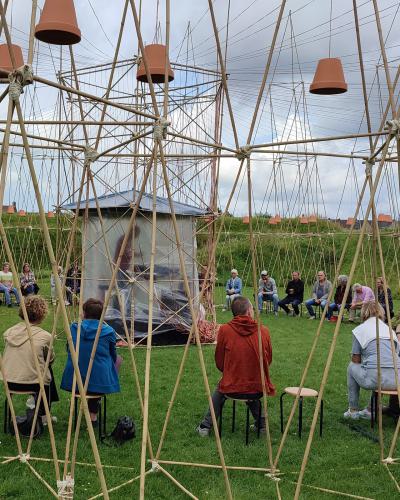
The project translates these themes into woven tapestries and a textile installation. For Dutch Design Week, a reduced version will be presented, focusing on the tapestries and textile works. Informed by interviews with contemporary female textile artists, the original installation explores identity, labour and the role of women using film and sound.
Drawing on mythological figures such as sirens, Undine or Circe, the work highlights how female voices have been silenced, marginalised or reinterpreted as symbols of transgression and male fears throughout history. By reclaiming these narratives, the project aims to give women a voice and position textile art as a medium for storytelling, knowledge and resistance. It also reflects on how consumer culture shapes identities, desires and social relations.
Textile Codes
The project explores the relationship between text, textile and technology. The words text and textile share the Latin root "texere" — to weave, connect and construct — forming the conceptual basis of the work.
Combining cyanotype processes with digital jacquard weaving, ephemeral photographic images are transformed into durable woven structures. Inspired by Donna Haraway’s understanding of identity as fluid, contradictory and strategic, textile-making becomes a process of storytelling and identity construction.
Particular attention is given to the relationship between weaving and digital systems. Long before computers existed, weaving operated through coded structures and patterns. By working with digital jacquard technology, the project highlights the historical connections between textile production, communication and contemporary information networks.
Material Memory
The project presents a landscape of woven textiles through which visitors can move and which they can experience spatially. The tapestries are more than just decorative objects – they serve as vessels for voices, memories and cultural narratives.
Whilst Circe and Penelope practise weaving as an act of wisdom and resistance, the Sirens are often stripped of their voices and their capacity for action. This reflects general patterns of the suppression of female speech and female desire. Through a feminist reinterpretation of these myths, the project creates a space in which marginalised voices can re-emerge as driving forces of critical reflection and transformation.
In summary, by interweaving historical and contemporary feminist perspectives with material and digital practices, the work demonstrates how textile design can engage with issues of gender, labour, sustainability and technology.