Art not only bestows pleasure, it can also heal.
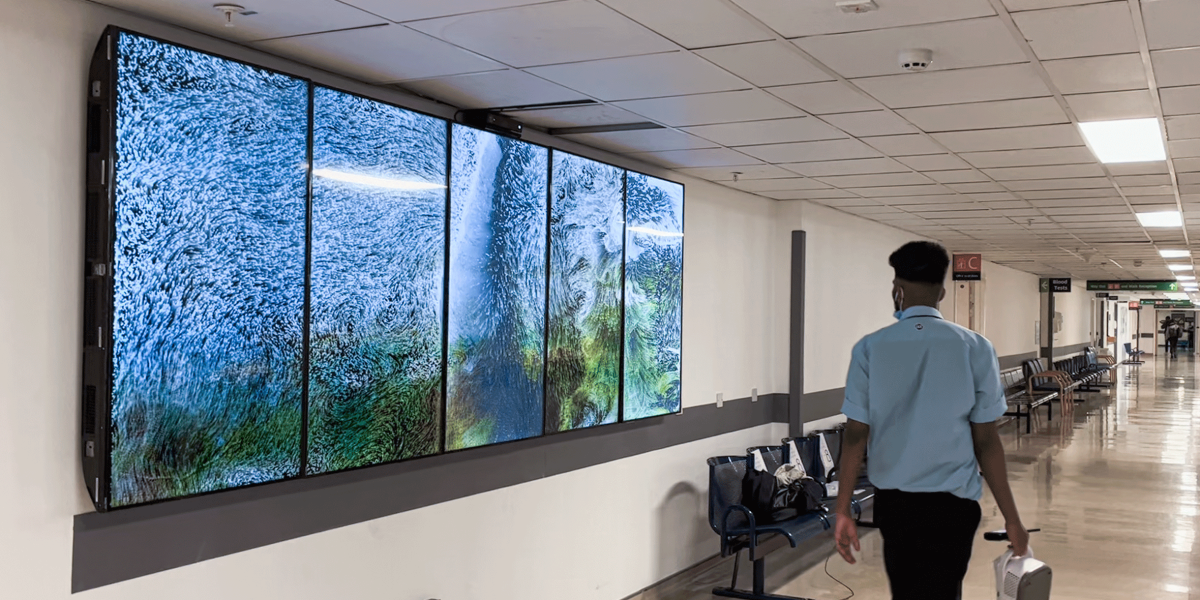
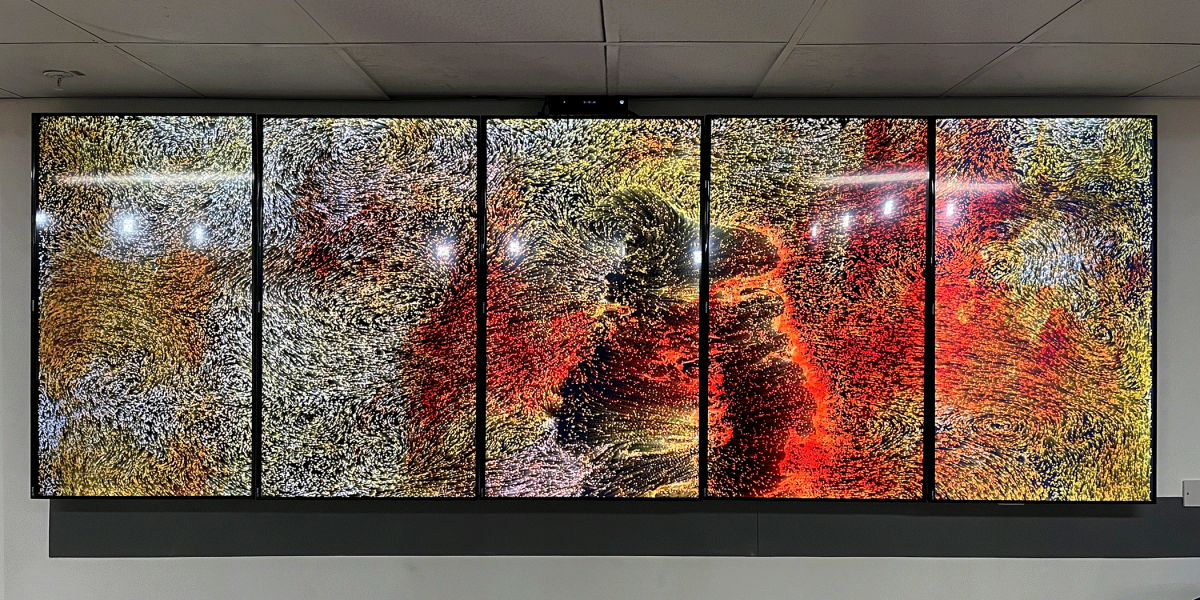
The Immersive Healing Art System is an ongoing project on smart, interactive artwork that creates healing environments and experiences for audiences. It transforms our daily space and offers a calming, reviving and ever-intriguing ambience.
Project Background - Workplace stress and the healing power of art
Workplace mental health issues like stress, anxiety and burnout have been aggravating dramatically in the recent decade. In 2019, the WHO officially recognised ‘burnout’, a symptom due to excessive work-related stress as an occupational phenomenon and called for global attention.
The pandemic and the economical and societal instability have further burdened employees in many industries. Take healthcare as an example, doctors and nurses all over the world are now the most vulnerable group to job stress and burnout. Staff shortages, increasing workloads and poor working environments all cause their accumulating stress.
While systematic changes are needed to address the problem root and branch, they require years of reform. Therefore, it is high time for companies and organisations to introduce practical changes to their current work climate. And shifting the dull and monochromatic workspace to a smart, lively and even restorative space can be a huge step.
We believe that art, especially interactive and immersive art has just the power. Humans are intrinsically attracted by artwork and well-curated art experiences have been proven to be therapeutic. That's why we developed the IHAS.
What is the Immersive Healing Art System?
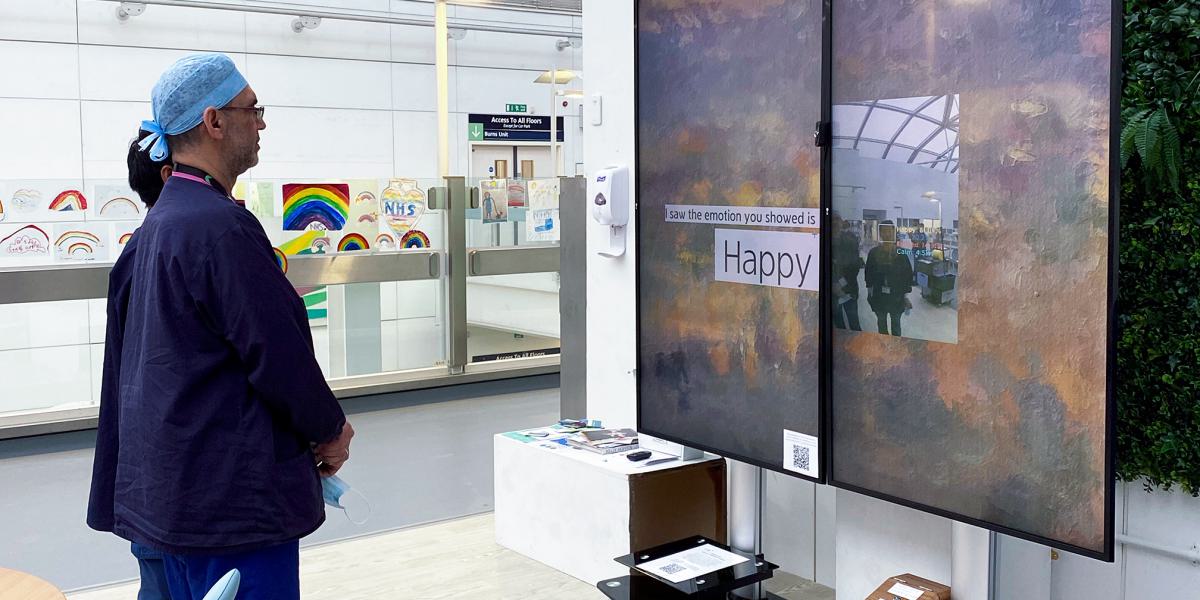
The Immersive Healing Art System (IHAS) system provides emotionally soothing and healing experiences in which audiences are invited to participate in and interact with the artwork. It uses AI and sensors that detect anonymous data including bodily movement and facial expressions of everyone who’s walking past it, and responds to them with live-generated artwork. It displays an artistic contemplation on the cumulative data of the current environment, and also an attempt to distract and communicate.
The visual art is created using tailored-built AI algorithms capable of creating an infinite amount of visual artwork under specific emotional styles, like calming, sad, happy and uplifting. Hence, in the IHAS system, every emotion detected could lead to different, often surprising and touching artwork that allows the spectators to experience and reflect.
Through the IHAS, we aim to harness the healing power of art and immersive experiences, and help different workspaces be transformed into smarter and more caring environments. We've already tested the soothing effects of the artwork in a laboratory setting and have been trialling it in multiple venues like offices and hospitals.
Project trials in Chelsea and Westminster Hospital in London
The IHAS has been launched and trialled in hospitals and workspaces in the UK and in China. In early 2020, we collaborated with CW+, the official charity of Chelsea and Westminster Hospital in west London, to implement the IHAS installation in the hospital, right during the pandemic. Since then, we have kept collecting feedback from staff and patients on their experiences and thoughts with it and have tested several iterations during the last two years.
Overall, the installation has been well-praised by hospital staff. Some mentioned "it really calms me down in a long day", "I get used to playing with it every once in a while now", "it attracts me at the first sight ... anyways it's good to know that the Trust is doing something to improve our working environment".
From their feedback, it's clear that the system has provided an artistic and relaxing void for the staff, which facilitated them to have a brief moment off, reflect upon their feelings and embrace a positive mindset. In the future, while we are constantly developing the work, we also aim to scientifically evaluate its contribution to the mental well-being of staff, caregivers and patients with empirical data.