How can designers operate?
This project was developed as part of a master’s thesis in Product Design and is embedded within the daily operations of KOBER Porzellan. Rather than approaching the company as an external designer, the research is conducted from within its industrial context. By working directly alongside manufacturing and development teams, the project investigates how designers can contribute not only to the development of products, but also to technological innovation, material research and production processes. This close involvement provides access to knowledge, challenges and opportunities that would be difficult to identify from the outside. In doing so, the project explores a form of design practice situated between research, technological development and manufacturing.
Porcelain 3D Printing
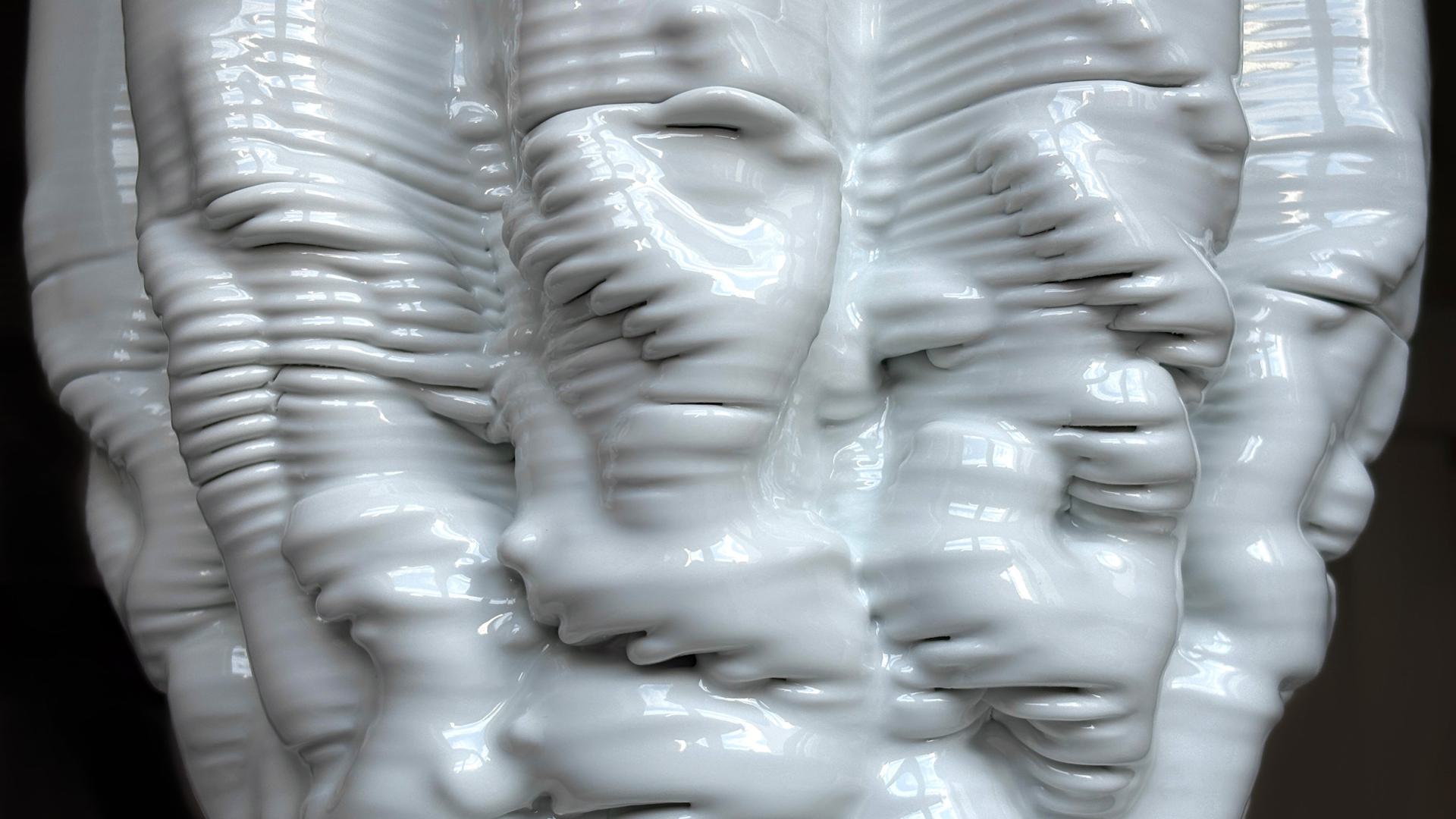
At the centre of the project is the development of a porcelain 3D-printing process suited to industrial production. The research began with selecting and testing an appropriate porcelain body and continued with the collaborative development of a custom extrusion system adapted to the material’s specific behaviour. In this phase of development the expertise in material, machine construction and openess for exploration from KOBER was indispensable. At KOBER they are always pushing for new methods and workflows of how to produce porcelain objects with their own tooling and machining workshops.
Expanded Role for Design
The project suggests that the role of design in manufacturing can extend beyond the development of individual products. As production technologies become more complex and specialised, design can help identify connections between technical possibilities, material knowledge and future applications. This requires time, proximity and an openness to outcomes that cannot be predetermined at the beginning of a project. In this context, the designer acts not only as a creator of objects, but also as an observer, translator and initiator who makes emerging possibilities tangible. The resulting prototypes therefore represent more than potential products: they make visible a process through which technological development can gradually acquire direction and relevance. While this research is rooted in the specific conditions of porcelain production, it points towards a broader model for companies seeking to explore unfamiliar technologies and develop new opportunities from within their existing expertise.