23-31 October 2027

Re-assembling Semarang City

A Strategic Framework for Semarang City: An Exploration of the Local Adaptive Mechanism in Urban Mitigation Planning

Hosted by Widasari Yunida Putri

This project is now archived and was part of DDW21

This project is part of
Archiprix 2021
→
The Local Adaptive Mechanism
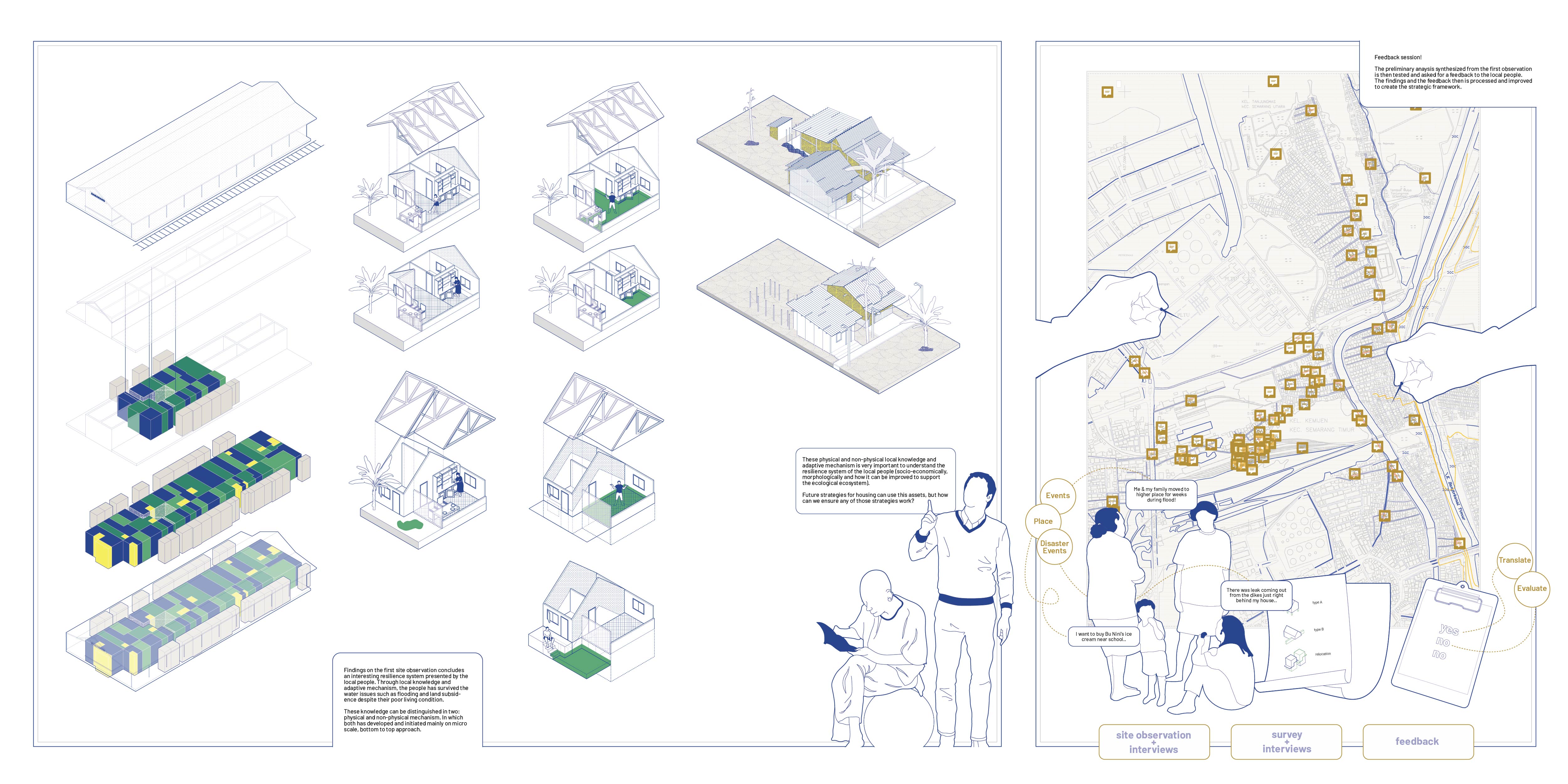
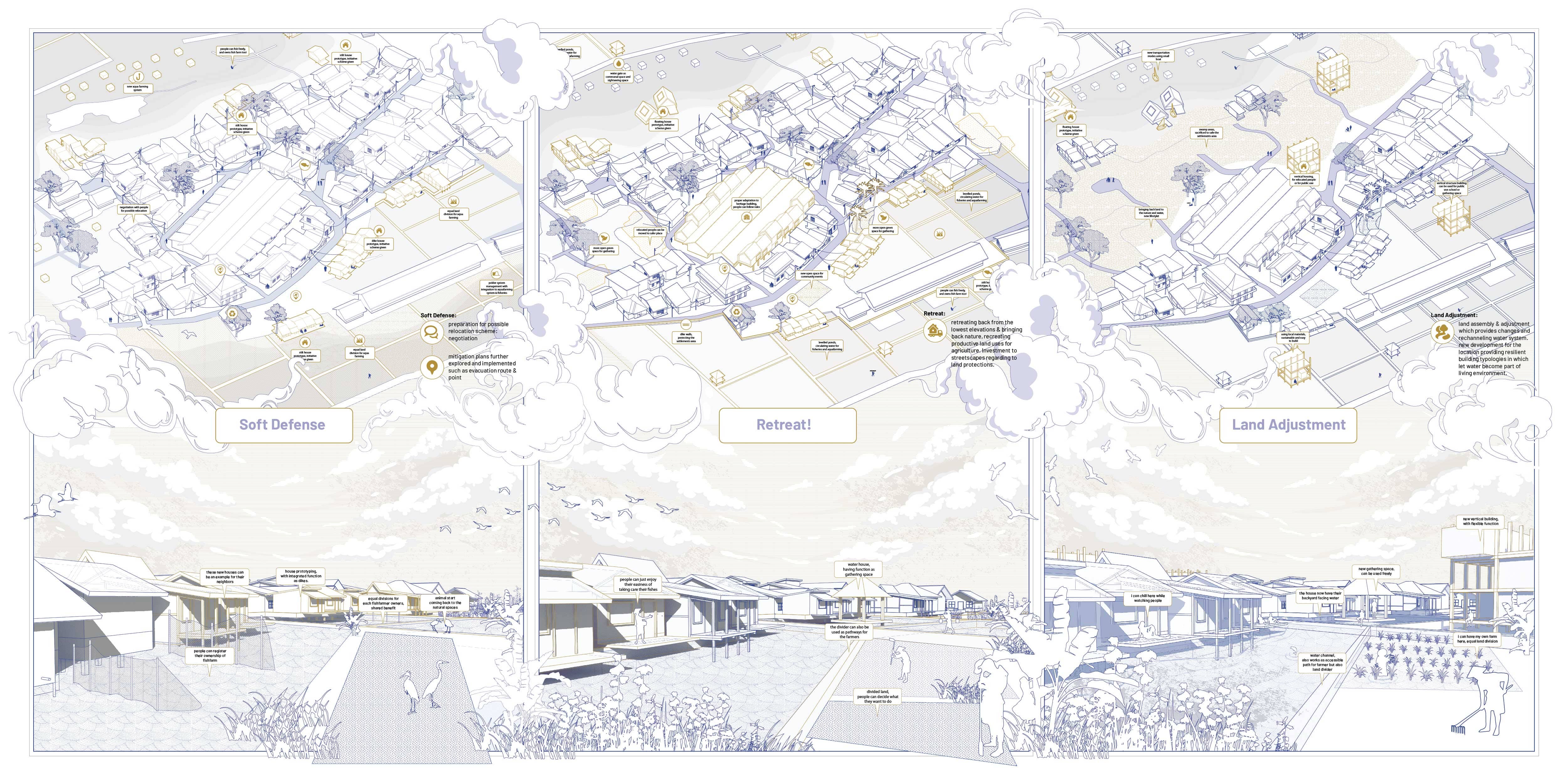
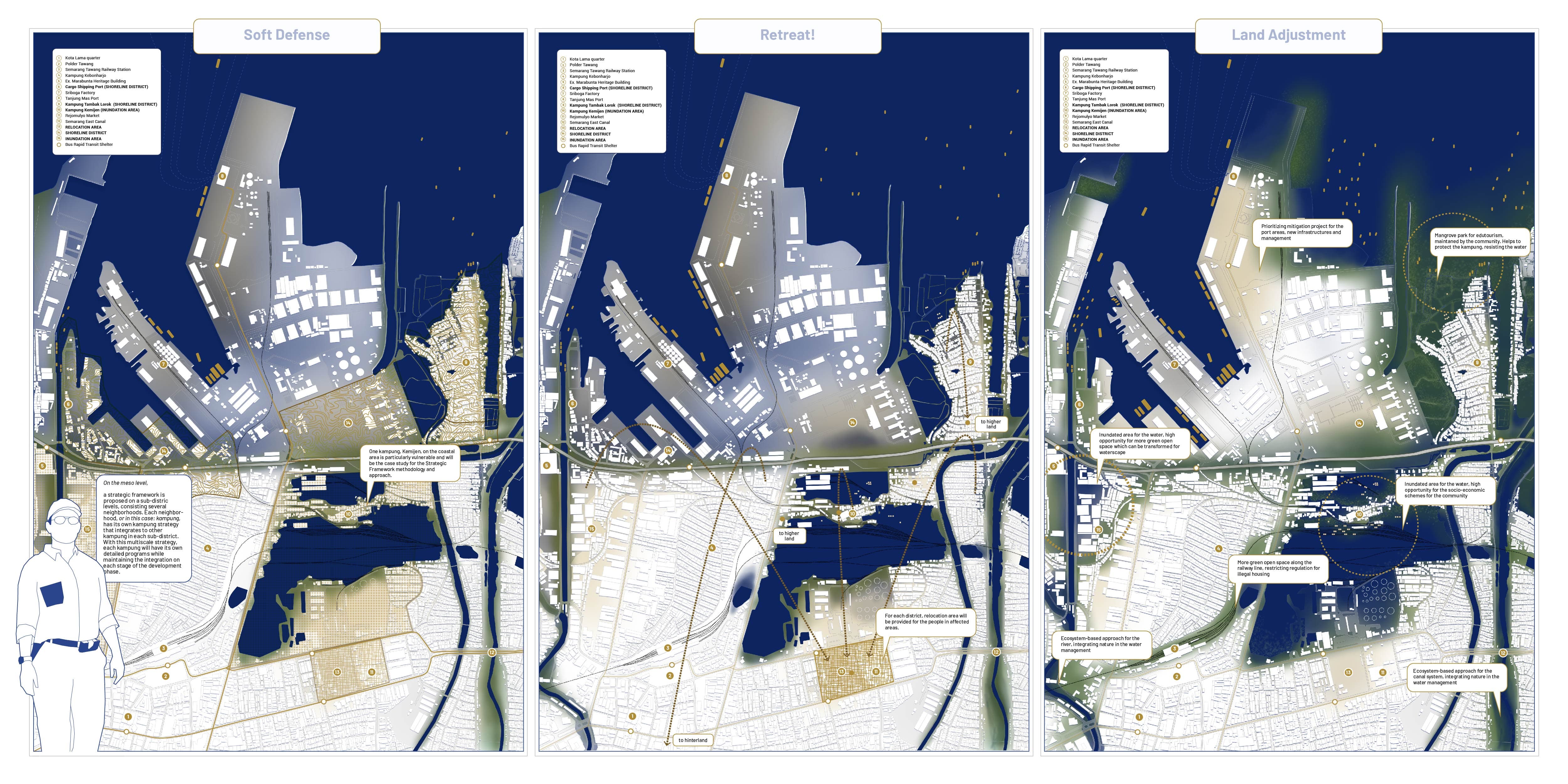
The project presents a series of strategies that can be used to combat the consequences of the unstoppable subsidence and sea level rise in the low-lying coastal areas of Semarang City. The focus is on local adjustment mechanisms with the participation of the residents.
Why the Local Adaptive Mechanism?

Current unjust urban developments and dubious investments in built infrastructure cannot solve the problems, on the contrary, the situation and well-being of vulnerable groups is becoming increasingly precarious. Many recent urban plans make the known mistakes, a plan focuses only on the final product and the aesthetics of the cities. The focus is unilaterally on built infrastructural strategies, the hard approach. Public participations, the soft approach, are not on the agenda. The main case study of this project examines the coastal area of ​​Semarang. The city needs a new approach, an urban strategy that solves environmental problems on several scales in the longer term so that residents can survive climate change without social conflicts. Despite the complexity of the proposed planning at the different levels of scale, the communities are coping well with this strategy. The proven local adaptation mechanisms provide opportunities to address the city's problems through simple adaptive measures, setting up socio-economic activities and facilitating community initiatives. These local adaptation mechanisms are implemented in the strategic framework of urban sustainability.

The Strategic Framework: In Balancing Soft and Hard Approaches to Implementation

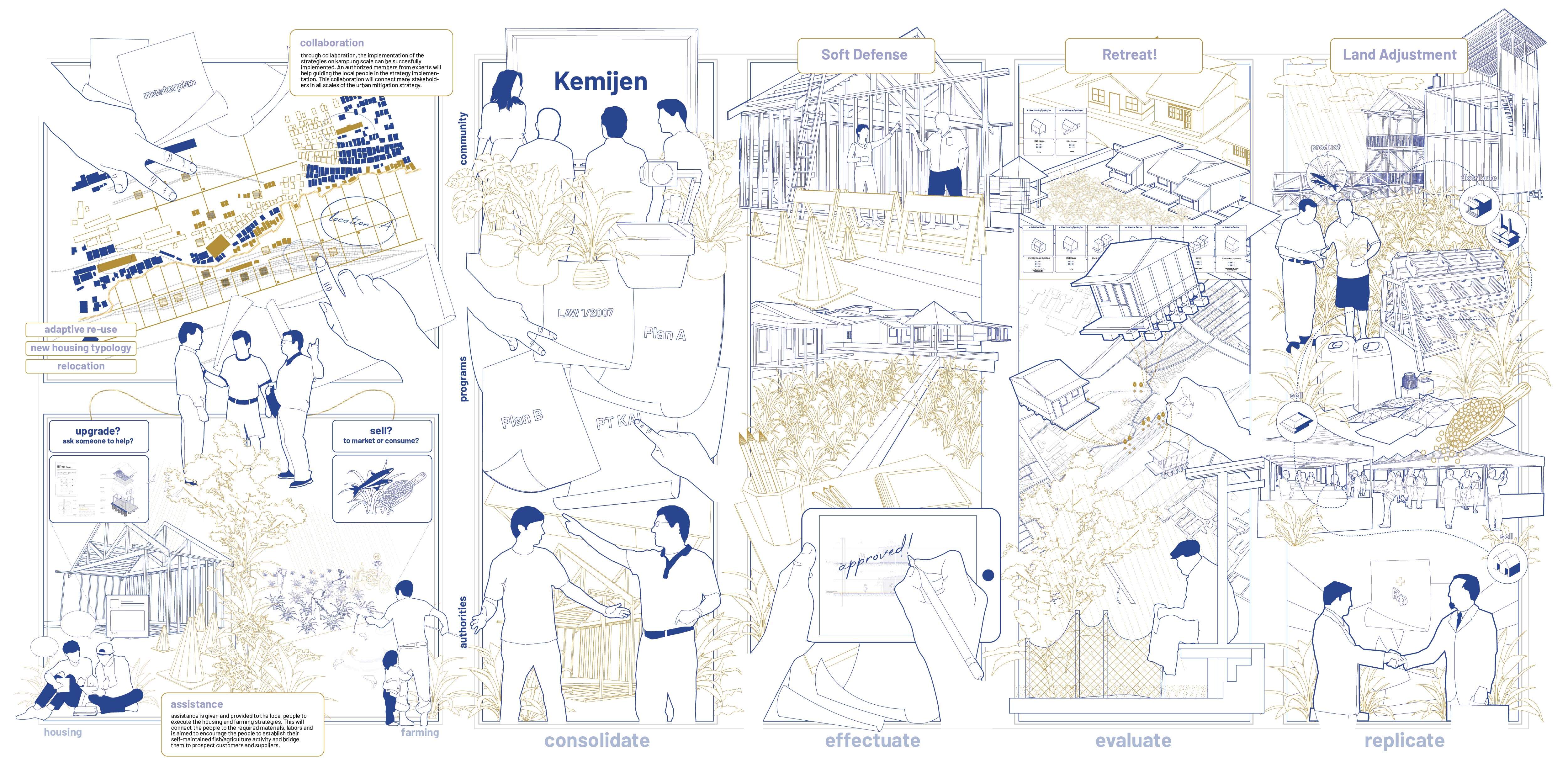
A general consensus is being developed in balancing soft and hard approaches. The emphasis is on the socio-ecological principles of urban resilience with attention to the socio-economic and housing aspects. A start is made with involving the residents in the development process, whereby the information is translated into tangible strategies. Investments are made in adequate infrastructure to tackle environmental problems at the various scale levels. The strategies also promote a self-sufficient lifestyle that enhances the socio-economic opportunities of vulnerable communities. At the same time, it restores the city's ecology, improving people's well-being.

The New Urban Planning Approach

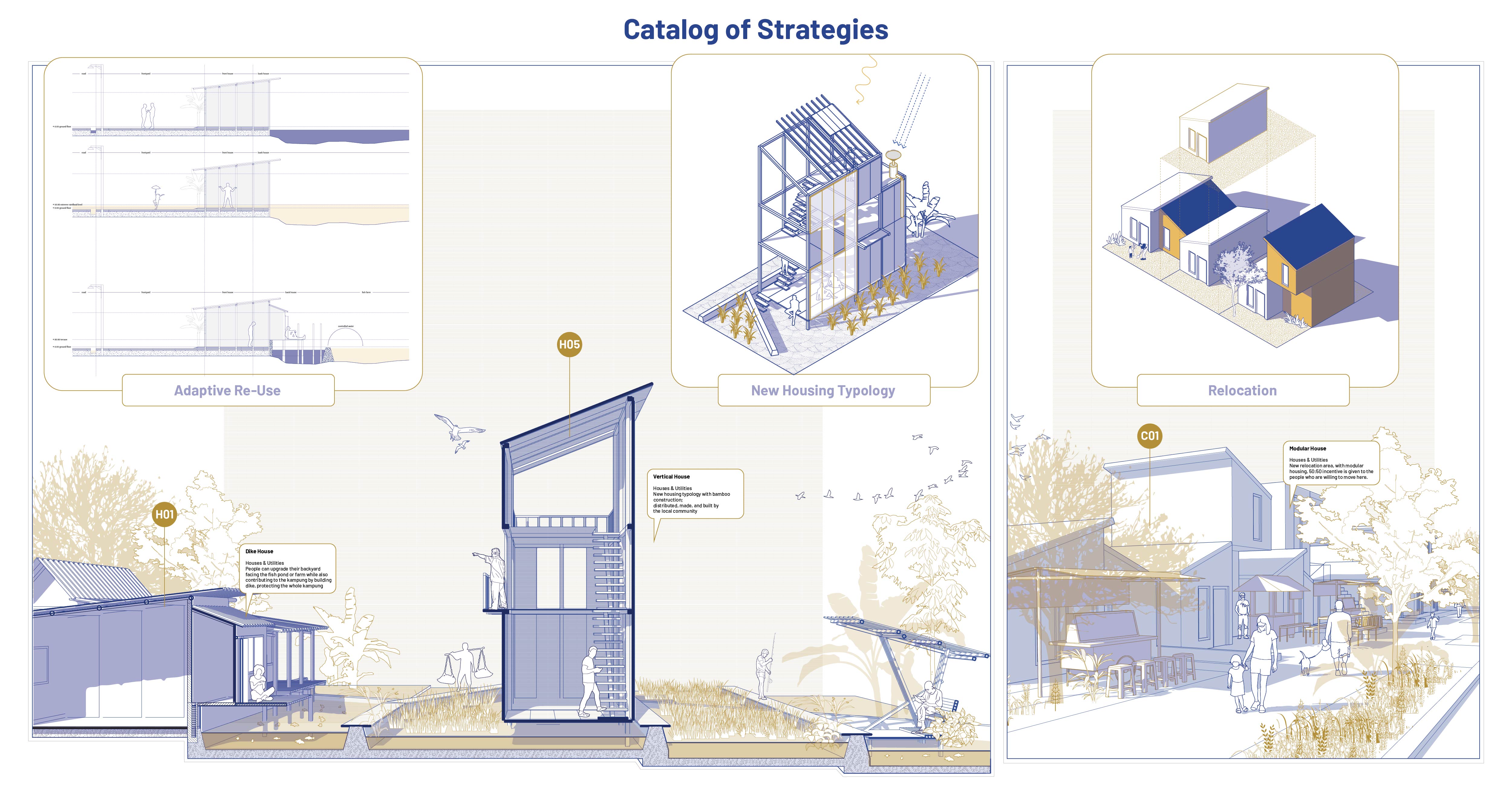
A clever combination of the soft and the hard approach of Semarang City provides a new way of planning urban sustainability. The catalog of strategies offers a range of actions for all stakeholders and encourages active involvement and cooperation at all levels between private and public sectors. At the same time, the built environment improves. The strategies offer flexible implementations in the field, focusing on the development process rather than the end result. This increases resilience in dealing with future challenges.
The Multiscalar Planning
The Time Phase Planning
The Stakeholder Engagement
The Catalog of Strategies

By

Widasari Yunida Putri

Hosted by

Stichting Archiprix
[email protected]
+6281326234209
Visit website

Download press kit