17-25 October 2026

HABITON

HESSEN DESIGN COMPETITION A modular nesting aid for hymenoptera, obtaining biodiversity in an urban environment

Hosted by Maurice Riegler

This project is now archived and was part of DDW22

This project is part of
Green Future Club
→
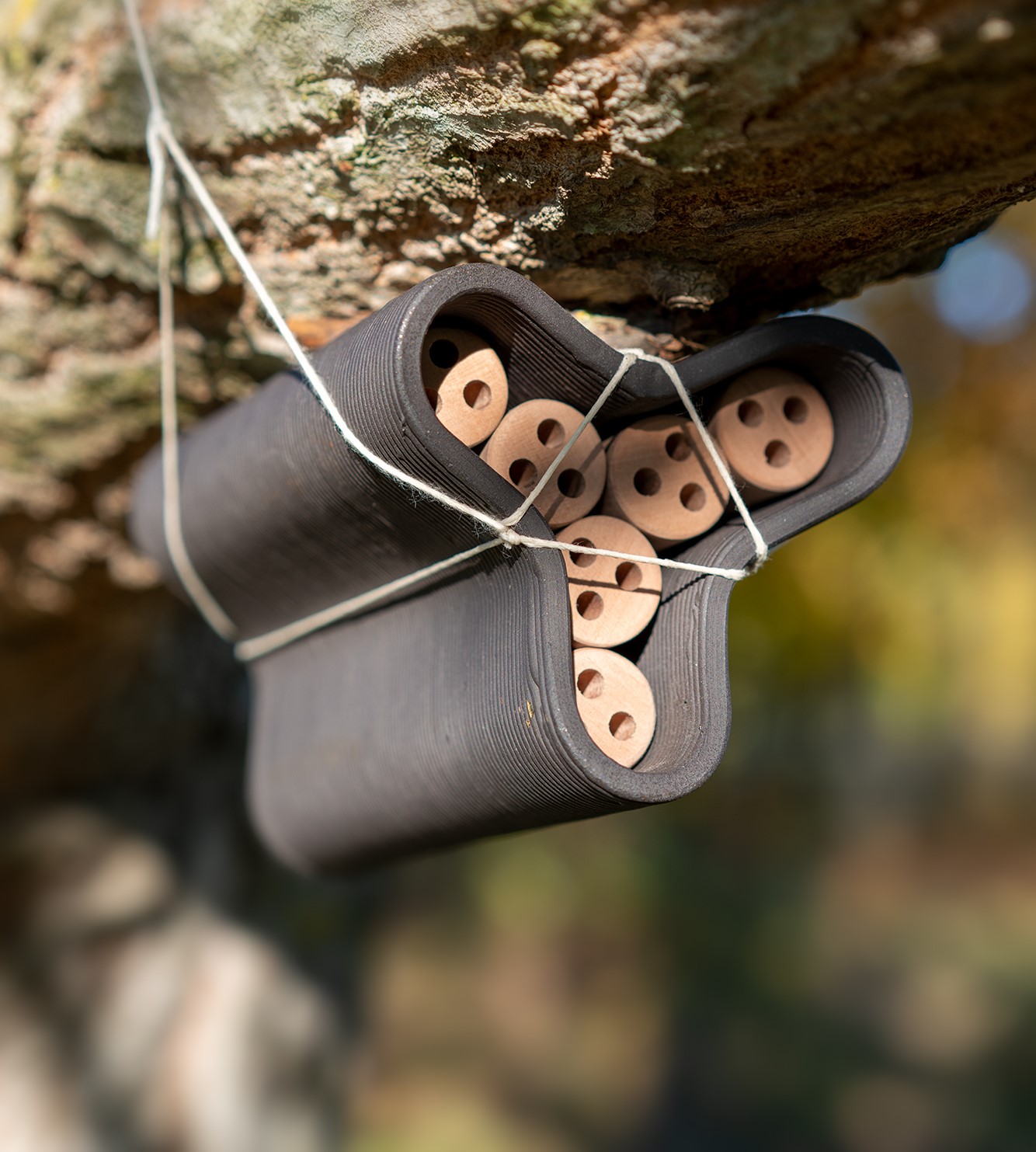
"HABITON" mounted to a tree
Dylan McGuire & Maurice Riegler
MAURICE RIEGLER completed his diploma project HABITON at the Hochschule für Gestaltung in Offenbach. The biomass of all insects has declined by an estimated 76%. Already one module of the modular nesting aid for Hymenoptera offers space for up to 720 insect cocoons, helping preserve biodiversity.
bee≠bee

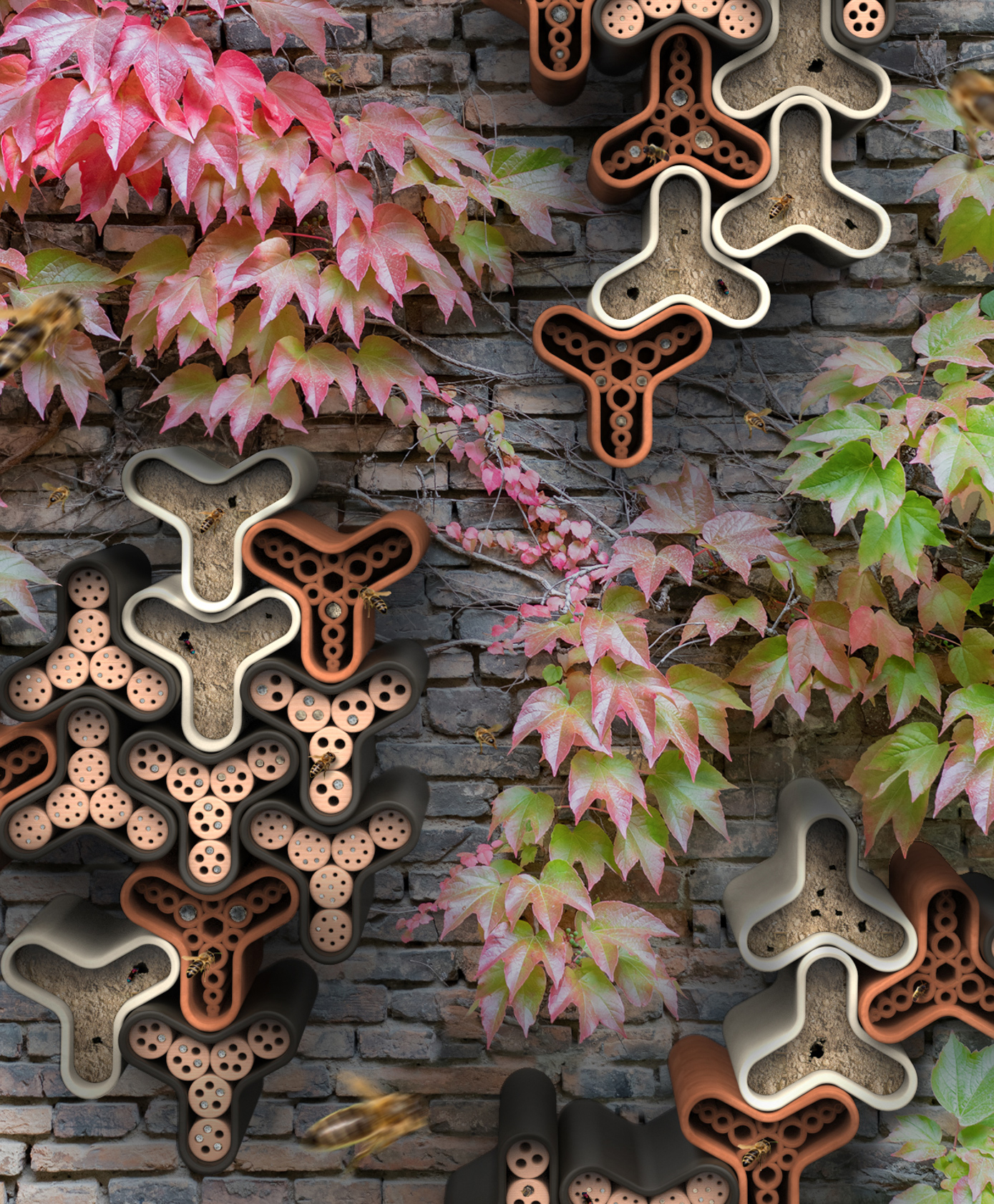
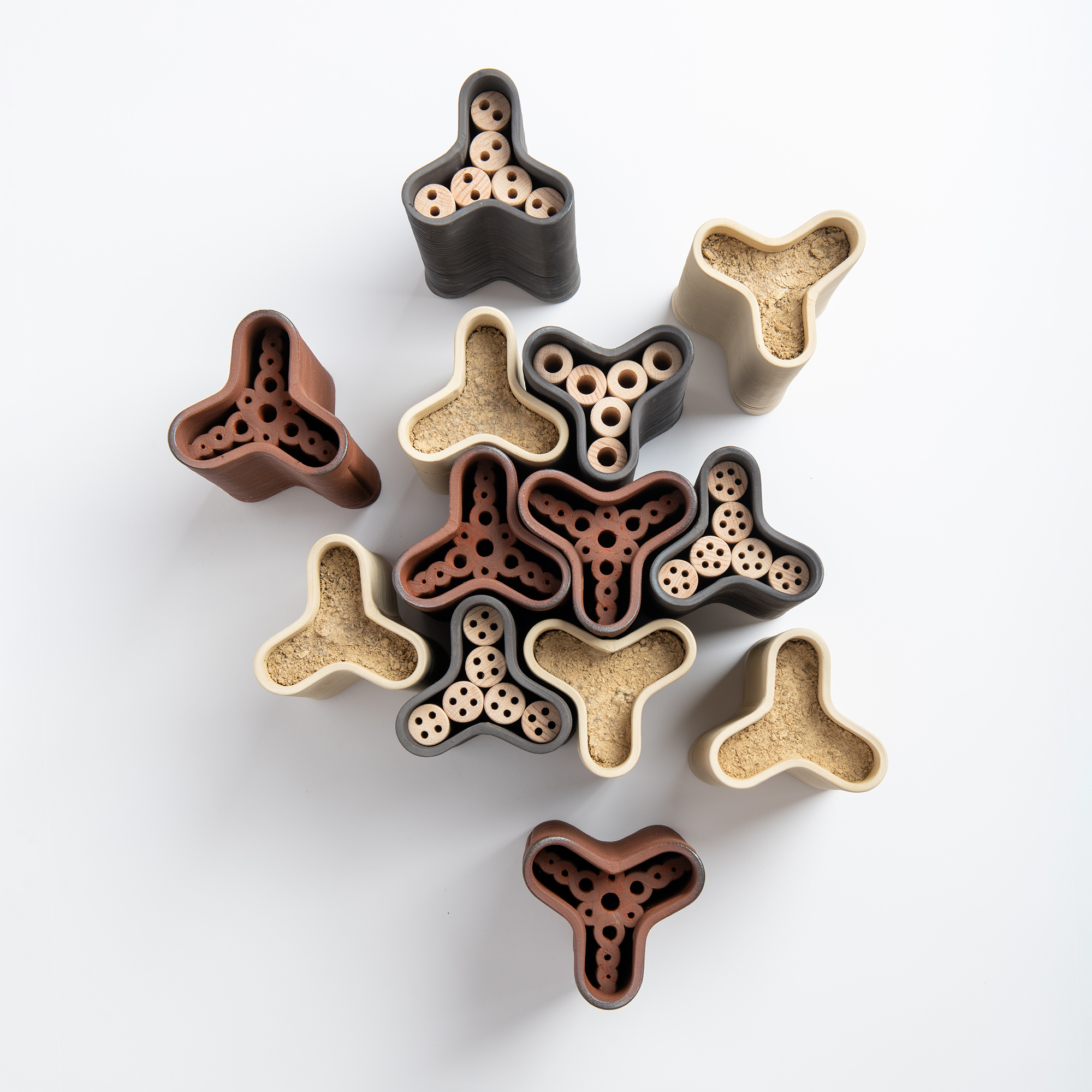
Due to a long list of factors, insects are increasingly "driven away" from their natural habitats. Intensive agriculture and the increasing sealing of areas are among the strongest drivers of this development. Often when we talk about insects' demise , the discussion focuses on honeybees, which do valuable work for humans. However, other insects are often forgotten. "Habiton" deals with the global damage to biodiversity and formulates a species-specific approach that is intended to counteract this development. Solitary wild bees play a key role in the design and can be seen as the starting point for the settlement of a large number of insects. Over the past few decades, they have looked for new niches in the metropolitan areas. The flora of the cities is more diverse and not yet exposed to agricultural yield constraints. However, densification, shrinking gardens and modern building materials are increasingly threatening the habitat of many animals. The needs of the single Types of Insects were raised to be the central design element and transferred to a system that is easy to install and requires little maintenance. 3D-printed ceramic modules serve as outer shells, which can be optimally adapted to the nesting needs of wild bees using various filling materials.It was printed using a strand laydown process.Basically like a casual FDM-print, but using clay instead of plastics. The printer followed a non-planar path, which created the iconic waveform. Thanks to its modularity, “Habiton” allows for collaborative cluster formation in order to promote resilient species communities. Even in its smallest unit as a single module, the design offers the possibility of creating cross-regional structures "HABITON" starts at 3:08
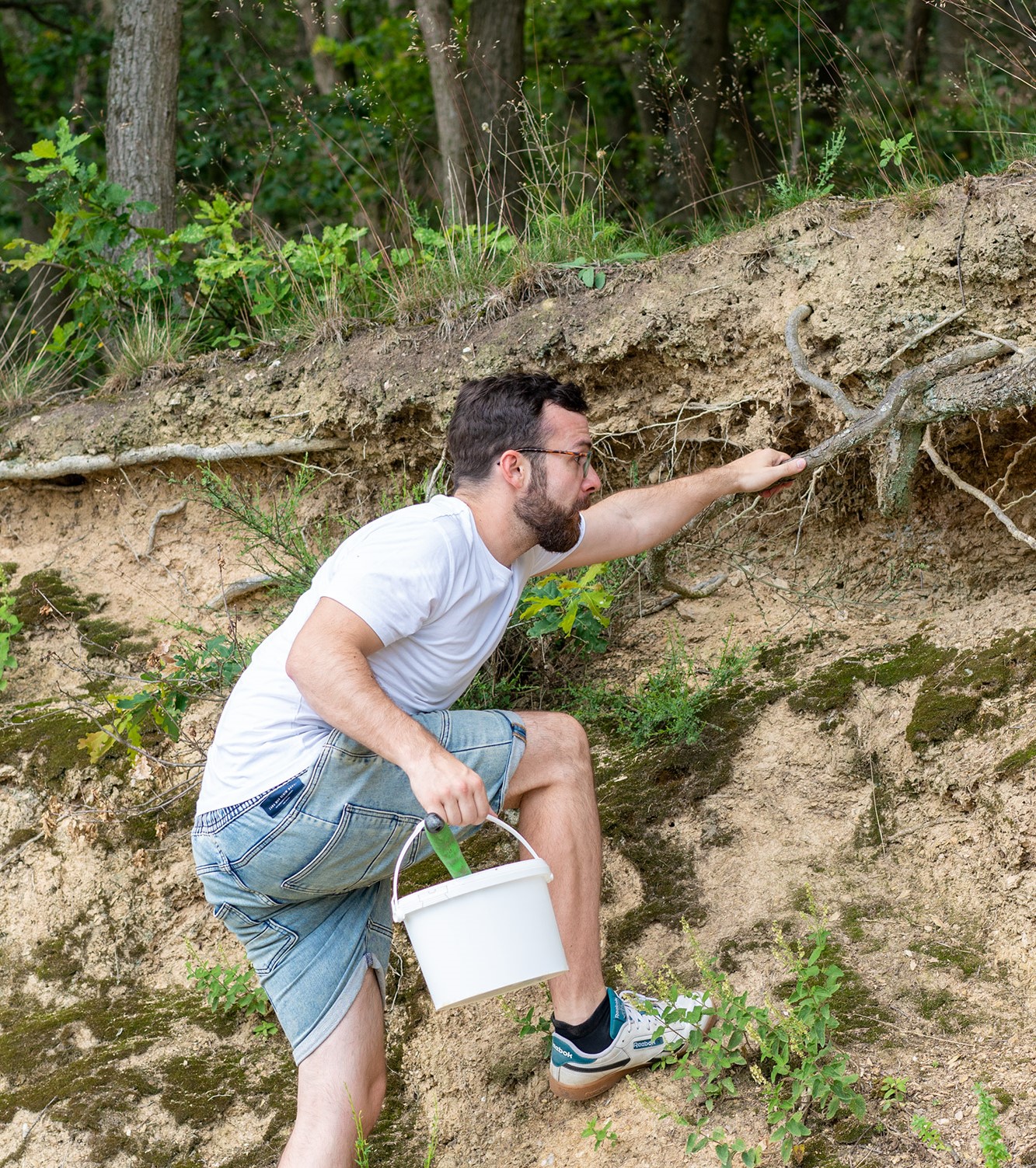
gathering material
gathering material
Sabrina Bock
single Habiton-Unit
single Habiton-Unit
Maurice Riegler
Habiton-Units grid view
Sabrina Bock & Maurice Riegler
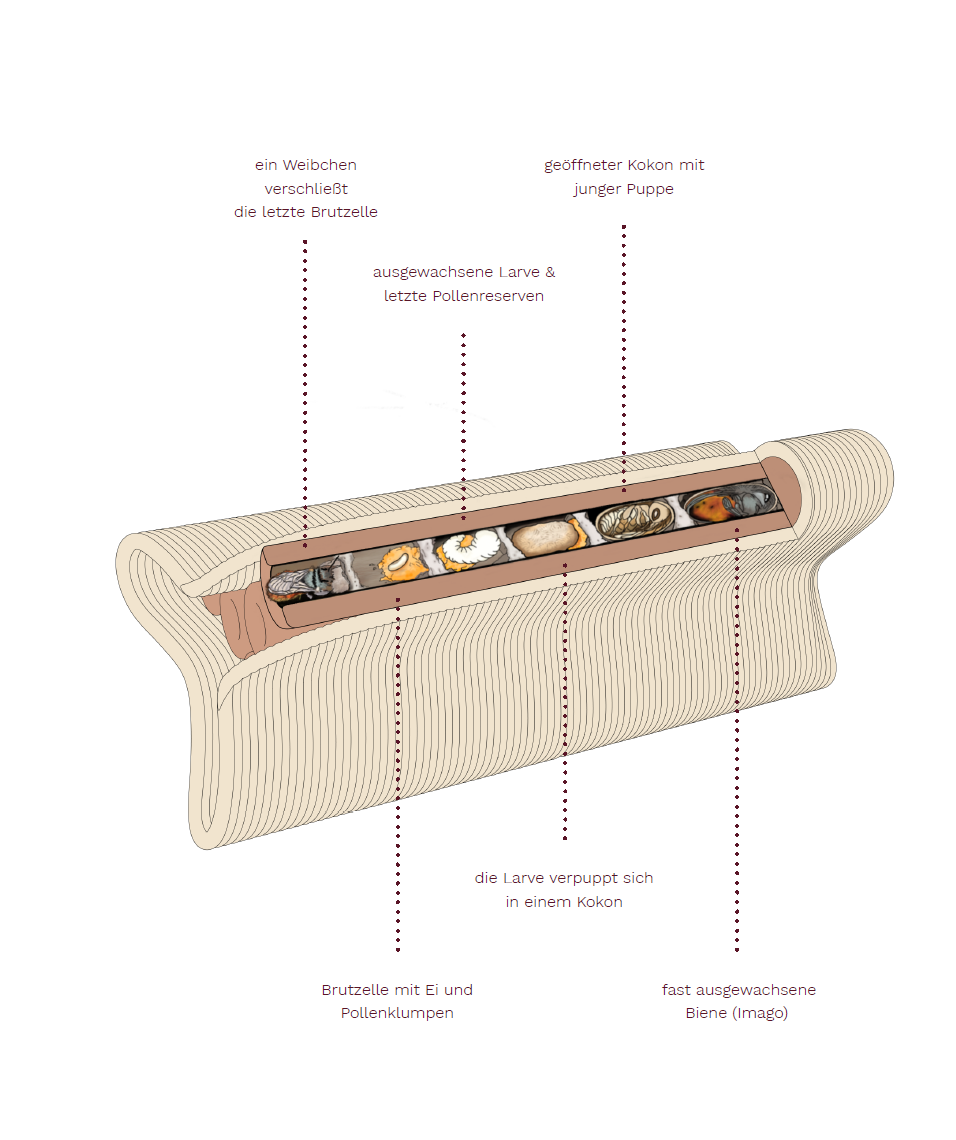
Nesting biology of solitary bee´s inside Habiton

About Maurice Riegler

MAURICE RIEGLER completed his diploma project HABITON at the Hochschule für Gestaltung in Offenbach. The biomass of all insects has declined by an estimated 76%. Already one module of the modular nesting aid for Hymenoptera offers space for up to 720 insect cocoons, helping preserve biodiversity.

Colofon

Designer Maurice Riegler

Partners

Sponsored by HABITON

As featured in