17-25 October 2026

Poëtics of Plentitude

The scale on which we use and employ materials conceives notions of plentitude and limits. What is available in abundance, and what is finite?

Hosted by Werkstatt

This project is now archived and was part of DDW22
Poetics of Plentitude
Werkstatt
When we perceive our build environment, what are the materials which make up the bulk of our buildings? Where do they come from, and, what do these materials mean to us? Do we engage a community through explaining principles, or by seducing them with a new, poetic, notion of the alternate economy?

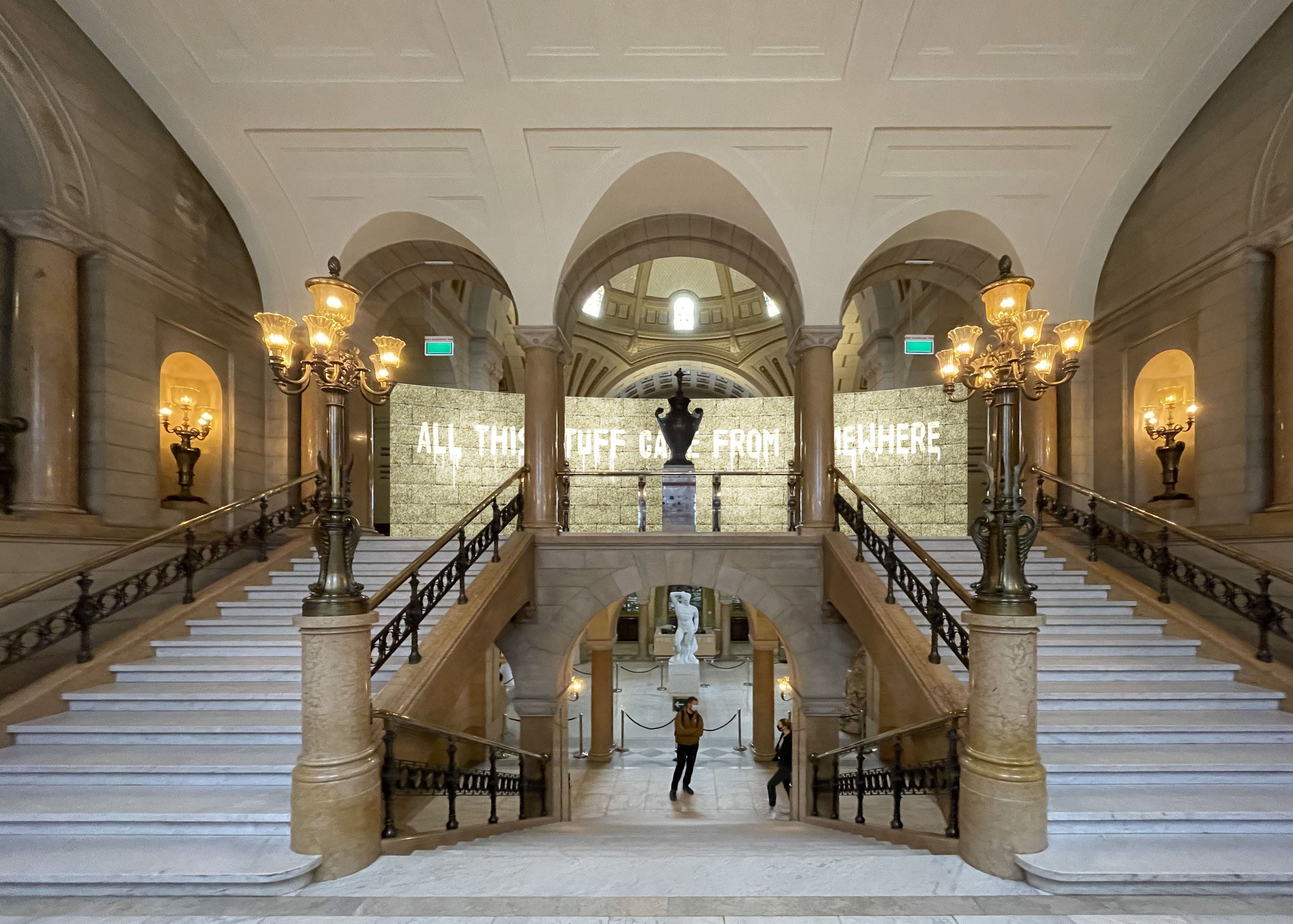
All this stuff came from somewhere

“All this stuff came from somewhere.” (Moe. K. (2021), Unless: the Seagram Building Construction Ecology, Actar Publishers, Barcelona.) When we perceive our build environment, what are the materials which make up the bulk of our buildings? Where do they come from, and, what do these materials mean to us? Material flows do not end in the build environment, they suggest a source, a starting point. They move between communities and influence economics and landscapes. Materials leave a plethora of traces, they exist in place AND time. The scale on which we use and employ materials conceives notions of plentitude and limits. The word ‘plenty’ is the culmination of two notions: abundance and ‘just enough’. How does the building industry relate to these ideas? What is available in abundance, and what is finite and deserves a sparing, careful utilization. Which roll do new, regenerative building materials play next to the beautiful, finite materials without which we cannot imagine our build environment?

construction ecology

Confronted with this contradiction, we try to reverse the implications of conflicting notions. Finite and infinite are not diametrically opposed: ‘just enough’ and abundant reinforce each other in a dynamic way. This asks for a multi faceted perspective on the value of materials. Next to their functional qualities, they embody memories, potential and beauty. Beauty which is not confined to the ‘looks’, but which can also be found in the origin of a fiber, or the potential of a future destination.

community

This multi-faceted approach is based on the thinking of Kiel Moe and Gion Caminada. It could be firmly stated that we need both collective and individual action to engage in alternative economies. The building – in economic sense- is therefore not an object, but part of a ‘building ecology’, a system. The architect needs a deep entanglement with the community in order to analyze and ensure understanding of changes to system. A question remains: do we engage a community through explaining principles, or by seducing them with a new, poetic, notion of the alternate economy?

About Werkstatt

Werkstatt is Niels Groeneveld, Floor Frings and Raoul Vleugels. All three graduated cum laude from the TU/e. Werkstatt was recently awarded the ‘Jonge Maaskantprijs’ for being the last ten years at the forefront of change in the building industry. Through thoughtful architectural design they try to implement economic, social and environmental change within the discipline.