Tableware _ Tree of Culture
Vessels _ Tree of Culture
Hosted by Basse Stittgen (Germany, based in the Netherlands)This project is now archived and was part of DDW22
This project is part of
Home(Land). UKRAINE.
→
Home(Land). UKRAINE.
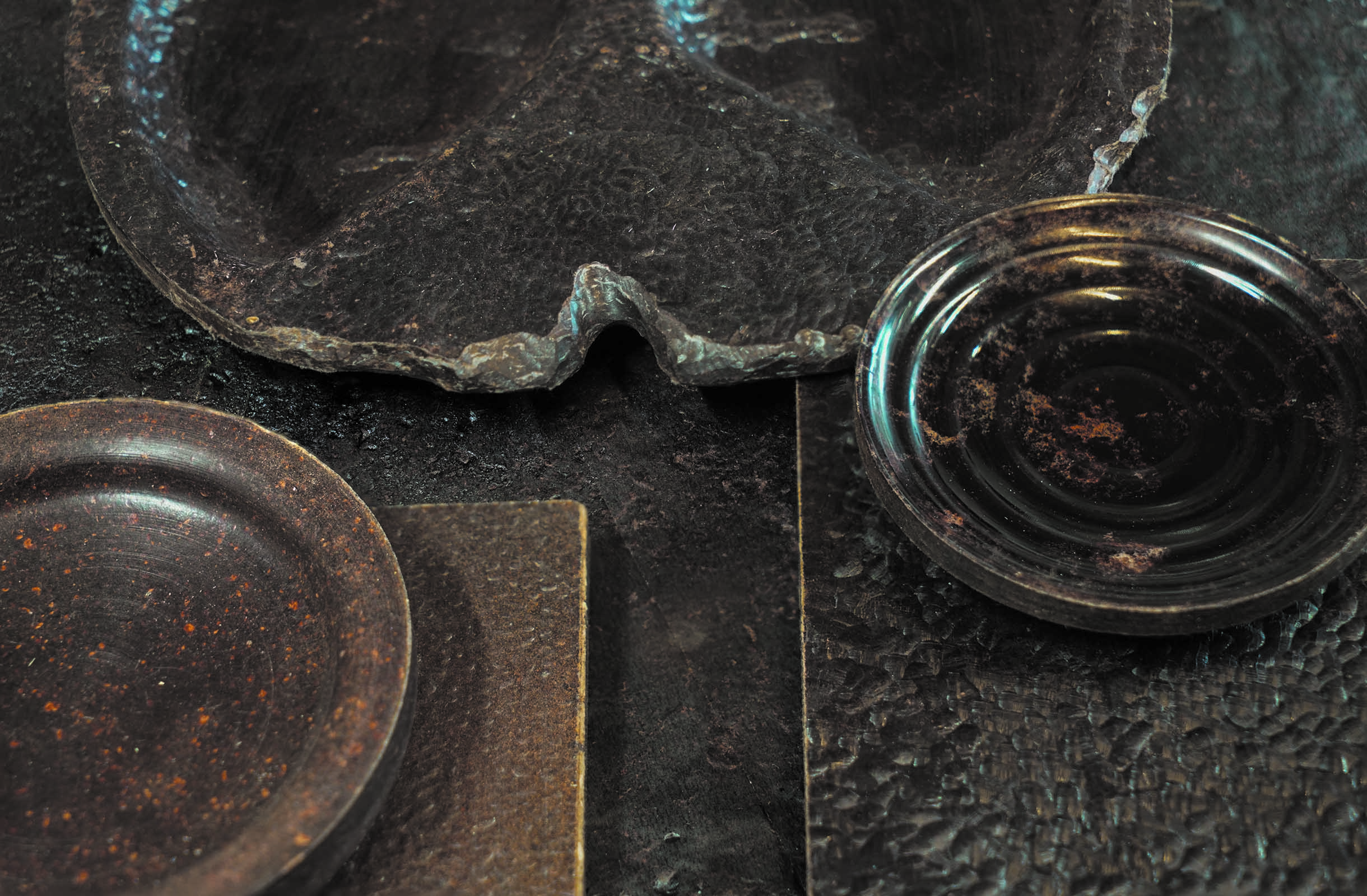
Lignin tableware fragment
Basse Stittgen
Cellulose and lignin are the two most abundant organic polymers on earth. While one is used excessively, the other stays largely unexplored, remaining an underutilized by-product. We use it to bind sunflower mulch, a by-product of the natural oil industry, bonding two leftovers in a piece of value.
Concept: Basse Stittgen
Material: Pine lignin, cellulose & buckwheat starch
Production: Basse Stittgen
Cellulose and lignin are the two most common organic polymers on earth. While one is applied abundantly, the other remains largely unexplored and an underutilised by-product. Basse Stittgen uses it to bind buckwheat mulch, binding two scraps into one piece of value. With this, he made table objects for the exhibition with a clear reference to the two most traditional and abundant resources of Ukraine - grain and forest.
Next to that, a soundscape resonates from membranes made from lignin and cellulose that evoke the organic nature of the material and situate it in a dialogue with its industrial processing.
By
Basse Stittgen (Germany, based in the Netherlands)Hosted by
Stichting Art-East+Art-West & NARADA Foundation[email protected]
Visit website
About Basse Stittgen (Germany, based in the Netherlands)
Cellulose and lignin are the two most abundant organic polymers on earth. While one is used excessively, the other stays largely unexplored, remaining an underutilized by-product. We use it to bind sunflower mulch, a by-product of the natural oil industry, bonding two leftovers in a piece of value.
Colofon
Home(Land) is a co-production of Stichting Art-East + Art-West and Narada Foundation curated by Dasha Tsapenko and Nazar Gresko.