17-25 October 2026

The Purhyphae project

Use of mycelium for the biodegradation of textile waste and exploration of a repurposition into a composite flexible material.

Hosted by Annah-Ololade Sangosanya

This project is now archived and was part of DDW22

This project is part of
Green Future Club
→
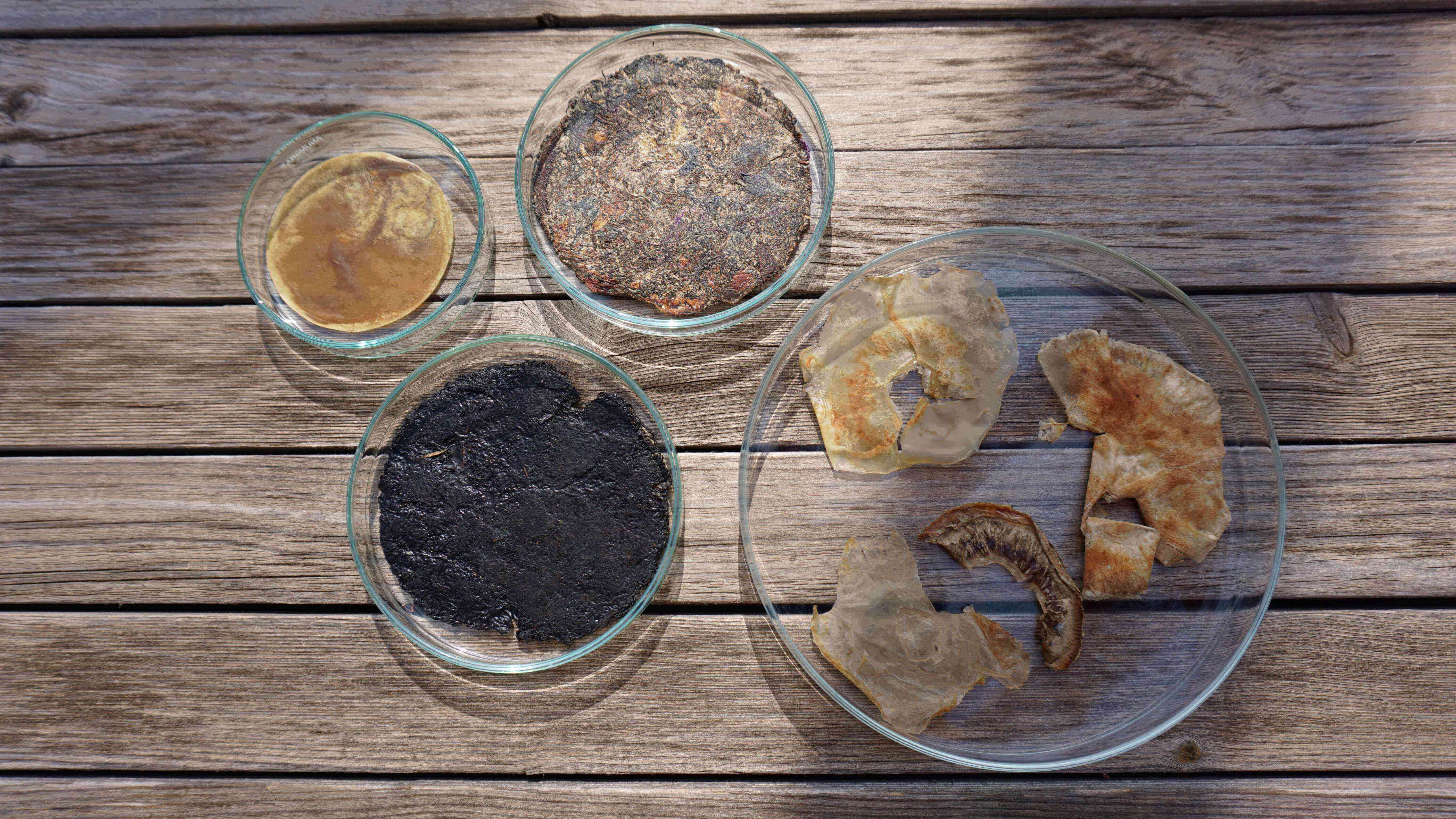
Pure and composite flexible mycelium materials.
Annah-Ololade Sangosanya
Can we use our textile waste as a raw material for the growth of fungus? Fungi are incredible species capable of feeding on various (toxic) substrates. Fungal mycelium was put to grow on mixes of textile and food waste, colonized the substrate and partially digested it.
Context

The fashion industry produces over 100 billion garments per year, of which 60% are plastic based and 85% will end up in a dump before the end of the year. Considering that various micro and macro-organisms, such as fungi and more specifically their mycelium, are capable of biodegrading the main components of textile (cellulose and more complex plastic molecules) an opportunity to rethink the linearity of the textile industry emerges. Beyond breaking down the waste products, the mycelium hyphae network can produce mycelium-based materials, including leather-like materials, adoptable in the fashion industry.

Research

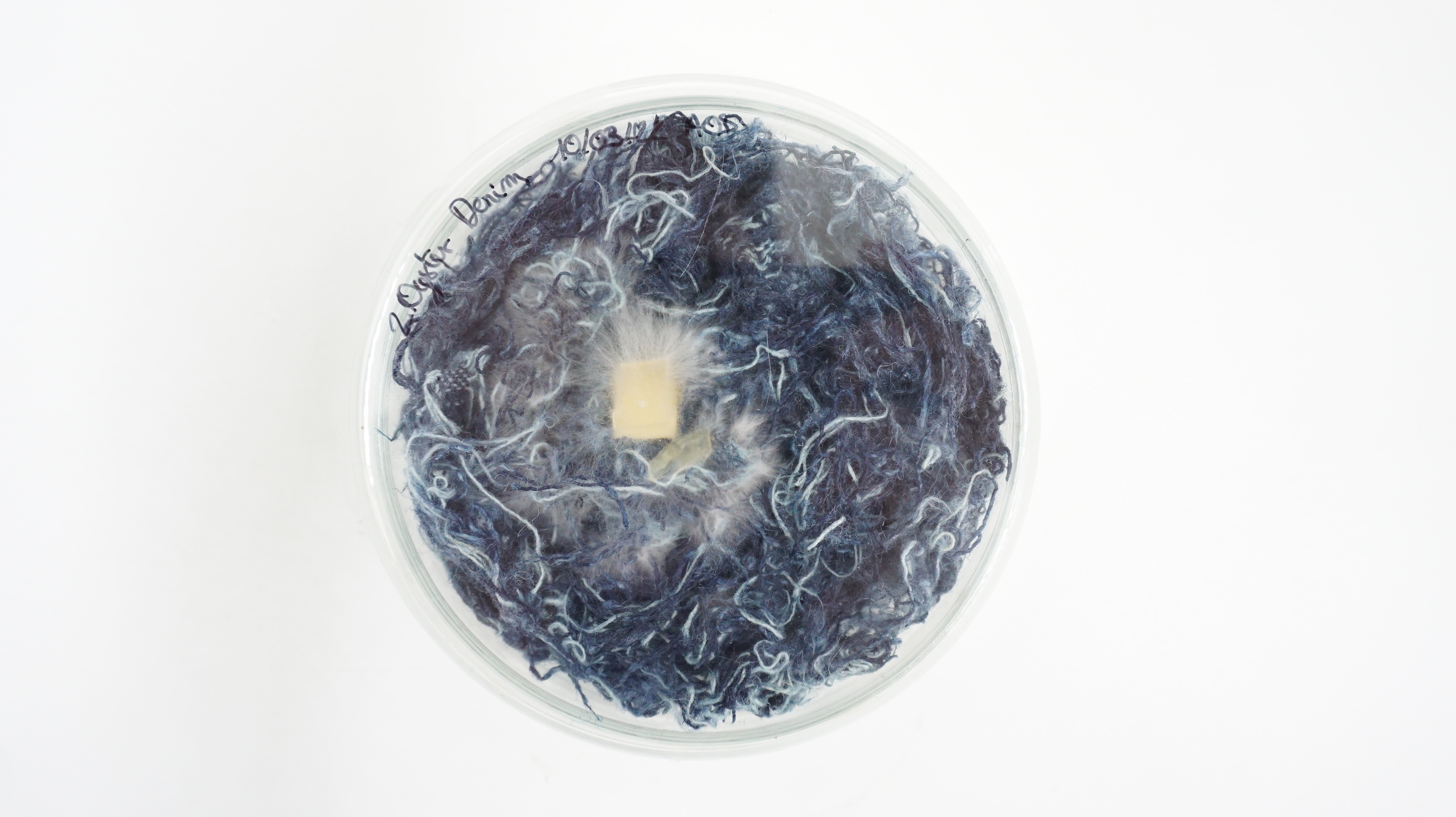
This project investigates ways to biodegrade various combinations of denim textile waste, synthetic textile waste, food waste and spent coffee grounds. The mycelium used was from the Pleurotus ostreatus (oyster) fungi. The results show that P. ostreatus (oyster) mycelium grows on all the combinations of food waste (vegetable peels and coffee grounds) with textile waste (synthetic textile and denim textile), and even grows on denim textile waste only. However, the mycelium did not entirely degrade the fibers but only partially digested it, leading to a leather-like composite made of the mycelium and remainder of its substrate. Provided the soft nature of the substrate, the textile waste and food waste mycelium composite is also malleable, and therefore interesting for further textile applications. A protocol for post processing of the flexible composite material using low energy and natural components (heat, water, glycerol, and beeswax) was created to make a composite flexible fungal material. The whole process thus enables a circular way of treating textiles by closing the loop of the current linear model.
P. ostreatus mycelium growing on denim waste
Annah-Ololade Sangosanya
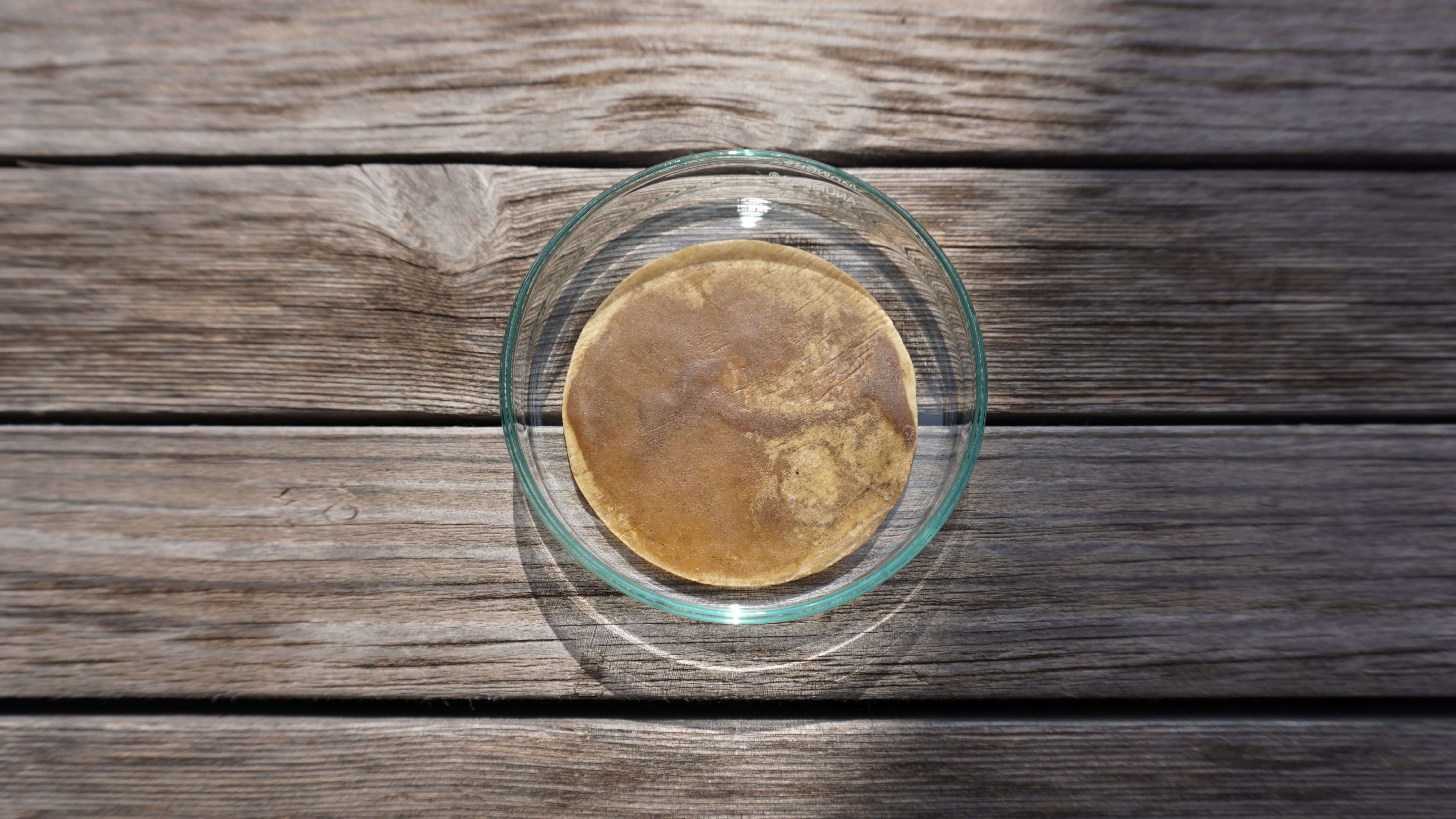
Pure mycelium leather (Reishi mycelium)
Annah-Ololade Sangosanya
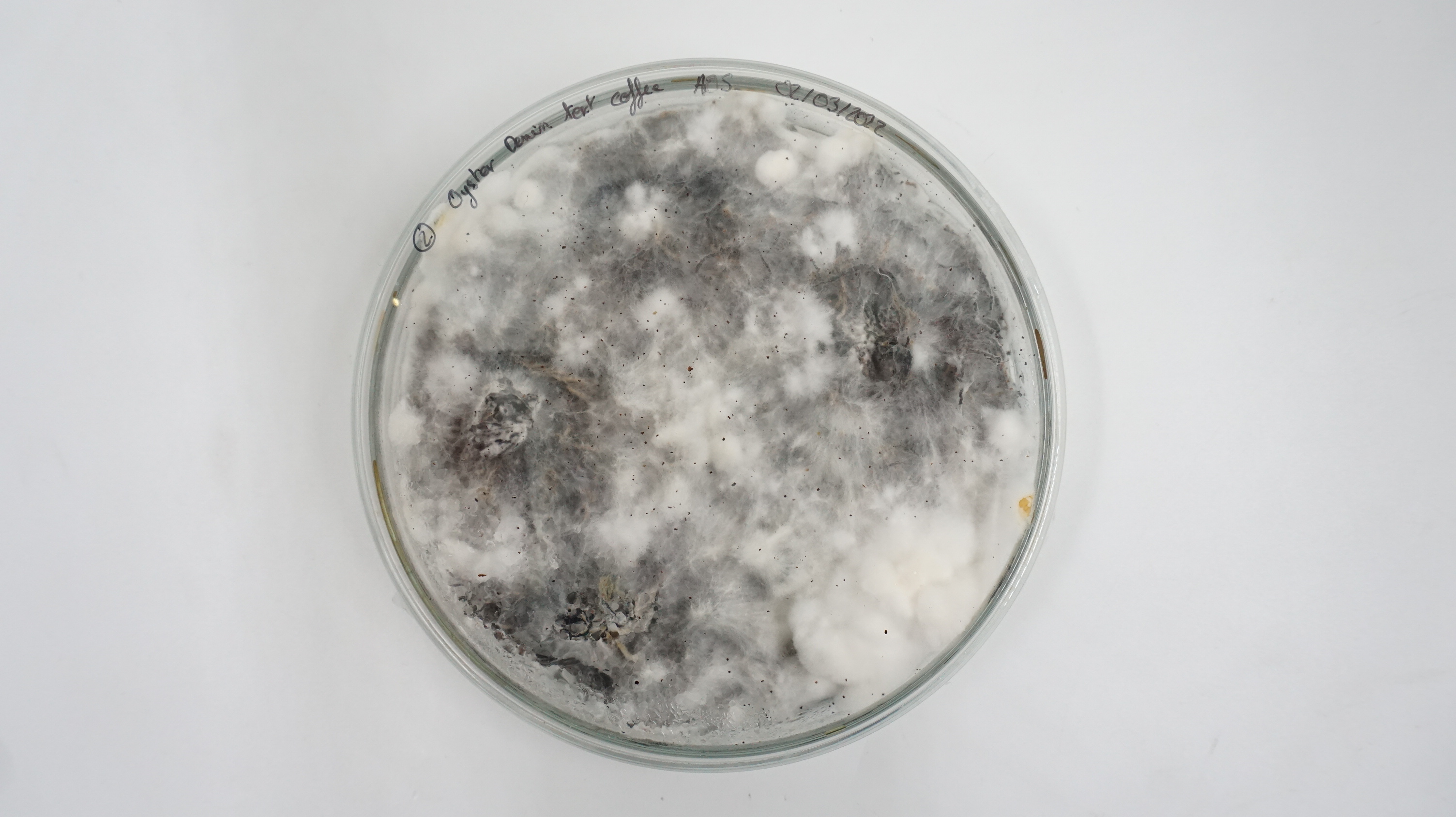
P. ostreatus mycelium on denim and coffee waste

By

Annah-Ololade Sangosanya

Hosted by

Green Future Club
[email protected]
+33612717929
Visit website
Download press kit

About Annah-Ololade Sangosanya

Textile waste is used as a raw material for the growth of fungus! Mycelium was grown on a mix of textile (natural and synthetic) and coffee waste, which colonized the substrate and partially digested it. The remaining undigested textile fibers act as a reinforcement.

Colofon

Researcher and desginer Annah-Ololade Sangosanya

Partners

Sponsored by The Purhyphae project