Process
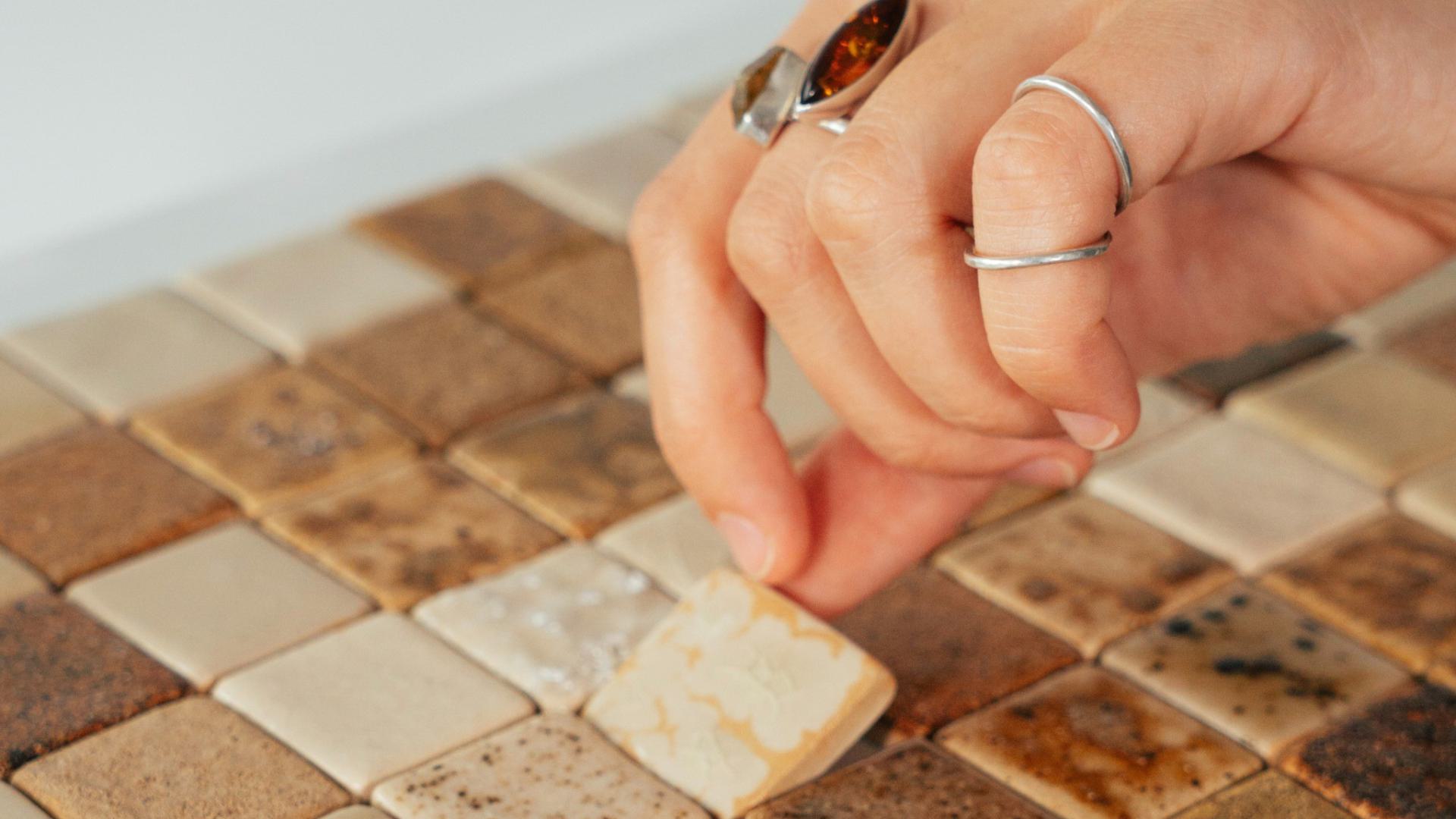
The goal of this project was to make a range of ceramic glaze test tiles, using as much foraged material as possible. Materials like wild clay, plant ash, and sea shells were gathered in the Netherlands and processed to create glazes. The glaze test tiles document how the materials behave when fired in a microwave and a ceramic kiln in various combinations and concentrations. While foraging for materials and processing them, it was important to reflect on the impressions of and impacts on the environment where the process took place through diary entries and annotated photographs.
By engaging with environments where materials originate, one is confronted with the impacts that using these materials have on the environment. To minimise the impact of gathering, principles of reflective self-limitation and looking for materials whose removal could have a positive impact were used to direct the foraging activities.
Using foraging as a method for material gathering gives designers a new relationship with production as a whole due to the connectedness with their local environments and the impact one has on it while gathering.