Plant laboratory
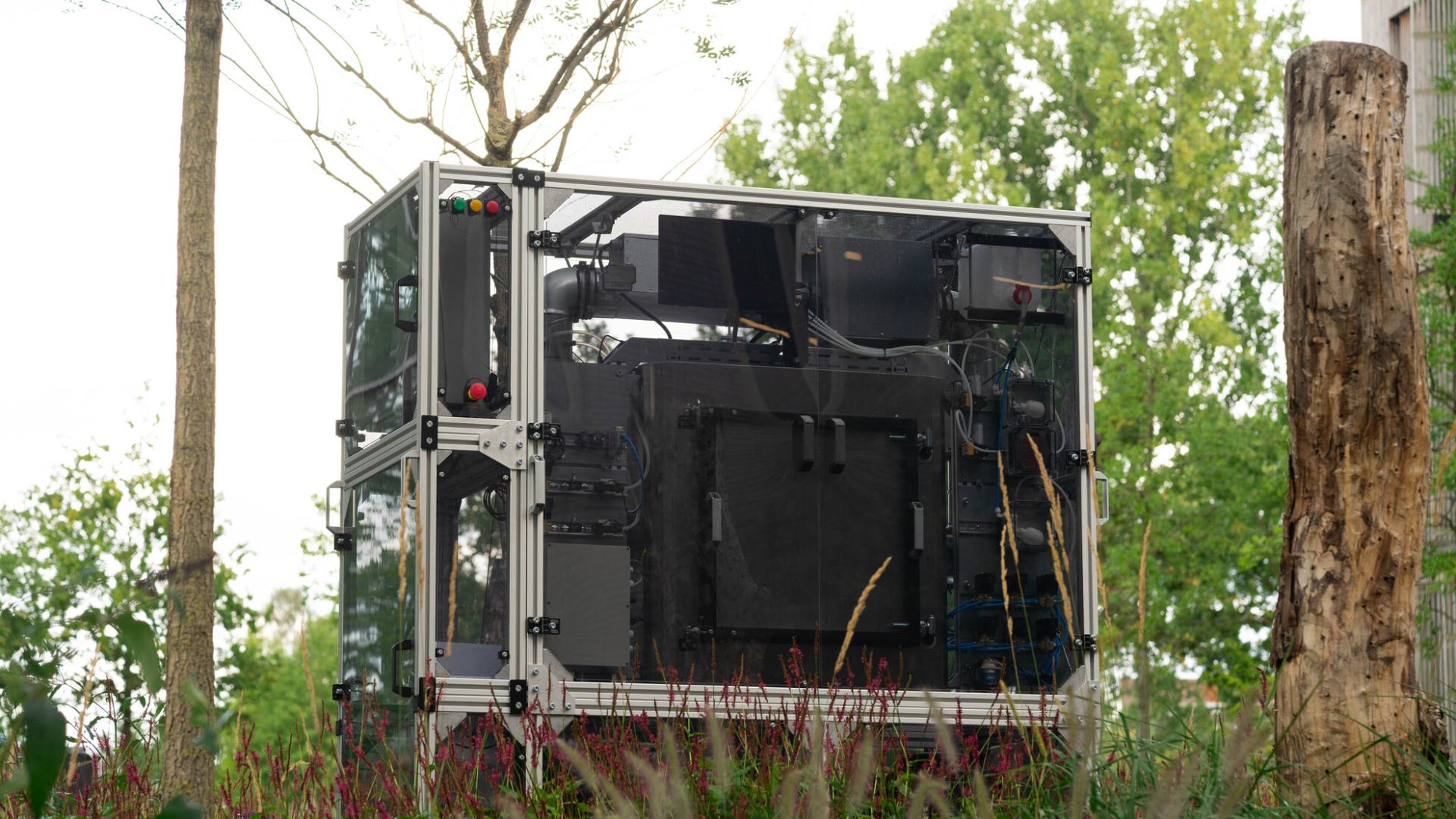
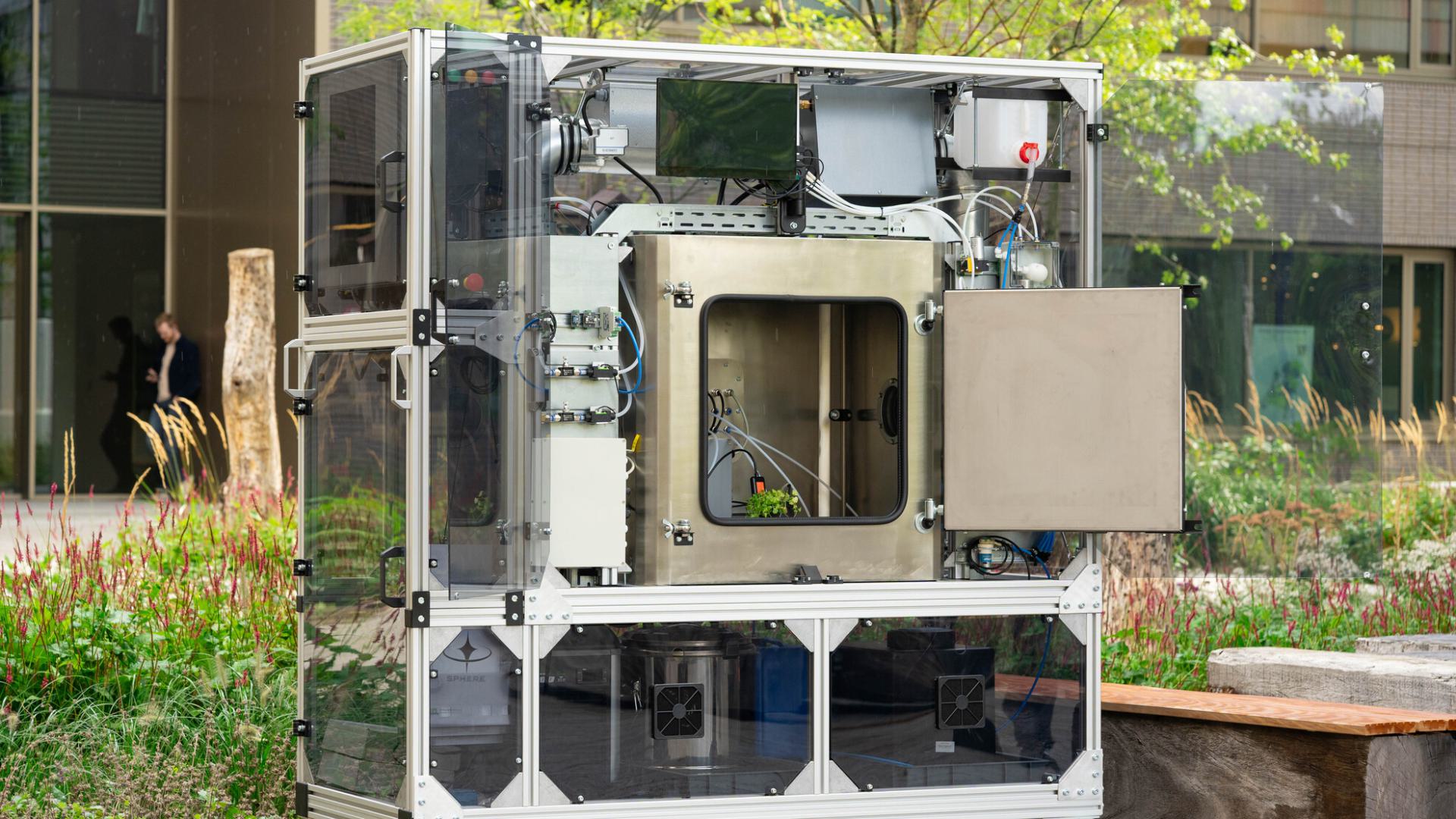
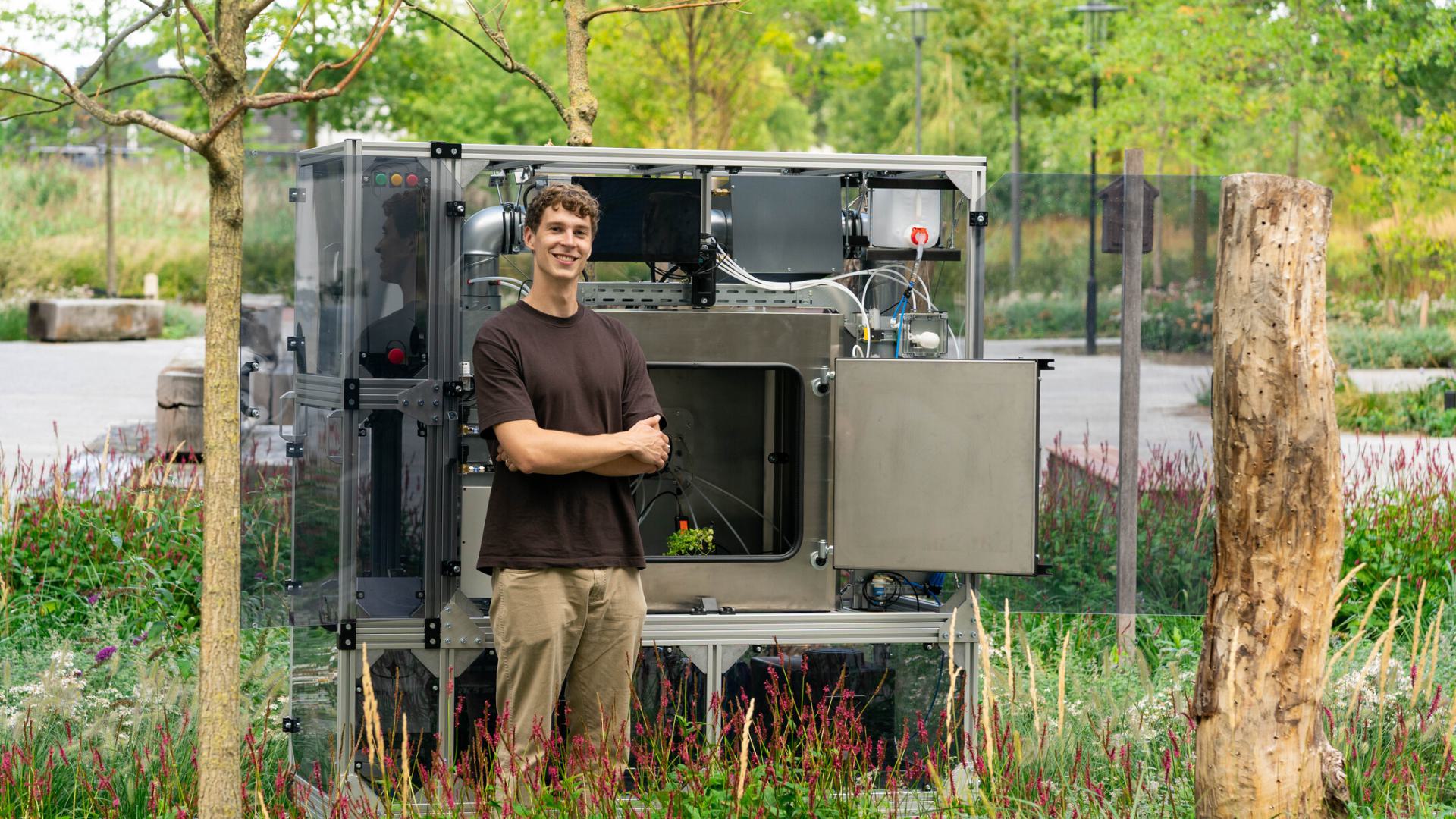
Conventional plant research is performed in open systems, where plants and soil are exposed to the earth’s atmosphere. This acts as a large buffer, making it difficult to calculate exactly how much CO2, water, and nutrients a plant takes up, or how much oxygen and water vapour it produces. In contrast, S.P.H.E.R.E. contains a fully enclosed and airtight plant growth chamber, inside which the environment is highly controlled and precisely monitored. It can be seen as a ‘plant laboratory’, where each relevant element can be individually controlled and inspected. The goal is to enable exploration into how crops can grow autonomously, efficiently, and circularly. The design is based on a simple principle: everything entering and exiting the system should be controlled, measured. and, wherever possible, reused. The system has been modularly designed to support research with numerous crops, soil substrates, and environmental conditions.
Global food production has a major effect on our planet, in more ways than most of us realise. Efficiency gains of single percentage points can therefore make a significant difference. Working on a system to produce food in space might seem like a strange way to improve agriculture on Earth, but knowledge from earlier space missions has been finding its way into farming practices for decades. While S.P.H.E.R.E. will not grow enough food to feed anyone, it can produce experiments and data. It offers students and researchers a new environment to perform research. Who knows: the insights that follow could prove valuable both far beyond our planet as well as much closer to home.