Unwanted Wind
"When it's windy, I don't come up here."
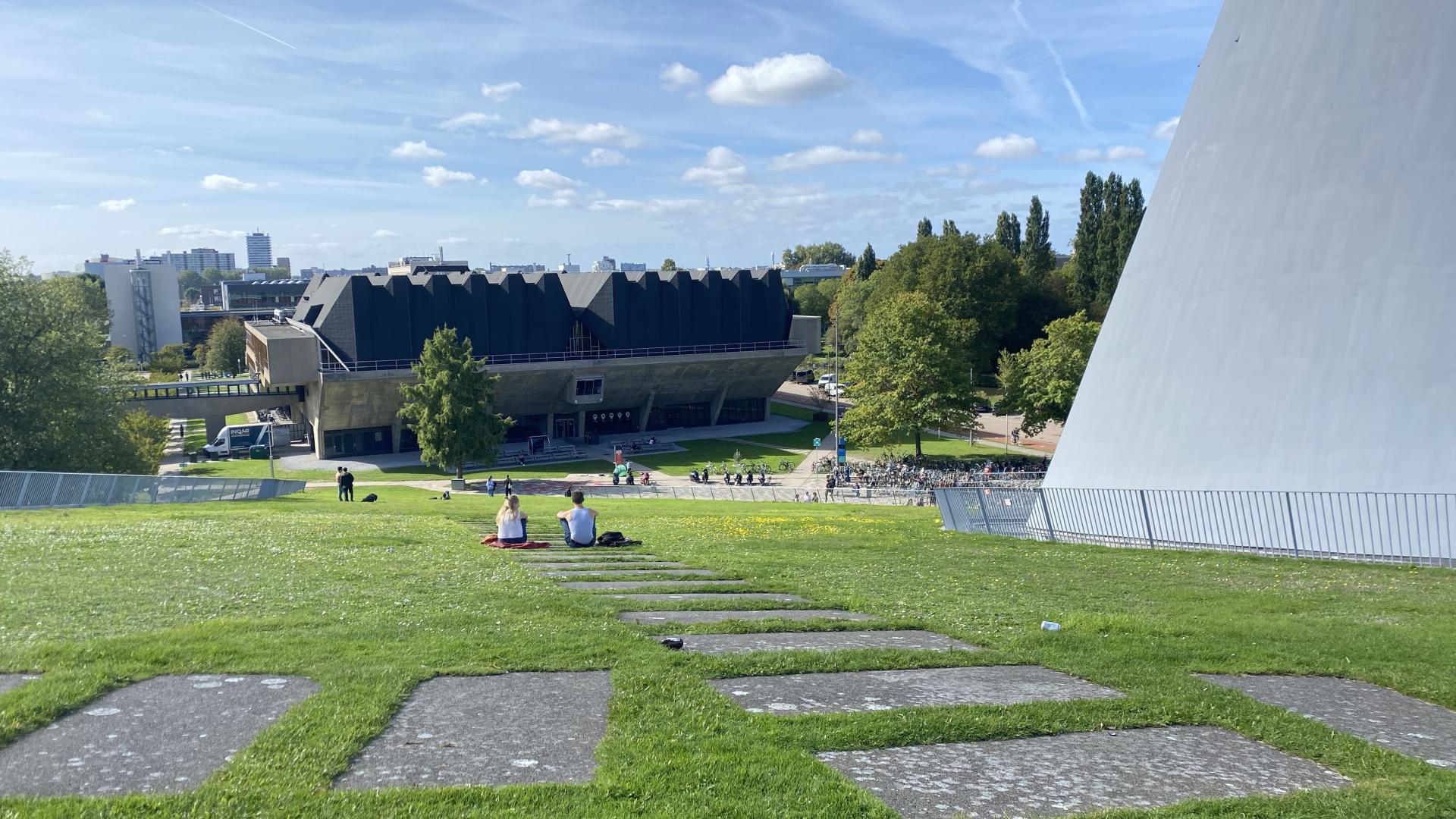
This is what visitors said on the rooftop of the TU Delft Library, a place meant for taking a break, yet one that many of them avoid. Interviews and observation showed that wind can make the rooftop feel less inviting, even though it is simply part of everyday life in the Netherlands. Hence the question behind Fledgling: instead of hiding from the wind, how can it become an enjoyable experience, even for people who don't like it?
Designing Flight
It started with watching people climb the rooftop: the higher they went, the stronger the wind felt. Next came wind toys. Bubbles were fun, but a foam glider simply blew away. The kite was different. It fought the wind, frustrated people, but fascinated them too. The struggle was part of the fun. So what if we could become the kite?
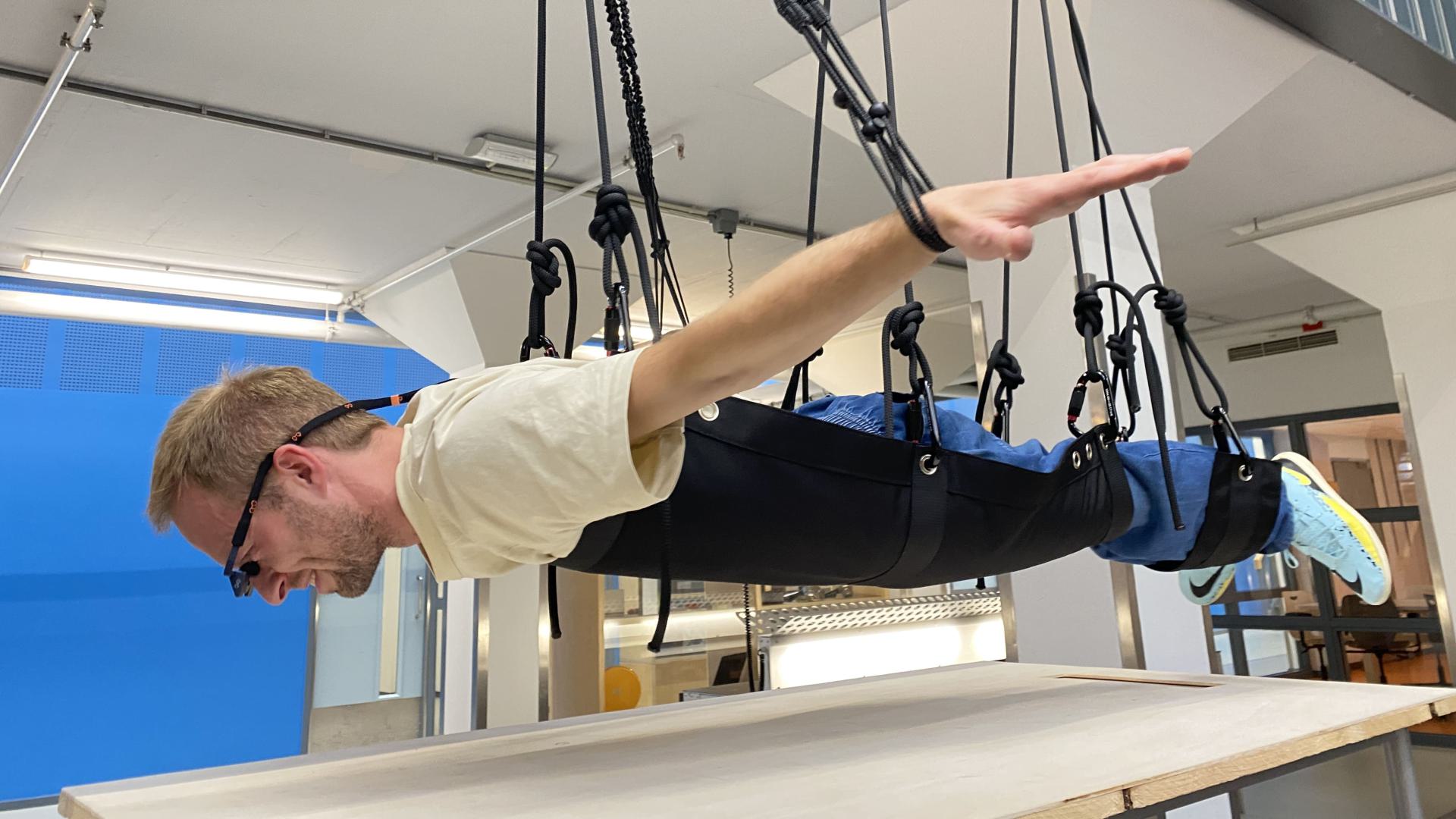
The designer's own flight at an indoor skydiving centre showed how the body could catch the air and be lifted. In a separate test, people were asked to draw themselves flying, and every drawing showed a body lying flat.
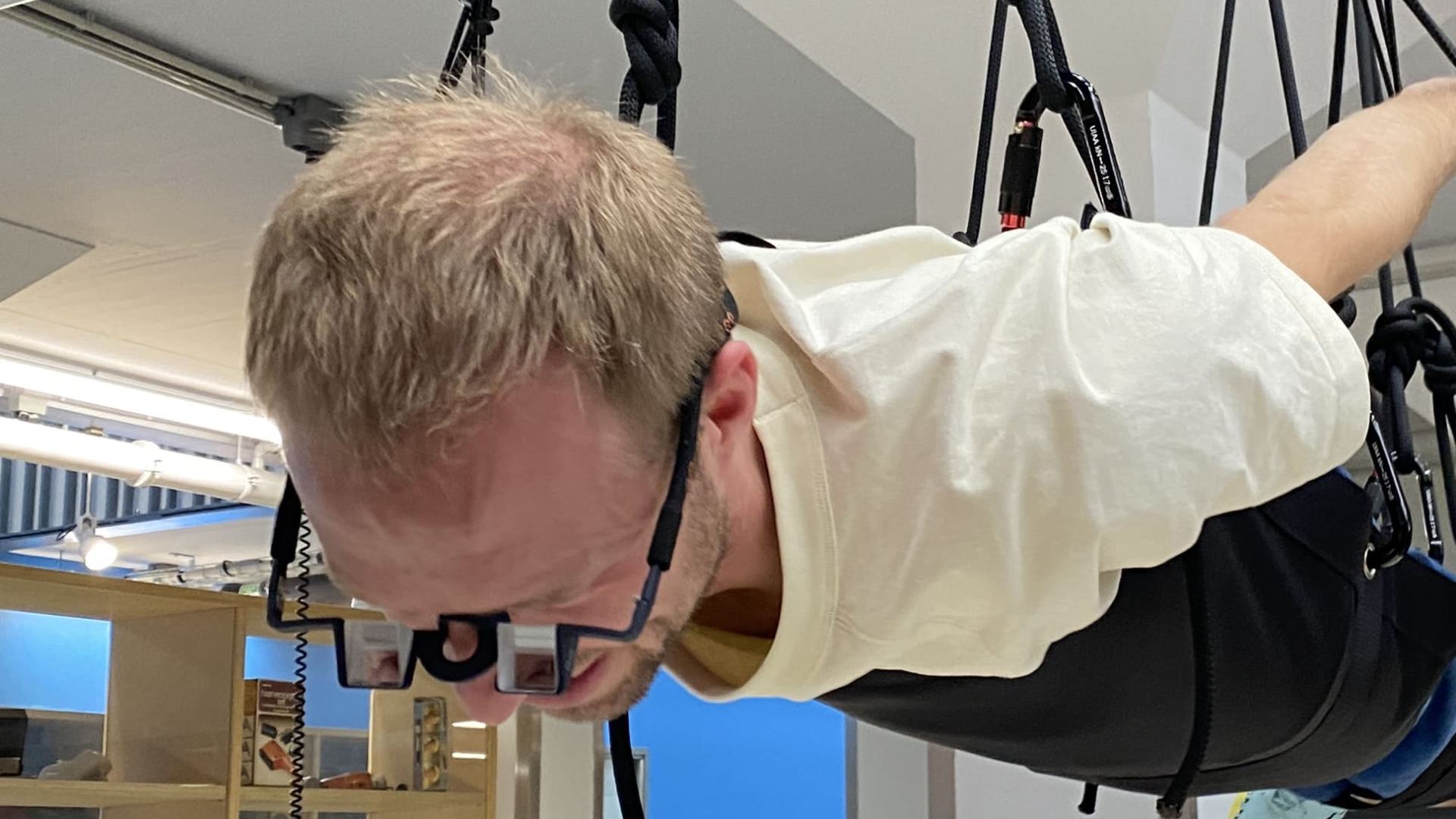
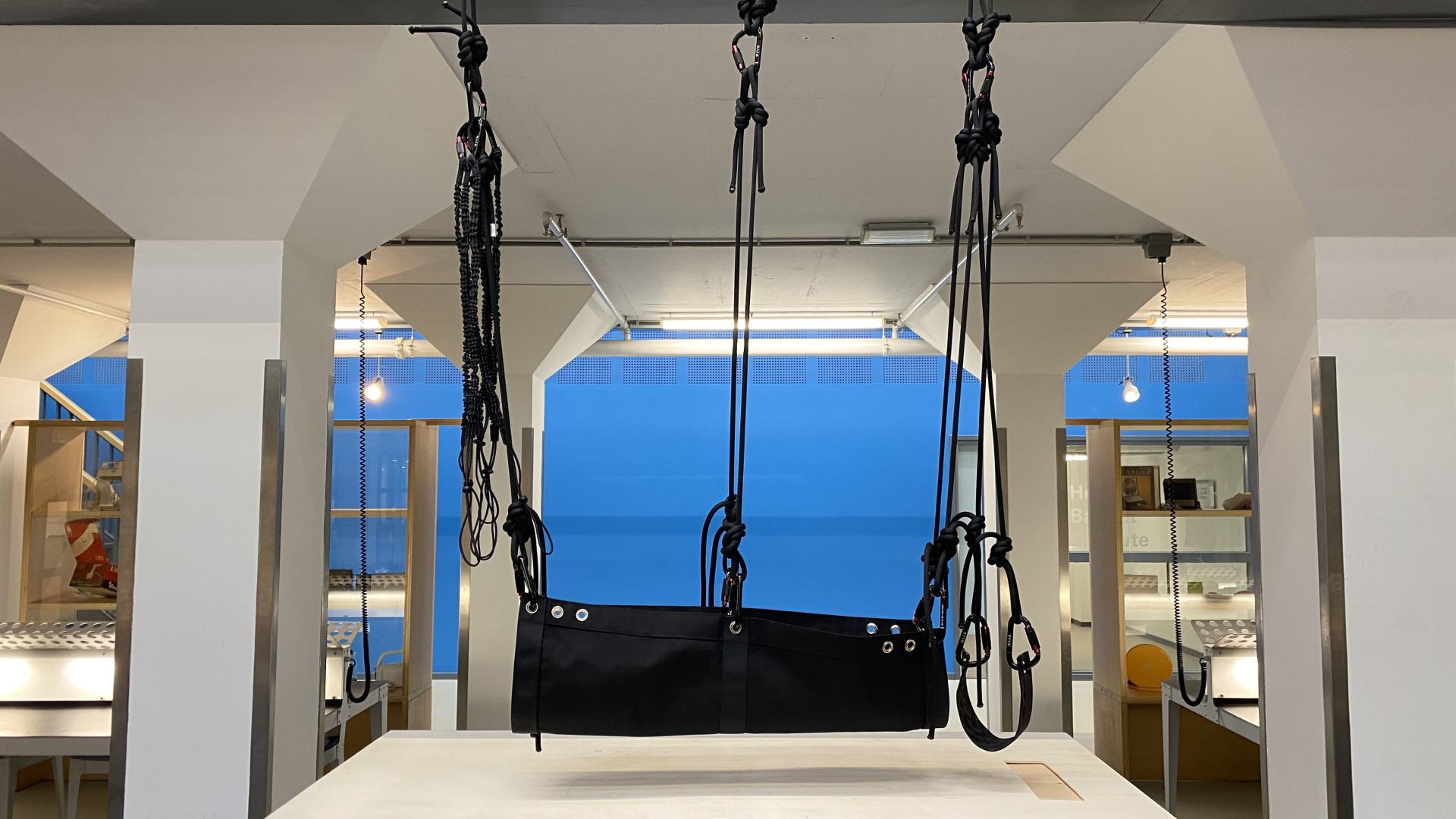
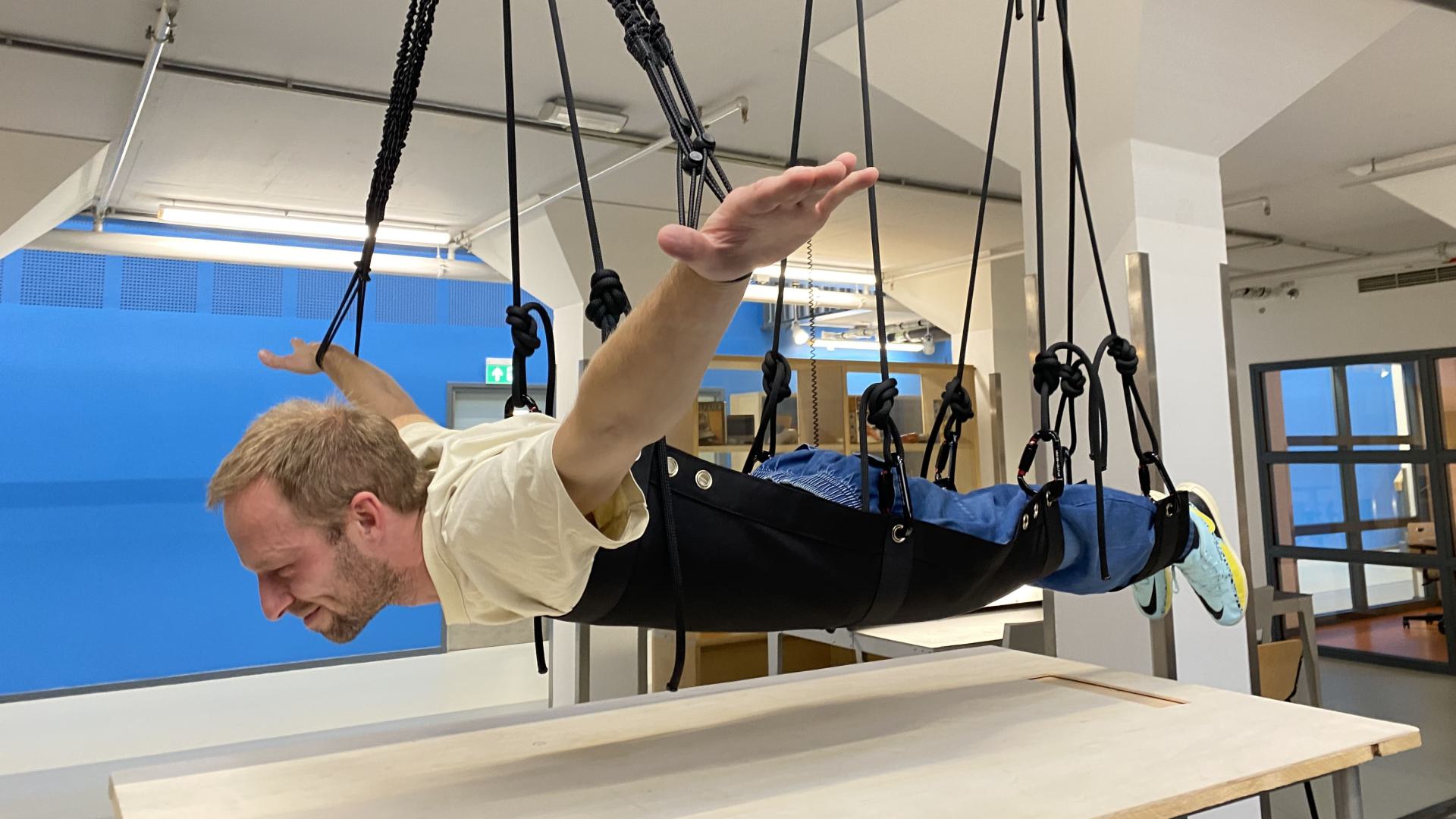
Two prototypes followed, each refining how the body could be held. The first used a wooden frame and harness; the second moved to a hammock-like sling that supports the whole body, with elastic cords that let the arms float. In the final test, people flew with mirror glasses that filled their view with sky, or with an eye mask that left only the wind and the body. The sky brought excitement; the mask set the imagination free and left people liking the wind a little more.
Real Flight
Unlike VR, Fledgling does not simulate flight. The sky reflected in the mirror glasses is the real sky, and the wind on your skin is the real wind. On the rooftop, the strong and changing gusts, the height, and the open view all become part of the flight.
Fledgling does not design the wind. It designs the way you meet it. See the sky, or put on the eye mask and let the wind and your body take over. Instead of hiding from the wind, Fledgling invites you to fly with it.