Grown through Fermentation
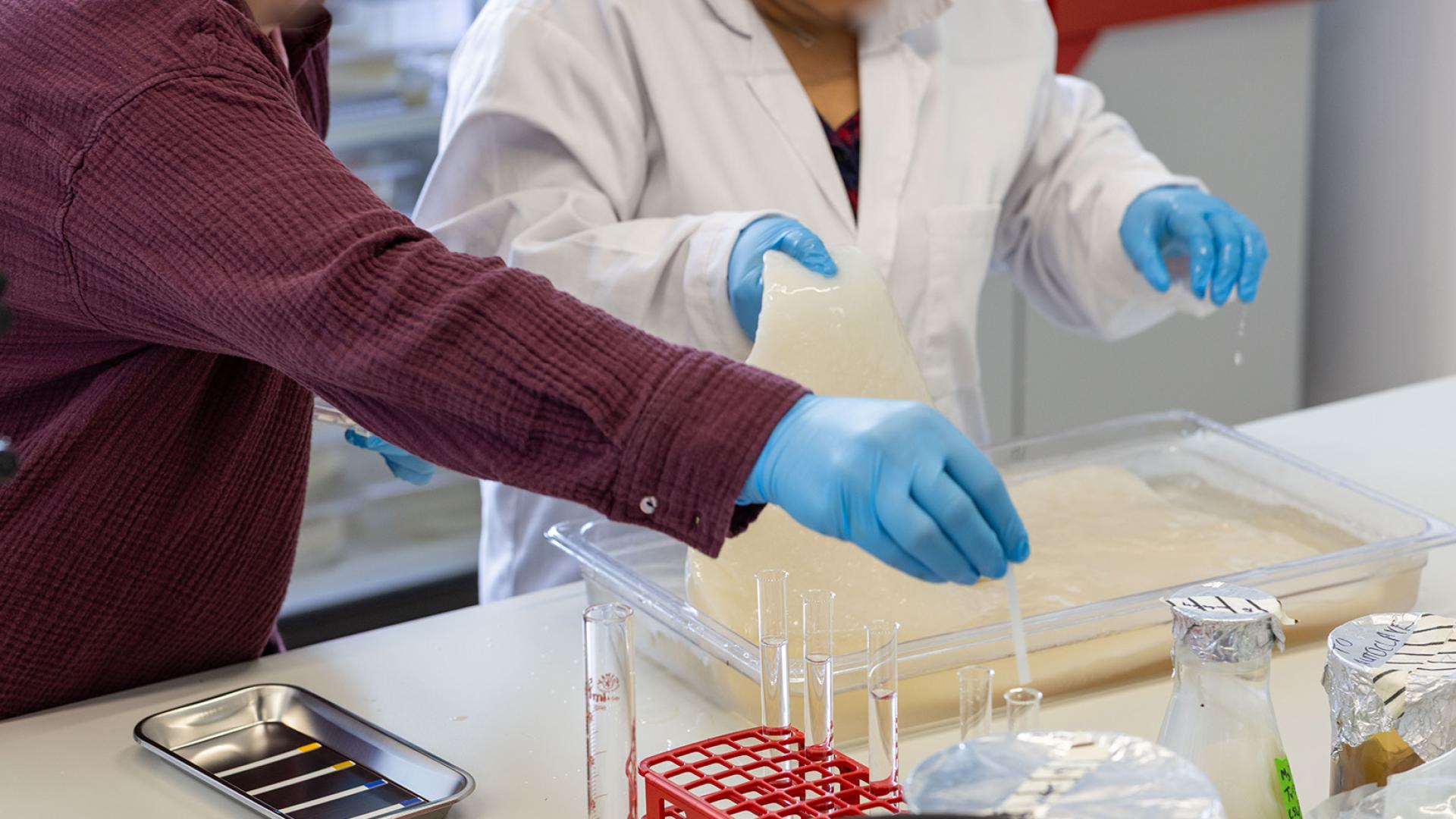
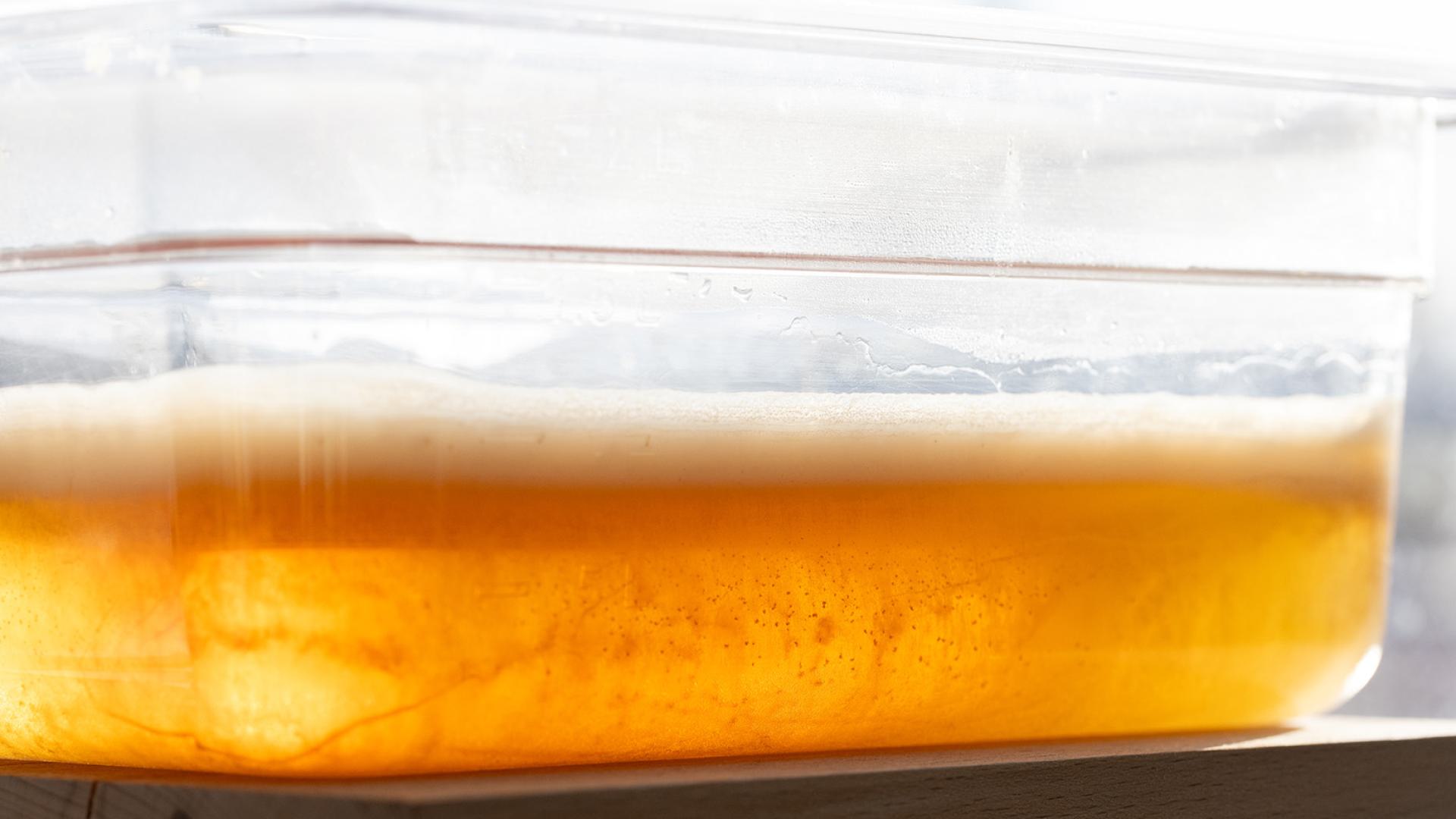
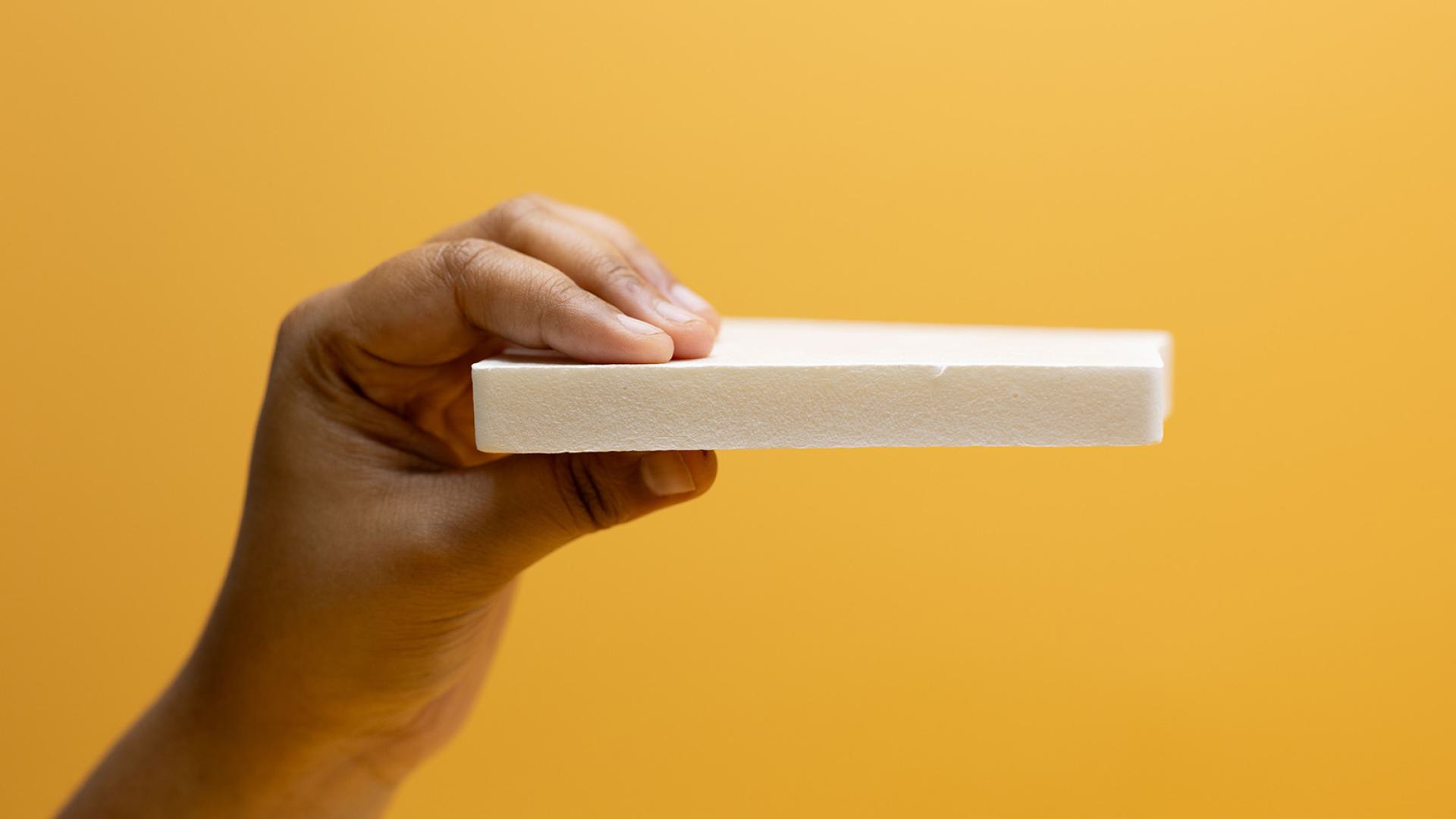
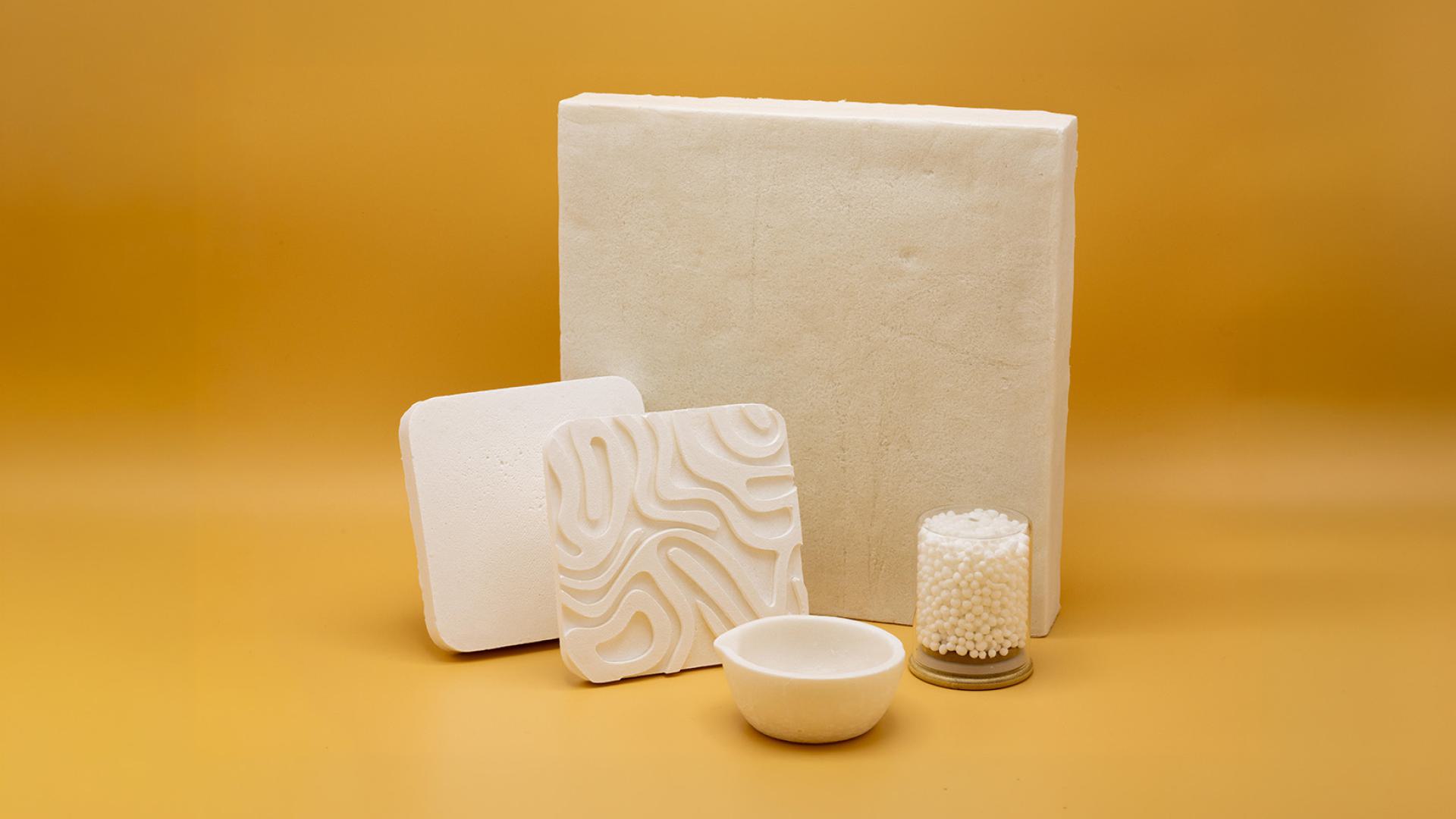
Unlike plant cellulose harvested from trees, we grow bio-nanocellulose naturally, with the help of microorganisms through fermentation. Just like beer! Bio-nanocellulose forms an ultra-pure, dense network of nano-fibers. It does not require trees, land clearing, or harsh chemical extraction. Thanks to its highly porous, nanofibrillar structure, our foam feels nearly weightless, while still delivering strength and durability. When its lifecycle ends, it fully biodegrades, returning to nature as clean organic nutrients.
Limitless Design Possibilities
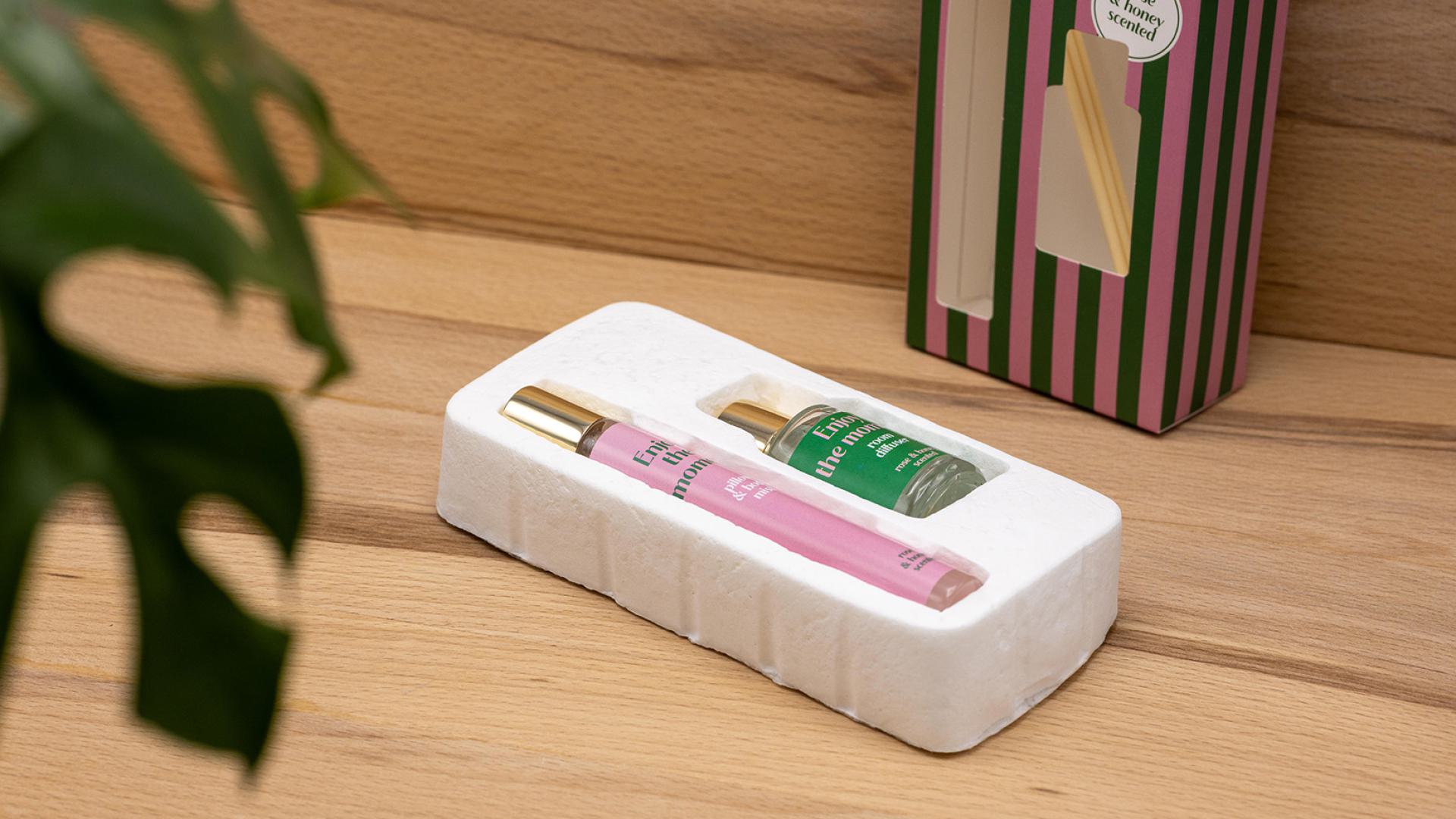
By pairing biological precision with biofabrication, we can shape and tune our bio-nanocellulose foams without relying on synthetic binders. The material is naturally pristine white, providing a clean canvas for natural bio-dyes, rich textures, and expressive geometric patterns. Whether engineered into ultra-light acoustic padding, molded objects, or advanced insulation, our process turns biological precision into tangible design, proving that sustainable materials can match or exceed fossil-based plastics in function, aesthetic qualities, and versatility.
From Start Up to Scale up
What began as a pioneering research initiative at the Faculty of Industrial Design Engineering, TU Delft, has quickly grown into a transformative material startup. Born out of the academic rigor of Prof. Elvin Karana’s bio-design work alongside co-founder Jeroen van Rotterdam, Foamlab is taking its next decisive step forward. Moving beyond our Delft roots, we are establishing a new pilot factory in Bleiswijk to scale production toward our first commercial product by 2028. This expansion bridges the gap between laboratory innovation and industrial reality, bringing circular bio-materials to market at true scale.