Possibility, not prediction
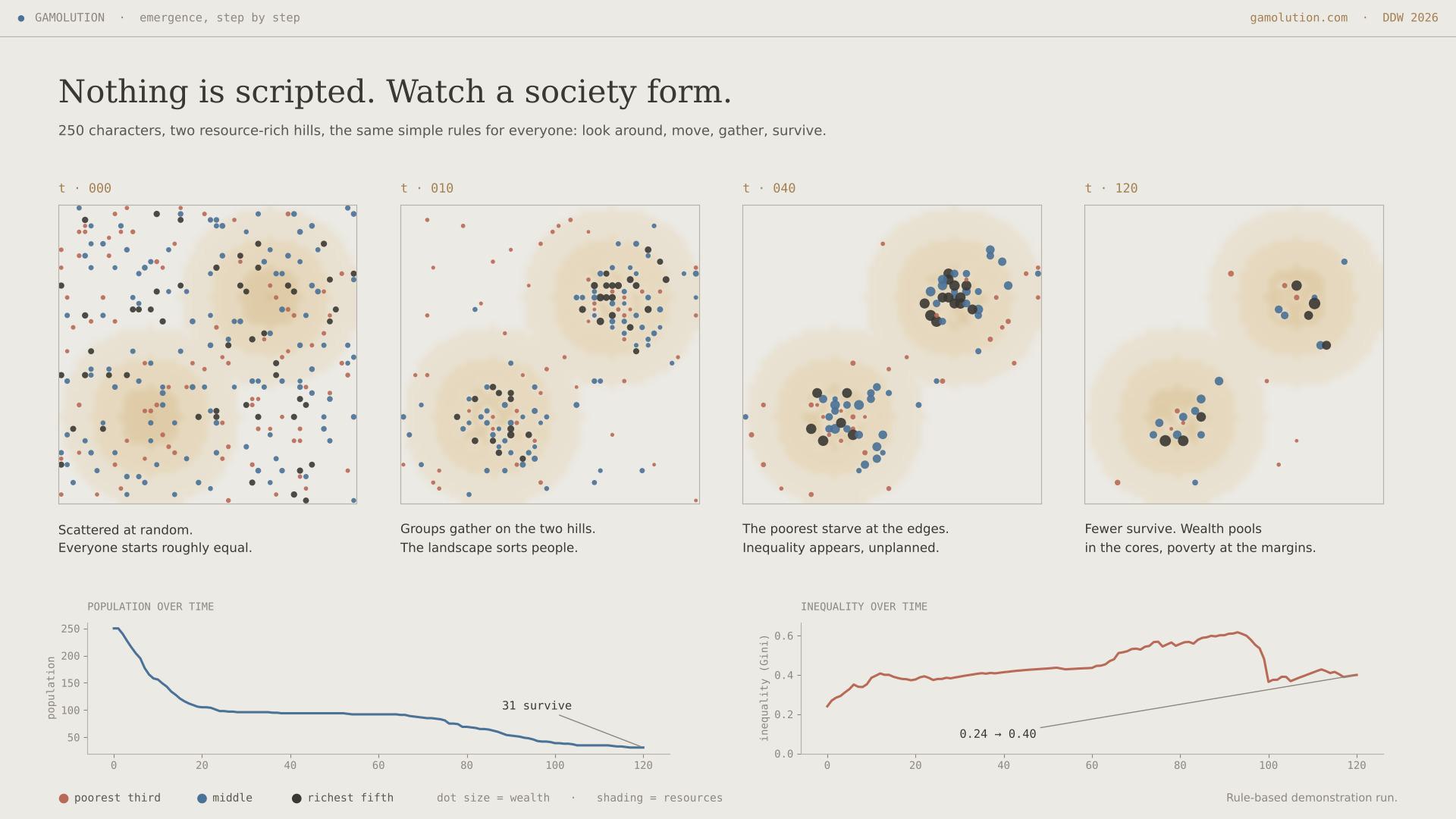
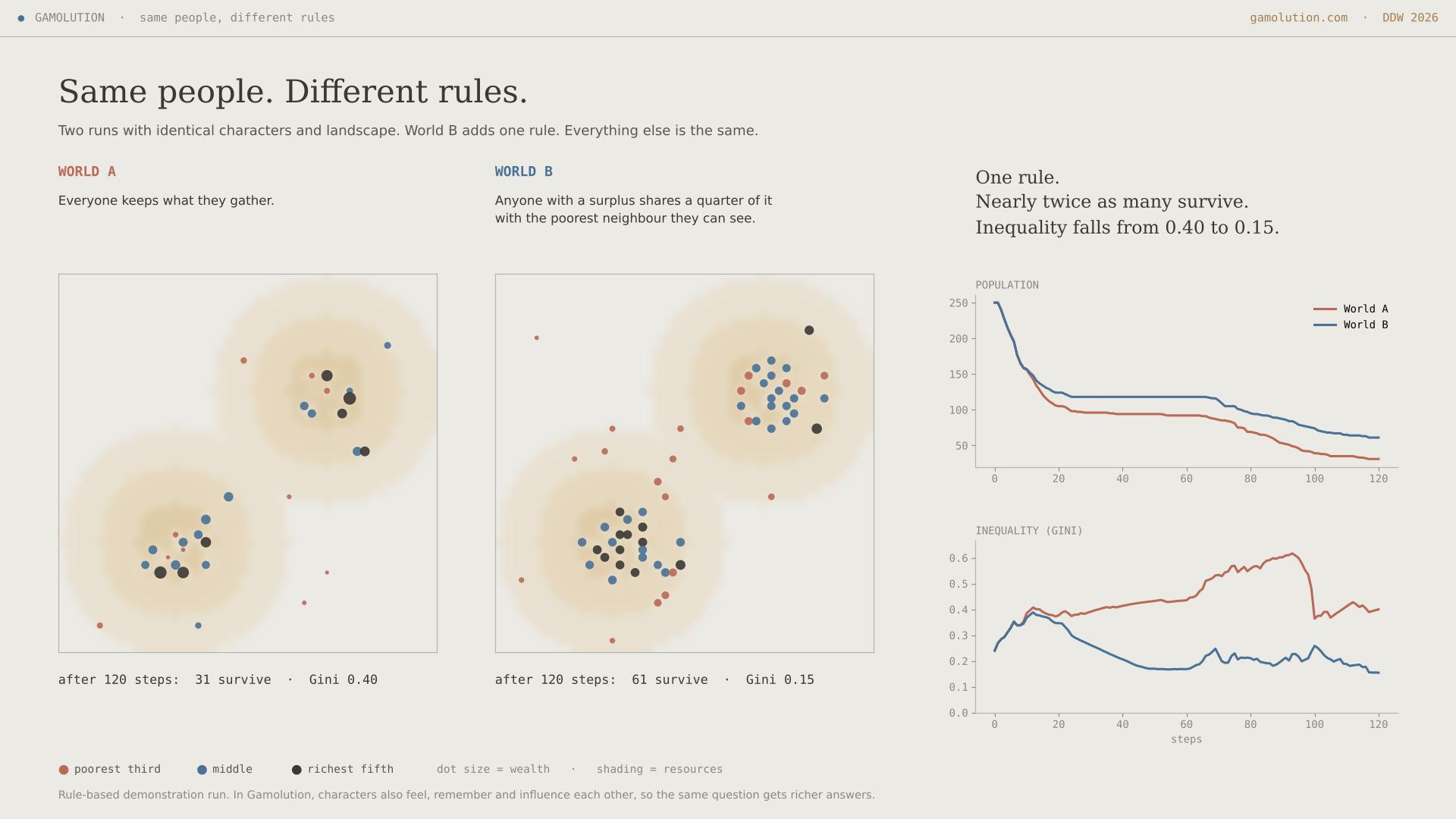
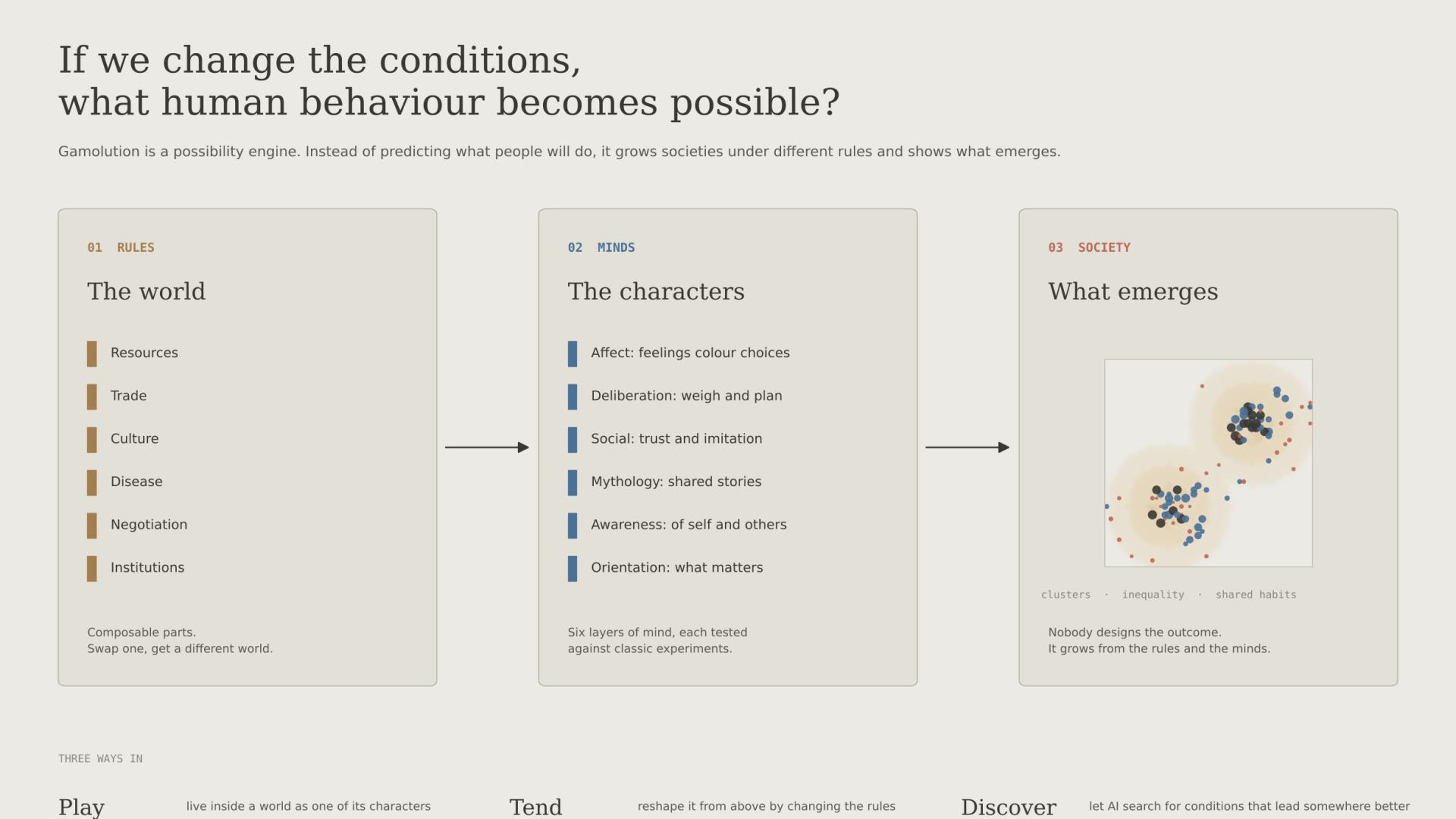
Every big debate in society, from how we raise children to how we run cities, share wealth or care for one another, is argued with intuition. We hold a few variables in our heads and argue, without seeing the second- and third-order effects of what we propose. Most AI simulation tools today predict what people will do under current conditions. Gamolution asks a different question: if we change the conditions, what human behaviour becomes possible? It is a possibility engine. Change the rules of a world and watch AI characters grow different habits, cultures and futures, not because anyone told them to, but because the system shaped them differently. It rests on a simple insight from simulation science: small individual rules produce large, surprising collective outcomes. Gamolution makes that visible, and playable.
Human-like minds
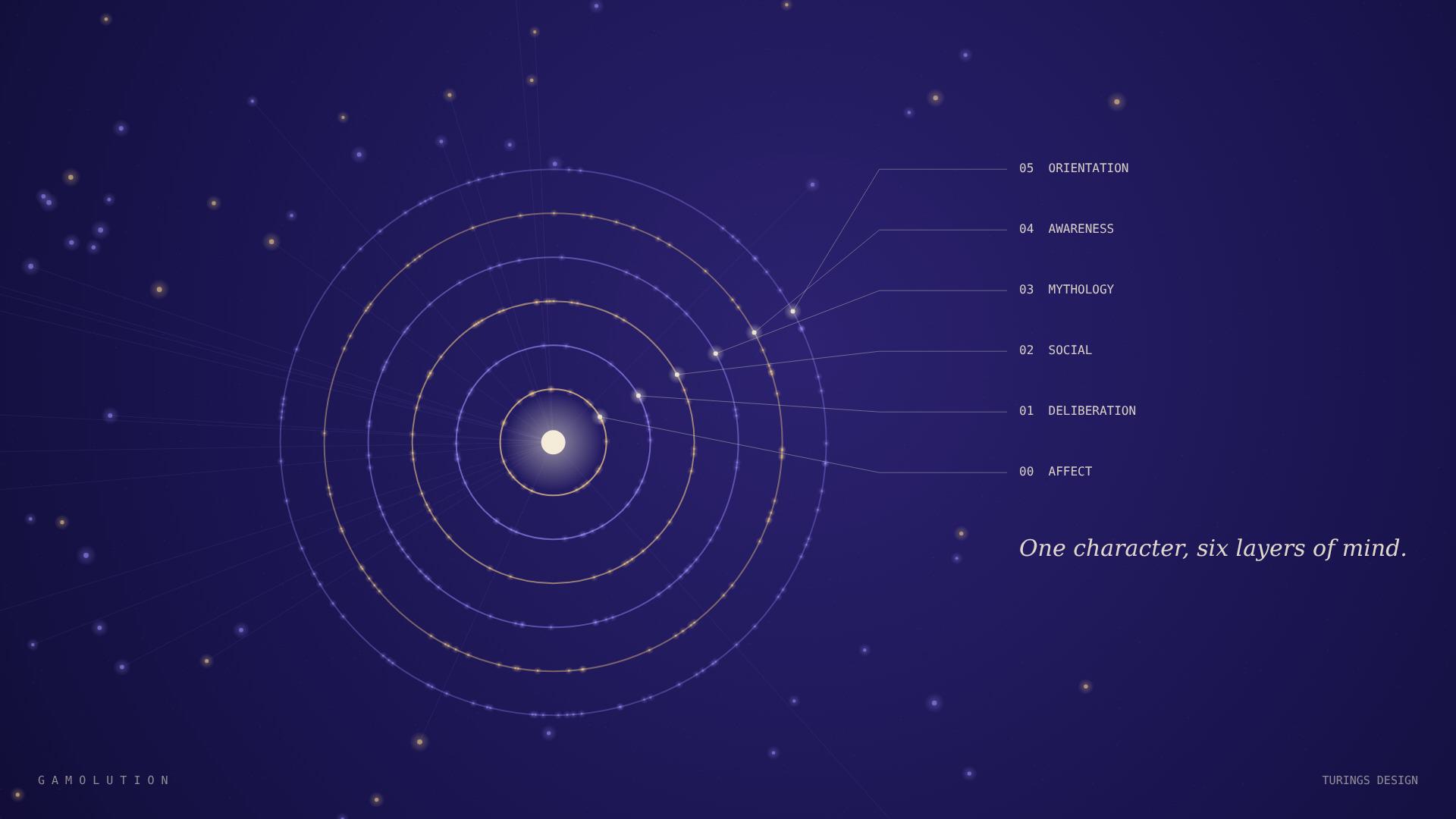
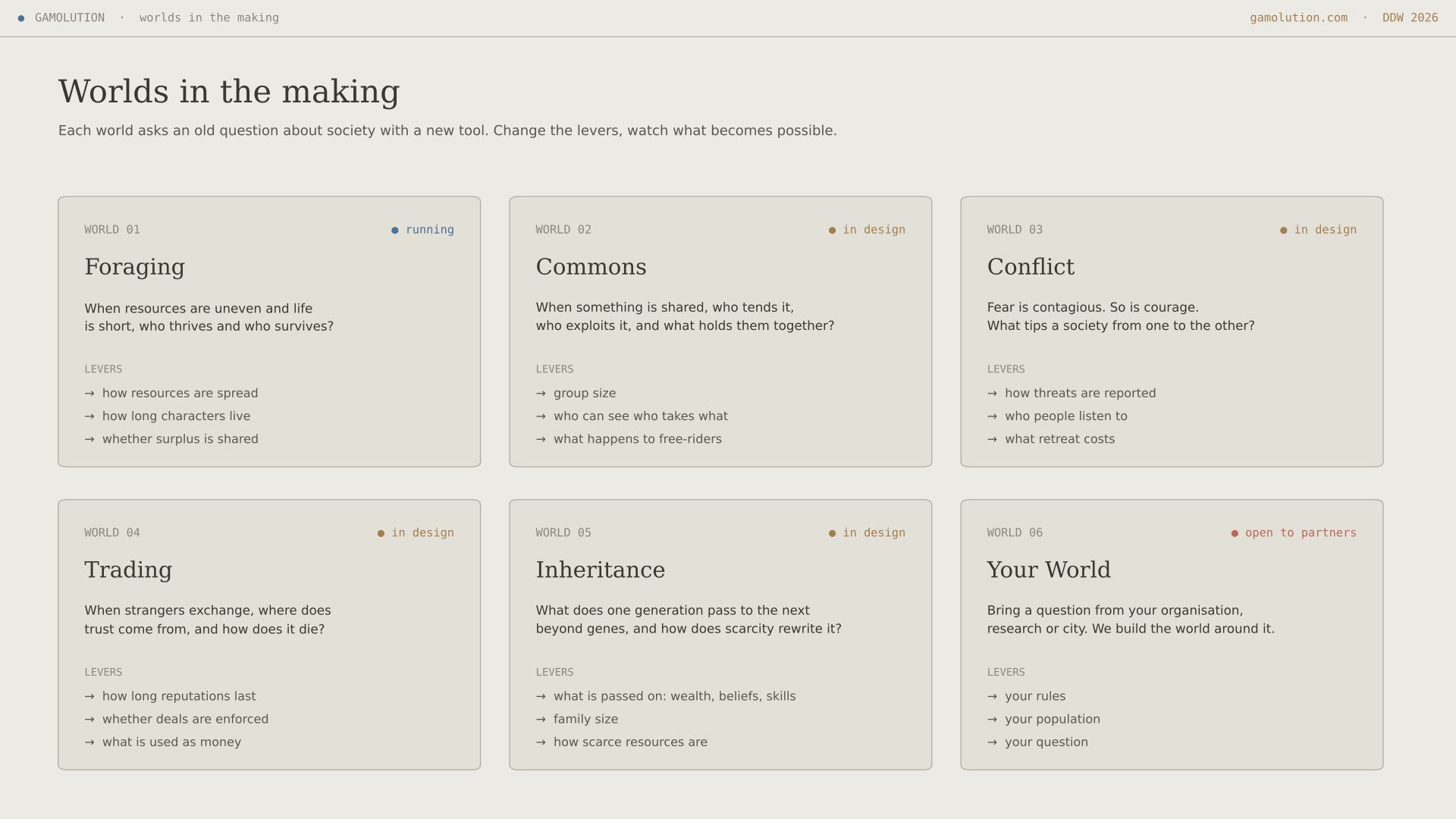
The inhabitants of Gamolution are AI characters with layered, human-like minds. They feel, and those feelings colour every choice. They weigh options and plan. They trust, imitate and influence one another, carry shared stories and beliefs, notice themselves and others, and choose between competing and co-creating. Each layer is grounded in behavioural science and tested against classic experiments from biology and psychology before it is trusted with a society. These minds live in worlds assembled from interchangeable parts: resources, trade, culture, disease, negotiation and institutions. Combine the parts differently and you get a different world, and a different kind of people.
Play, tend, discover
Gamolution is designed to be experienced, not just read. You can live inside a world as one of its characters, reshape it from above as a gardener changing its rules, or let AI explore many conditions to discover which ones lead somewhere better. It is made for anyone who needs to see what argument alone cannot show: policymakers testing an idea before committing to it, organisations seeing how one structural change reshapes behaviour, and researchers, designers and curious people asking how the systems they live in shape who they become. At Plan-B, a screen shows recorded worlds as they unfold, with captions marking the moments where something new emerges. When the maker is present, live sessions run the simulation in real time. Gamolution is not a game you win. It is a place to find out what could be.