Natural Hues
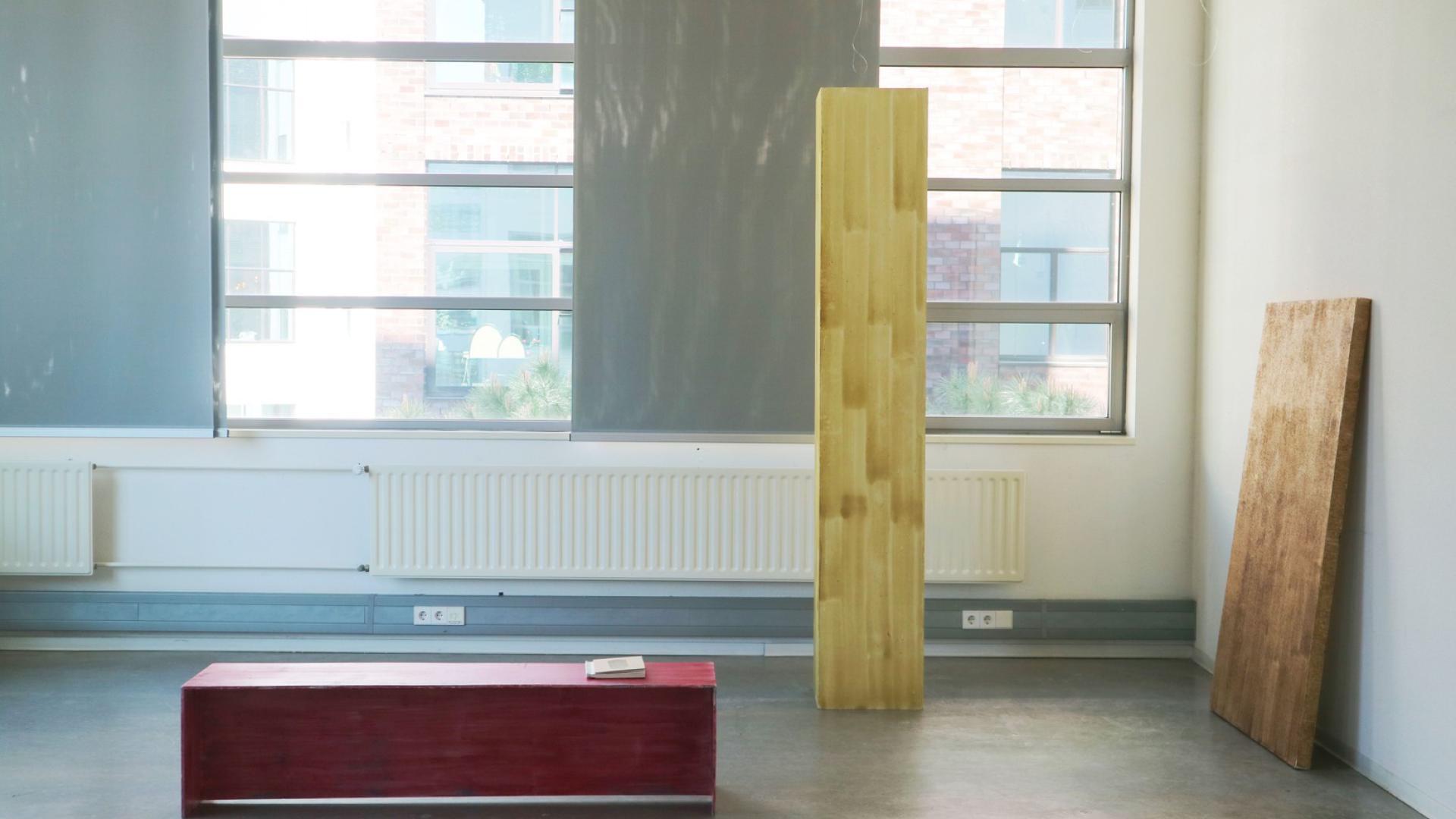
The Mul-deum project explores how we can extract natural dyes from local ecosystems and seamlessly integrate them into our daily spaces and objects. As biophilic design grows increasingly vital in architectural and spatial fields, this project proposes a sustainable alternative to chemical paints by demonstrating how these organic extracts can be applied to various spatial elements. Ultimately, it aims to show intuitively how these natural hues influence public emotion, fostering feelings of composure, calm, or vitality.
Color Experiments
Through experimentation with fallen leaves, flowers, plants, and soil, we have identified twenty distinct natural dyes that some expected and unpredicted. For instance, while fallen leaves yielded a deeply comforting brown, the Gerbera flower unexpectedly shifted from pink to green due to pH level variations depending on the application surface. These findings, along with accessible recipes based on my personal experience, are documented in a book.
Spatial Application
By applying three of these key colors to essential architectural elements such as a column, a wall, and a bench, I aim to transform how people perceive and interact with sustainable materials, presenting a tangible vision of how nature can coexist with modern interior spaces.