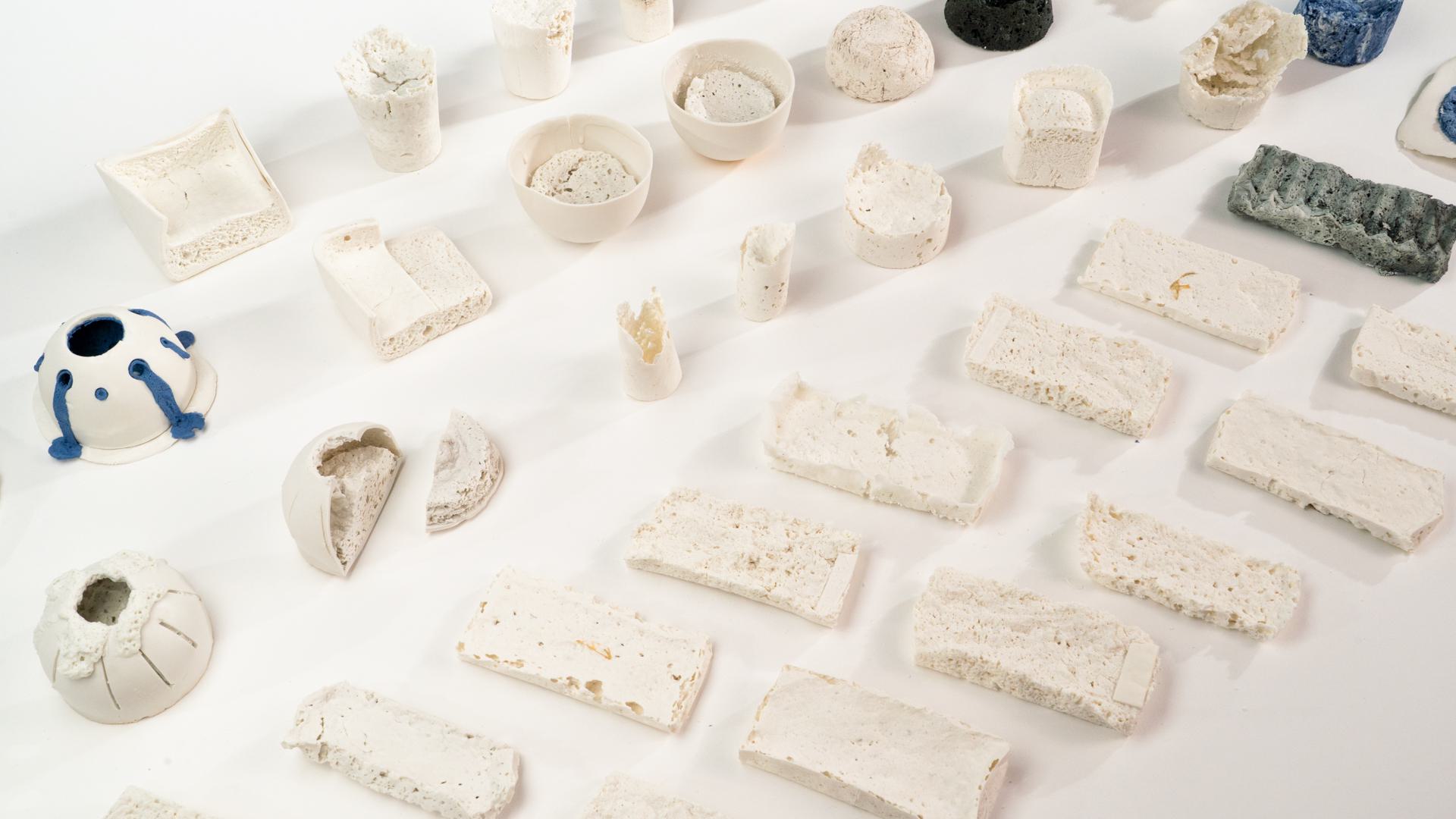
Exploration & Development
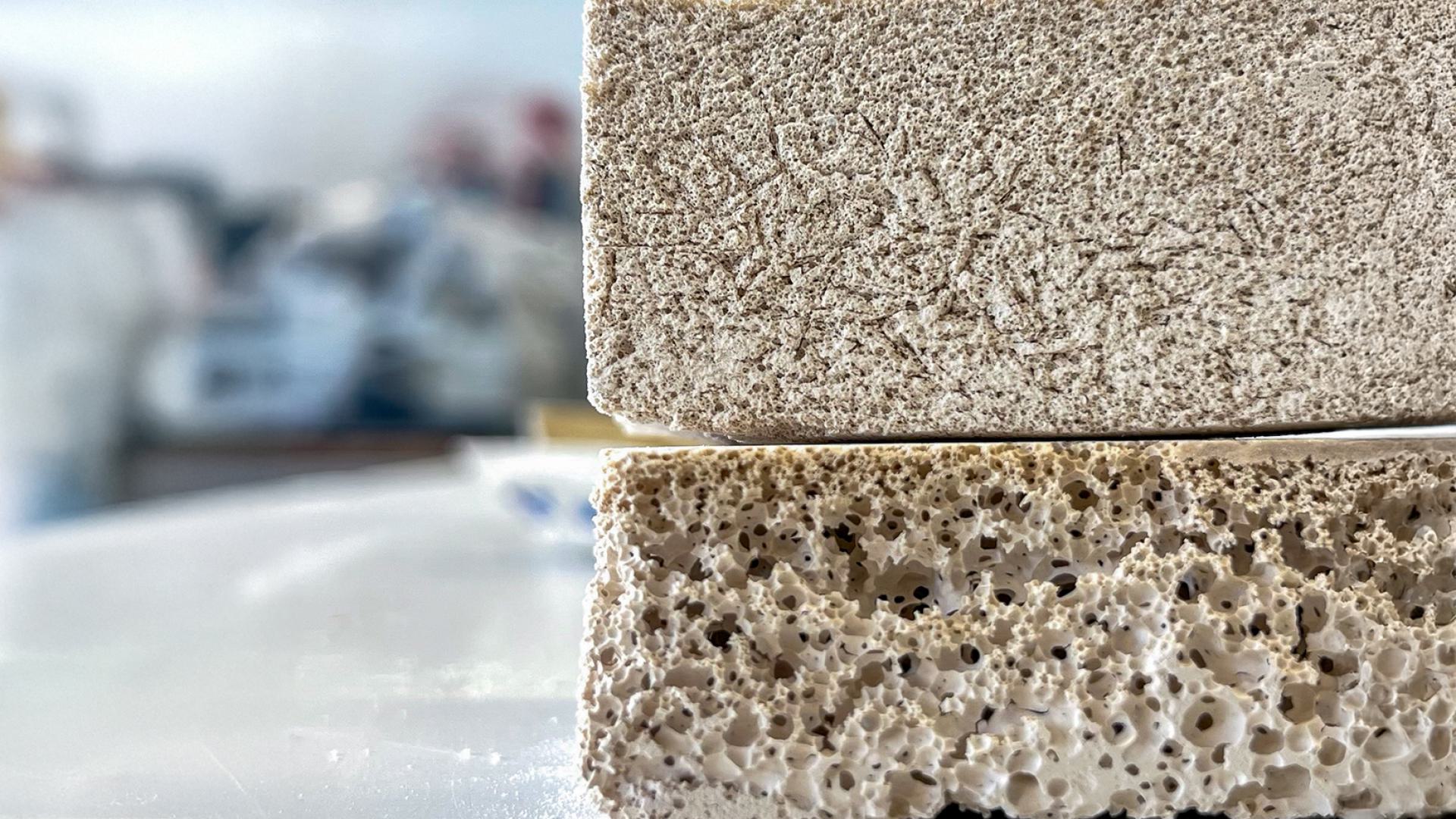
Conventional ceramic foams are usually produced by pyrolizing polymer templates, creating a "ceramic copy" of the synthetic sponge. This project focuses on developing a more sustainable alternative: a direct foaming process for ceramic slip.
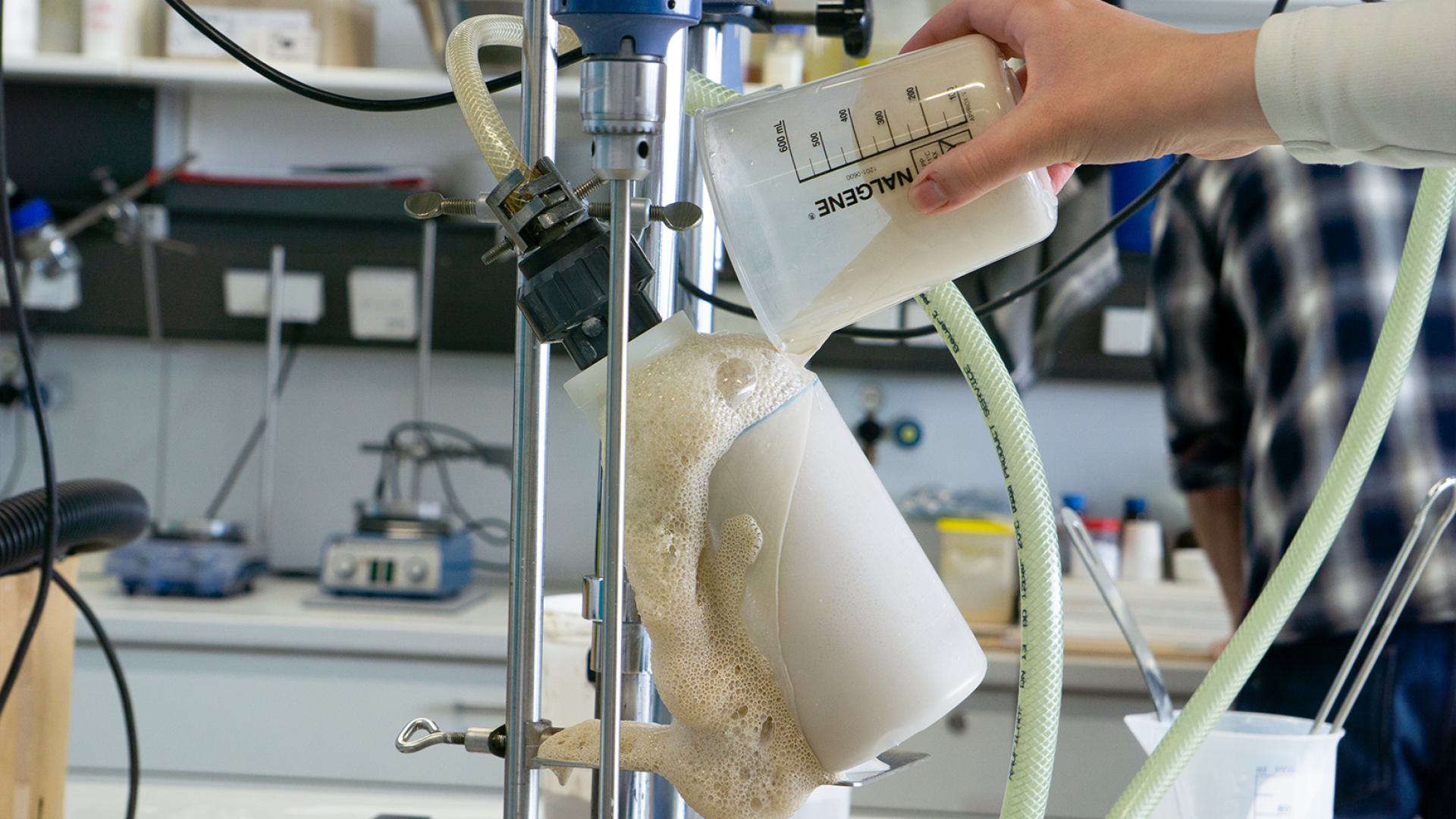
Through extensive testing, various additives, processing methods, and shaping techniques were combined. In this approach, air is introduced directly into the viscous mass, causing the slip to foam while organic additives stabilize the internal air bubbles. The primary challenge remains the sensitive drying process, which is currently undergoing further refinement.
Beyond developing the manufacturing process, the project also focused on processing the porcelain foam and exploring the material through design — shaping, post-processing, haptics, and aesthetics.
Material Properties & Application
Following comprehensive testing in the laboratories of the University of Bayreuth and Coburg University, the properties of the porcelain foam were systematically evaluated. Potential applications were then discussed in an interdisciplinary exchange across science, design, and industry.
Due to its ceramic base, the material is inherently heat-resistant and chemically stable. Pore size and porosity levels can be adjusted during production. A key feature is the ability to cast large-volume components that burn without cracking and remain lightweight due to the high air content. Additionally, the open-pore structure generates capillary action, allowing liquids to be absorbed and evenly released.
For practical application, the project focuses on two key fields: filtration for wastewater treatment and acoustic absorption for indoor spaces.
Translating Material Potential
Charlotte Becker — Filtration System:
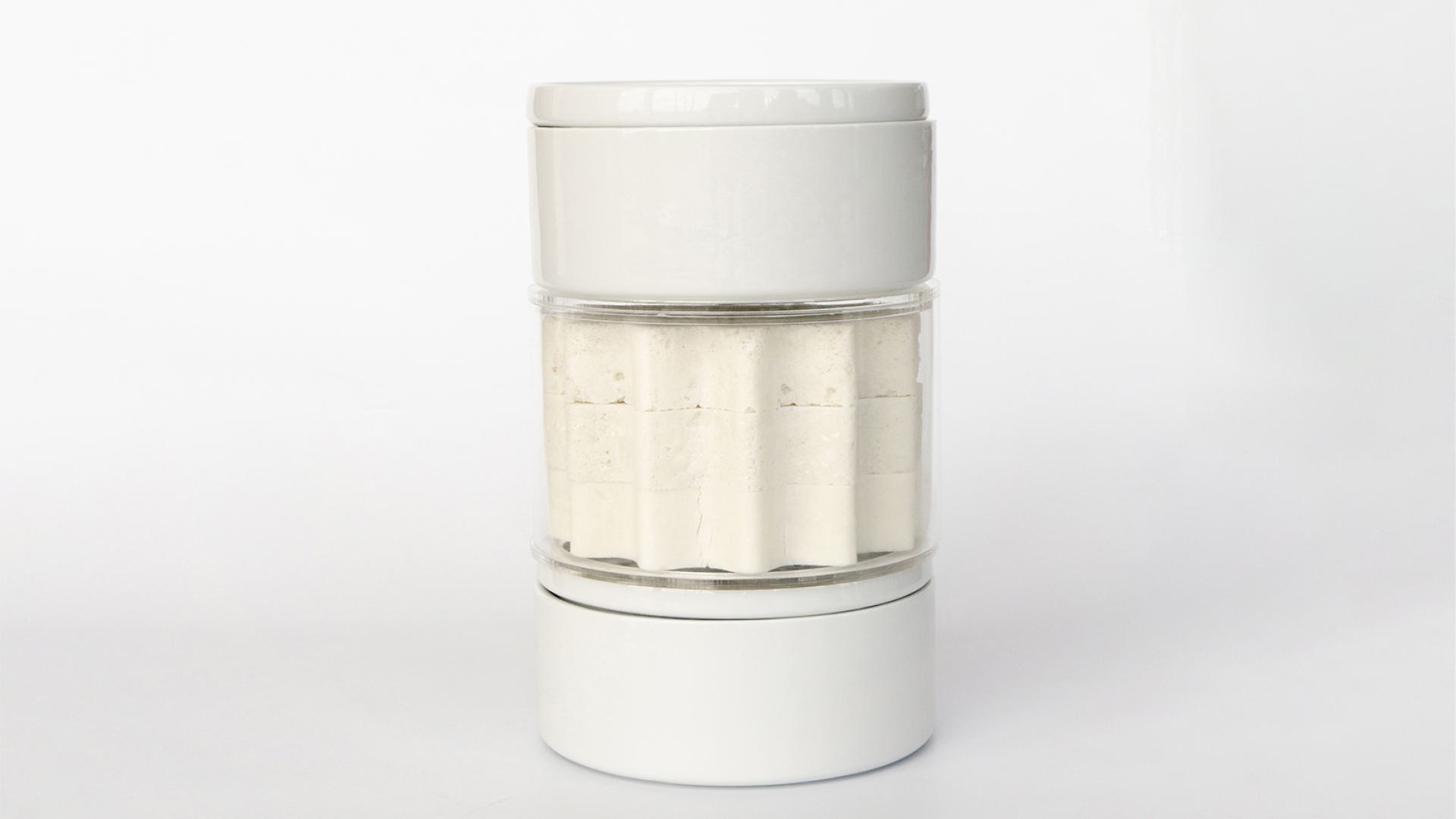
By precisely tuning pore size and porosity, the porcelain foam filters contaminants down to microorganisms from liquids and gases. SEM analyses confirm its effectiveness for industrial, household, and humanitarian applications. The modular filter elements are cleanable, reusable, and durable. The prototype illustrates the mechanism: contaminated liquid flows through small openings onto the foam elements and collects as clean water in the lower vessel.
Eva Conci — Acoustic Absorber:
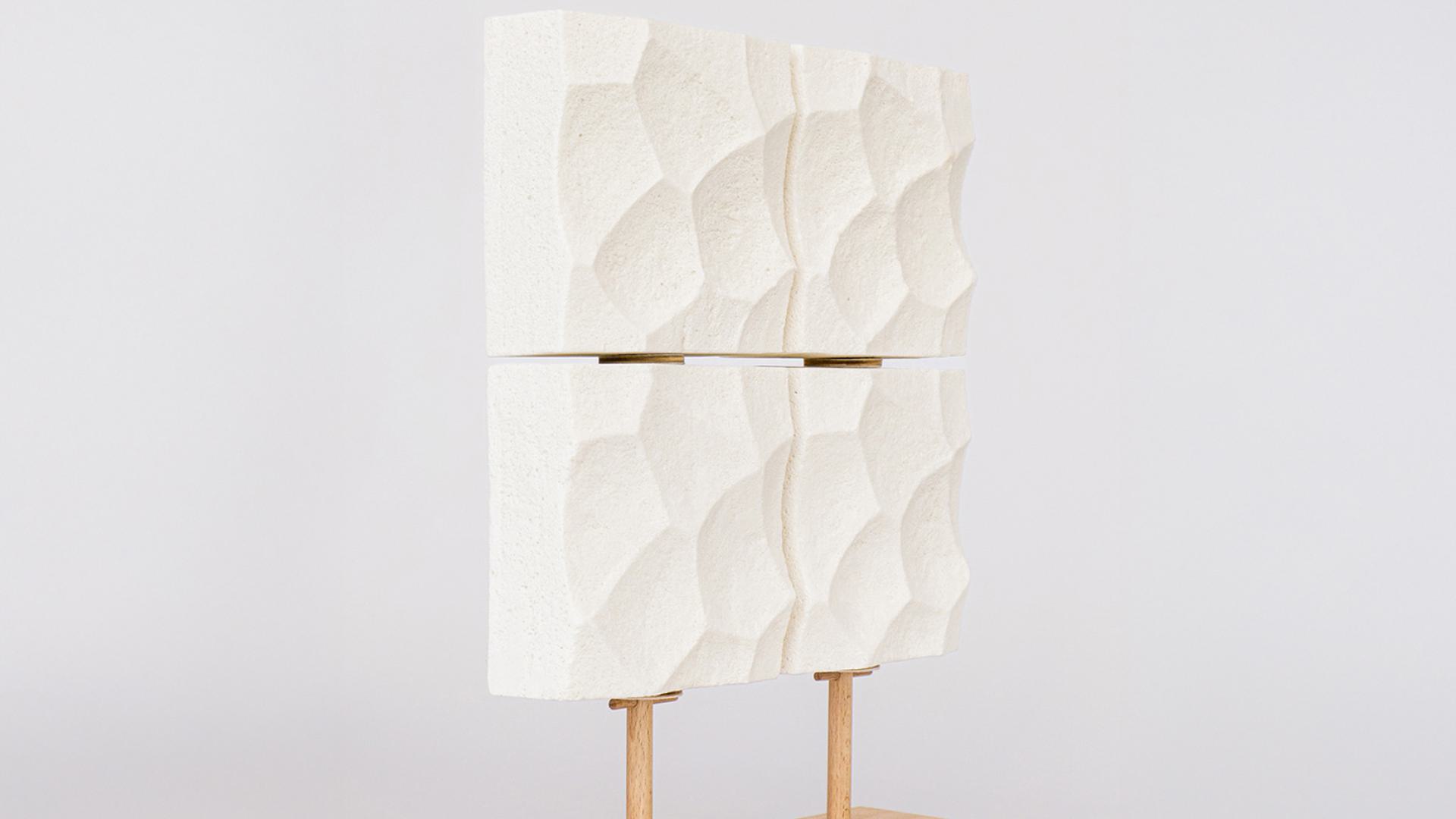
Room acoustics profoundly shape well-being, concentration, and social interaction. Acting as a porous absorber, the porcelain foam converts incoming sound wave energy into heat through friction. The material naturally meets strict fire safety standards. Thanks to its moisture resistance, it can also be used in high-humidity spaces like indoor pools, opening up new application fields for such absorbers. The design translates this physical principle into a modularly expandable acoustic panel, combining simple geometry with functional acoustics and traditional ceramics.