From need to solution
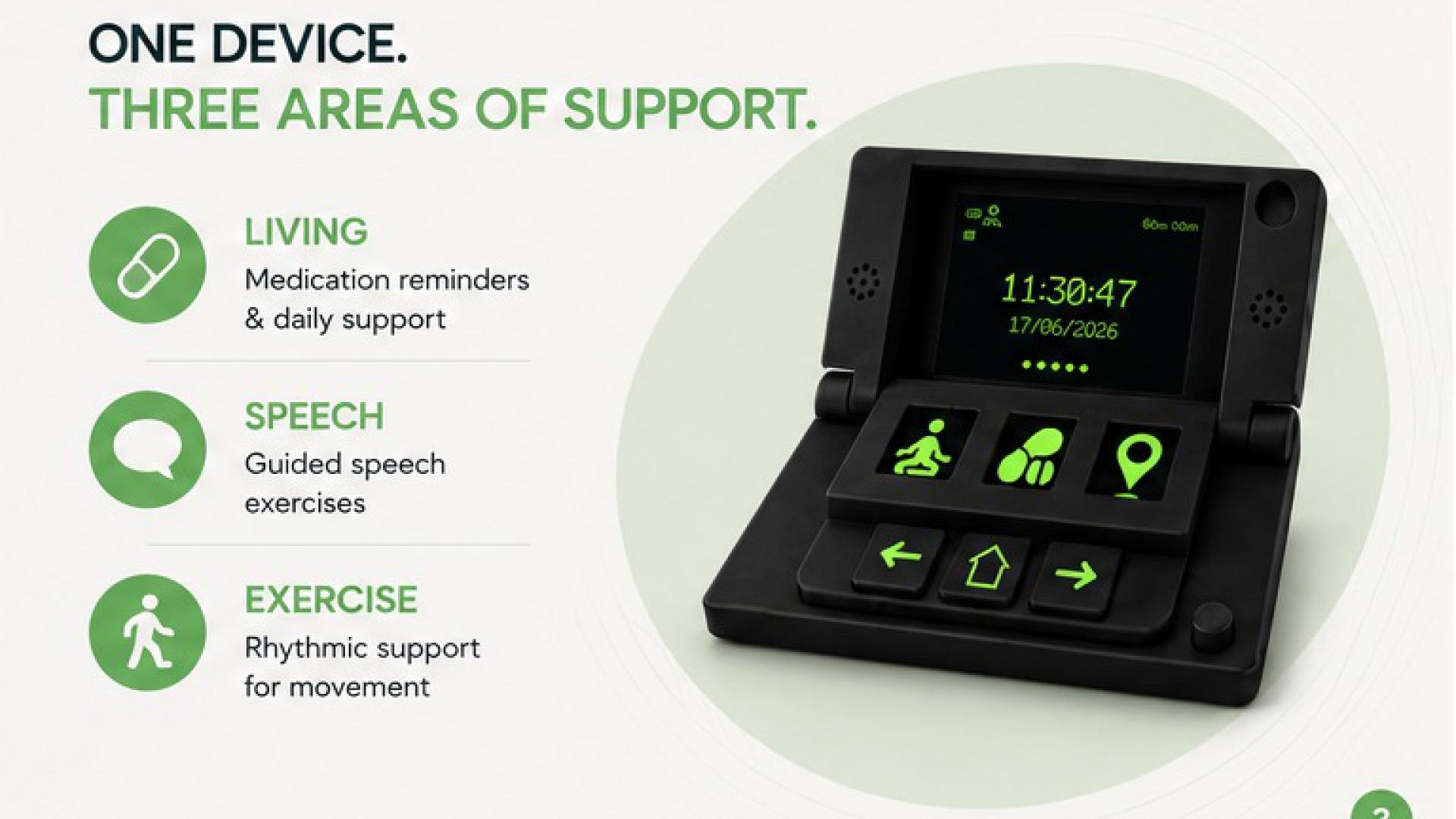
P.U.L.S.E. started with a simple observation: people with Parkinson’s often rely on different aids, apps and routines to manage a variety of challenges throughout the day. Taking medication on time, staying active, dealing with freezing of gait, and supporting speech and relaxation each require their own approach. Instead of adding another separate aid, we explored how different forms of support could be brought together in one product.
Together with people living with Parkinson’s and other stakeholders, we explored everyday situations, needs and frustrations. These insights became the starting point for our design. We did not simply want to combine functions, but to explore how one device could become a natural part of someone’s daily routine.
This led to P.U.L.S.E.: a concept in which technology provides support without taking over the user’s everyday life.
Designed around people
The experiences of users are at the heart of P.U.L.S.E. Through interviews, observations, prototypes and user testing, we explored which forms of support are genuinely valuable and where people encounter difficulties. We looked beyond functionality alone, considering clarity, ease of use and how the product feels as part of everyday life.
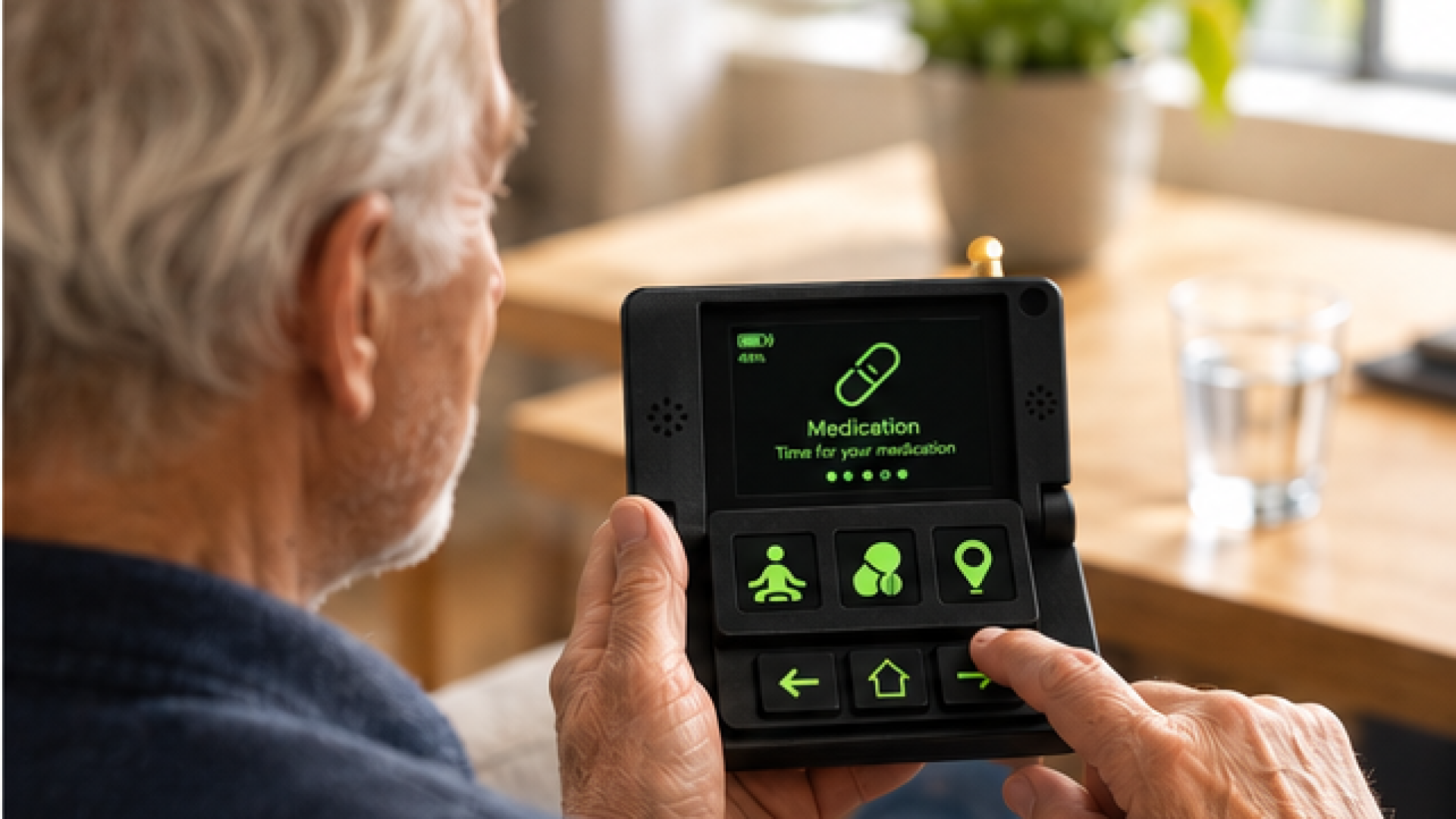
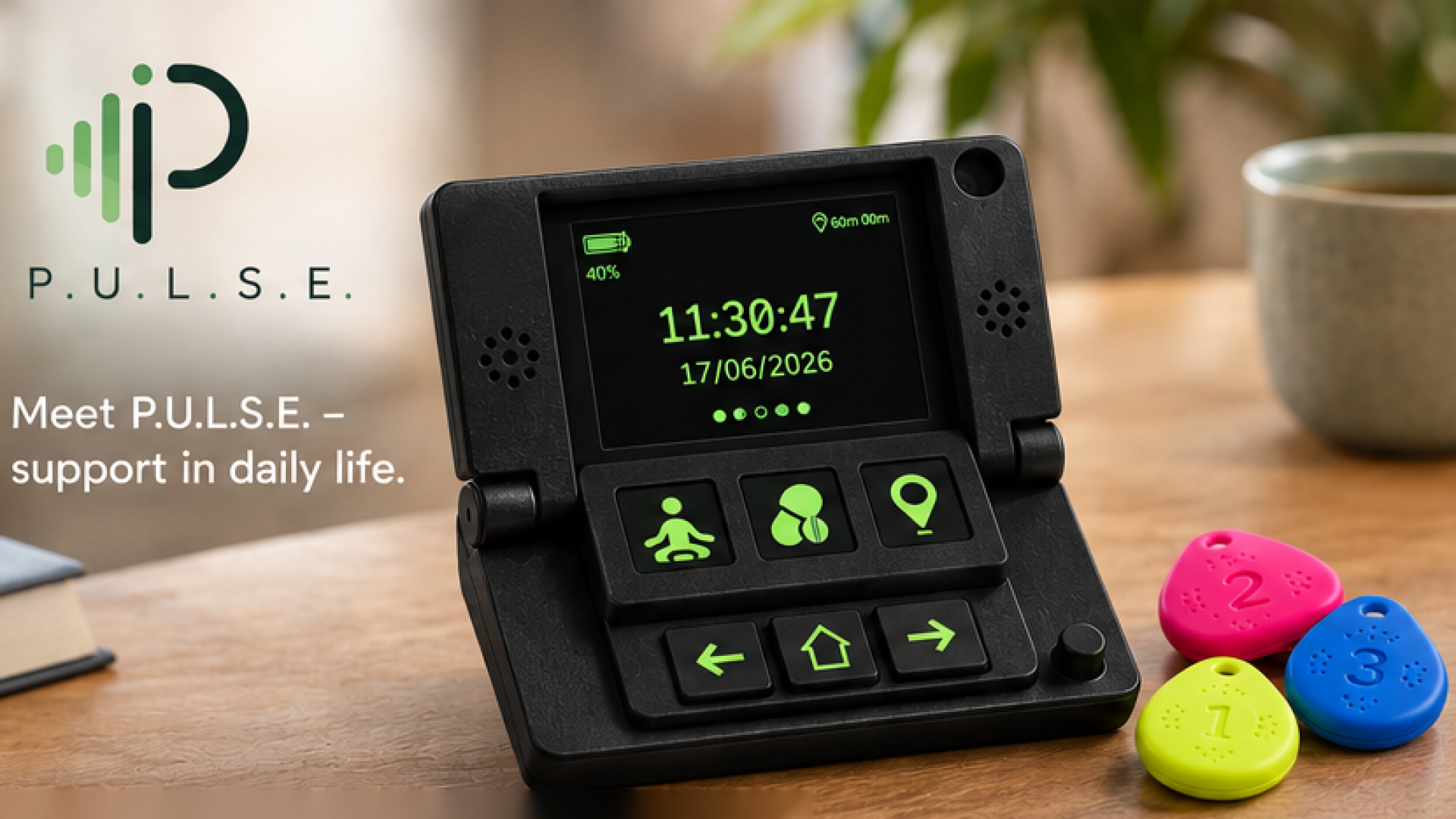
P.U.L.S.E. brings together several functions, including medication reminders, voice training, rhythmic support for freezing of gait, relaxation exercises and haptic notifications. Support can be provided when it is needed, while keeping the device compact and simple to use.
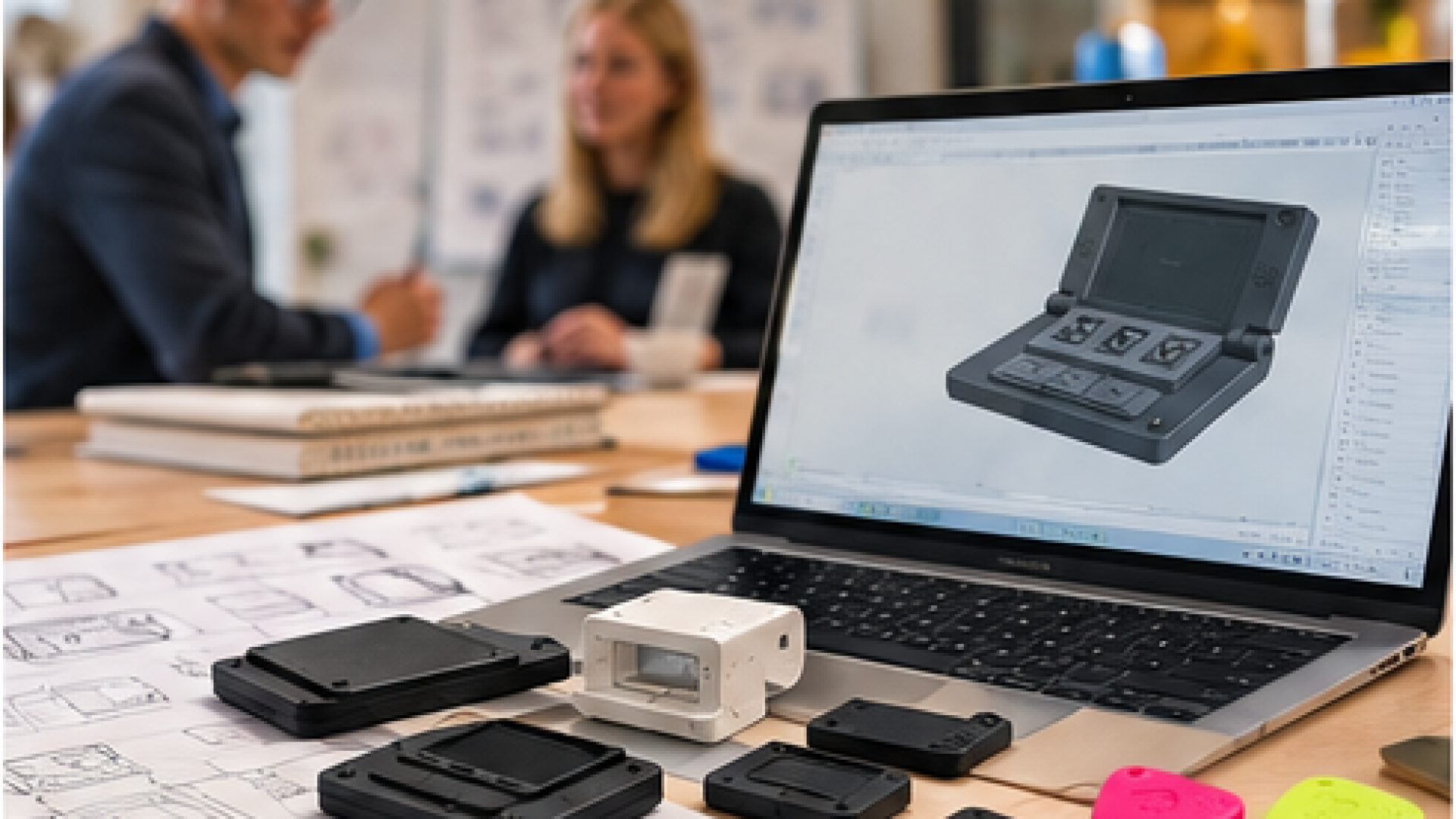
By combining product design and electrical engineering, we were able to develop both the physical form and the interaction and technology behind it. Each round of testing provided new insights that helped us refine the functions, interactions and design.
Looking ahead
P.U.L.S.E. is still evolving. For us, Dutch Design Week is therefore not an endpoint, but an opportunity to make the concept visible, gather reactions and discover new perspectives. By sharing our design with a wider audience, we hope to engage with people who approach our solution from their own experiences, expertise or interests.
Our next step is to further develop our prototypes and test them with users again. Based on their experiences, we want to refine the design, explore new possibilities and better understand how P.U.L.S.E. could fit into different everyday situations. We also want to investigate how the concept could become relevant to a broader range of users in the future.
Our ambition is to develop a personal and adaptable form of support: technology that does not feel like yet another medical device, but like a natural part of everyday life.