Exhibition walk-through
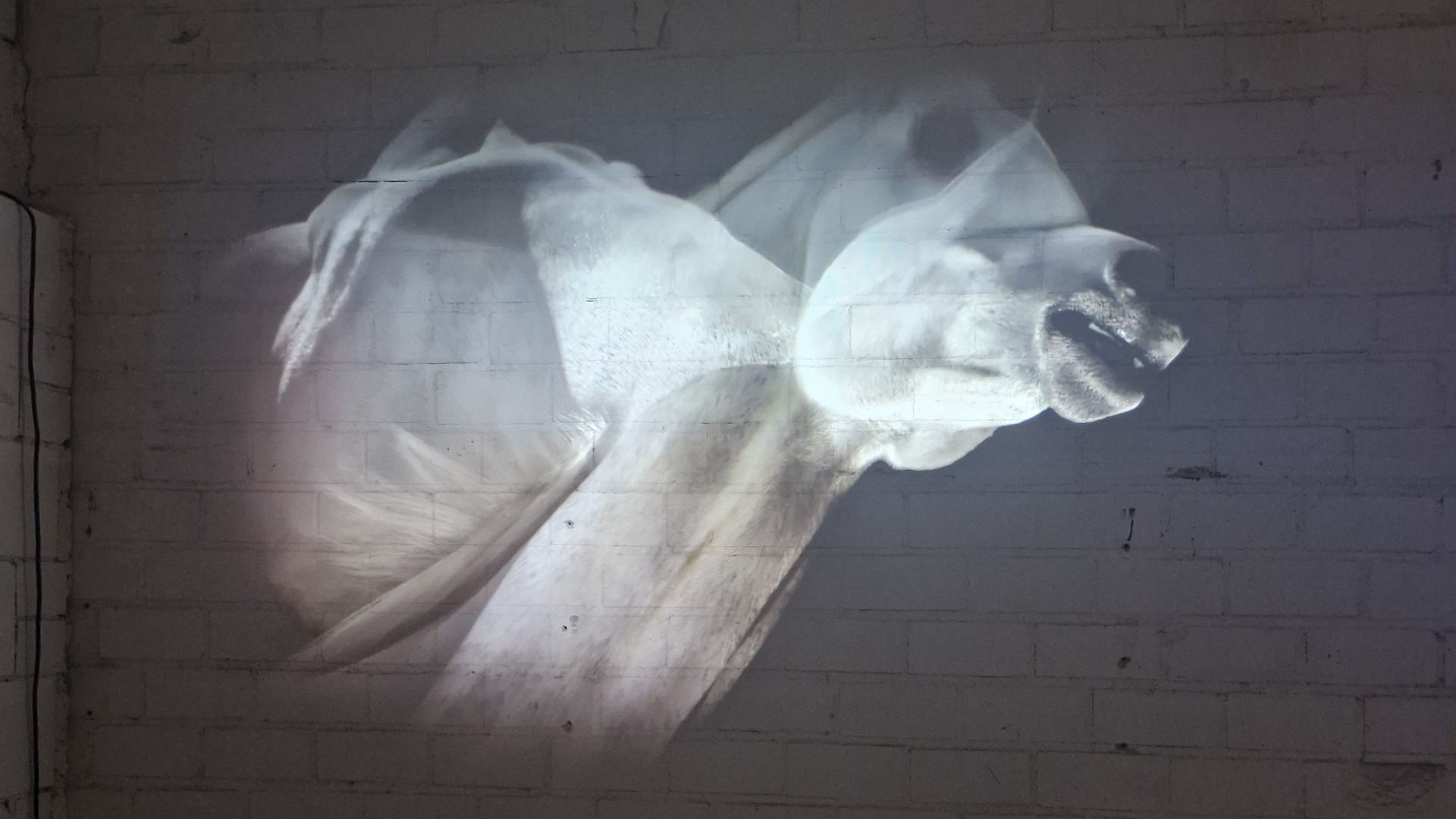
Featuring an exhibition walk-through with several artists & researchers from the Slow & Small AI show which includes work by Persijn Broersen & Margit Lukács, the Digital Methods Initiative, Mariana Fernández Mora, Carlo De Gaetano & Inte Gloerich, Gabriel Pereira with Nina Boelsums & Steve Jankowski and Dan Xu.
13:00 - doors, welcome by the Visual Methodologies Collective curators (Sabine Niederer & Janine Armin), snacks, drinks
13:15 - Janine Armin in conversation with artist & educator Falke Pisano
14:15–14:45 - break & Messages without blue checks postcard activation with Inte Gloerich
14:45 - exhibition walk-through with artists & curators
16:00 - close
This event is in English.
Falke Pisano
To ground the afternoon’s focus on local, responsible alternatives to how we approach technologies, we are delighted to welcome artist and educator Falke Pisano who will speak from her own process-based practice. Her long-term and embedded projects consider the terminology and people that shape institutional policy over time. In the projects that emerge, Pisano offers a path for how artists and students might intervene in these policies. In dialogue with exhibition co-curator Janine Armin, Pisano addresses recent activist, collective-based scholarly methodologies related to humanities research that can inform art education infrastructure – even if that means doing less – to be accessible to those outside normative frameworks.
For this conversation, Pisano takes the 2024 book Heavy Processing by T.J Cowan and Jas Rault as a departure point. Set within the realm of digital humanities, the researchers put forth the Trans- and Feminist Queer (TFQ) as a critical mode that questions how and what is reproduced when doing research both in the digital context and outside it, be it data scraping or convening publics.
Institutions
Pisano poses similar questions in her research on institutions: How can people within these structures not only articulate their limits and norms, but also find possibilities for intervention? How can institutions learn from less-established dynamics in which people gather, regroup, band together, and reorganise? How can these methodologies reshape art education?
Following the talk, Slow AI postdoctoral researcher Inte Gloerich facilitates a break and workshop where postcards slow down communication, initiating the walk-throughs where you can learn directly from participating artists and curators.
Falke Pisano works as an artist, researcher, and educator. Her practice questions how enduring ideas, institutions, and systems have historically developed, and how art might challenge them, often through long-term research cycles. Her current research explores historic and contemporary forms and domains of institutional governance, aiming to create space for imagination and disruption within this class-coded societal field. Based in Rotterdam, she was 2023 Superhost at M HKA, Antwerp, and has shown at the Venice Biennale, Manifesta, Museo Reina Sofía, and Berlin Biennale.