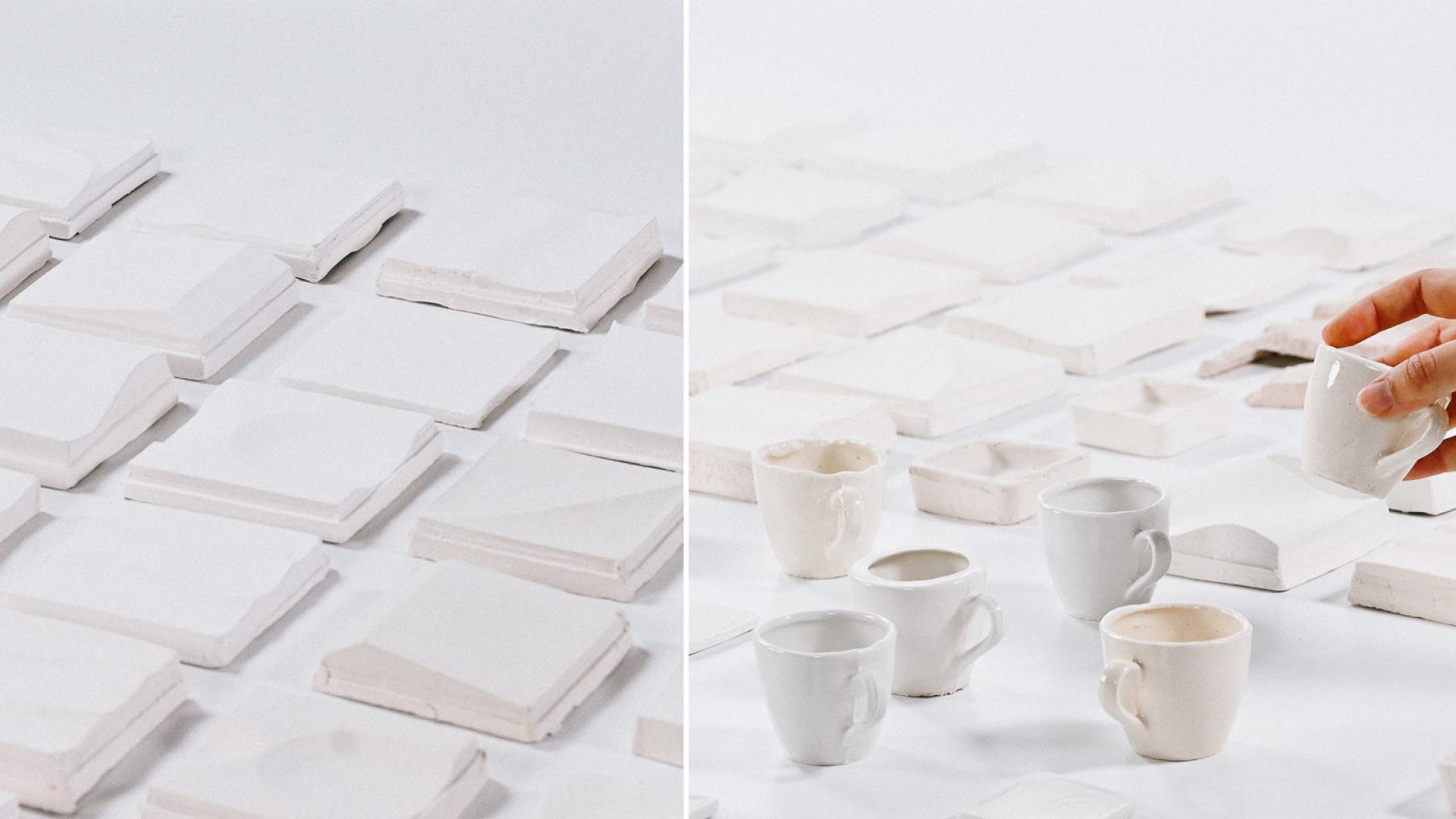
The Contradiction
Discarded sanitaryware carries the embodied energy of a high-temperature firing, yet leaves the building as crushed aggregate. Returning it instead as a surface requires addressing two challenges rarely considered together. One is material engineering: how can fired sanitaryware become a castable ceramic body? The other is perceptual: even if the material performs technically, will people accept it once its previous life is disclosed?
Material Engineering
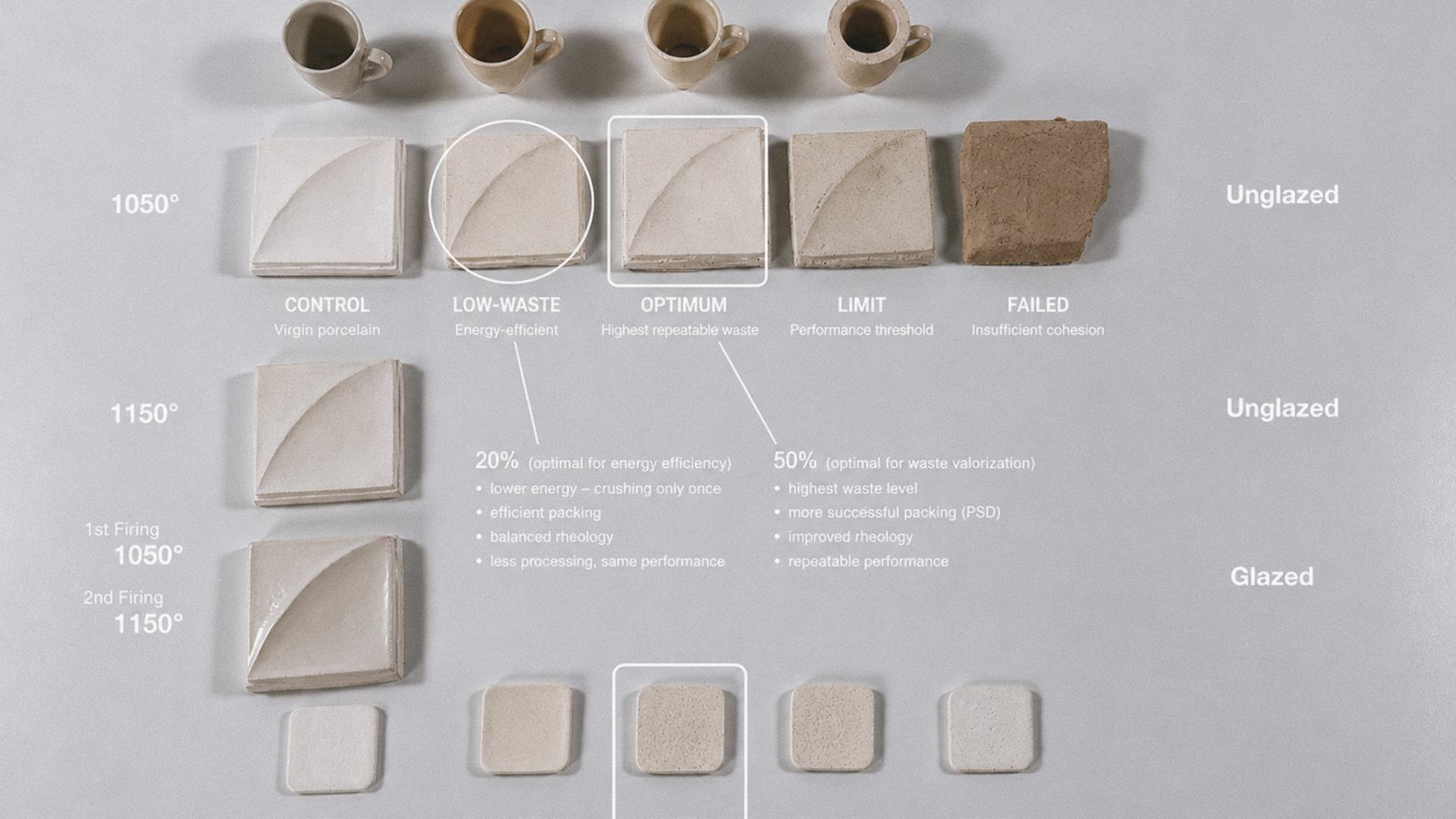
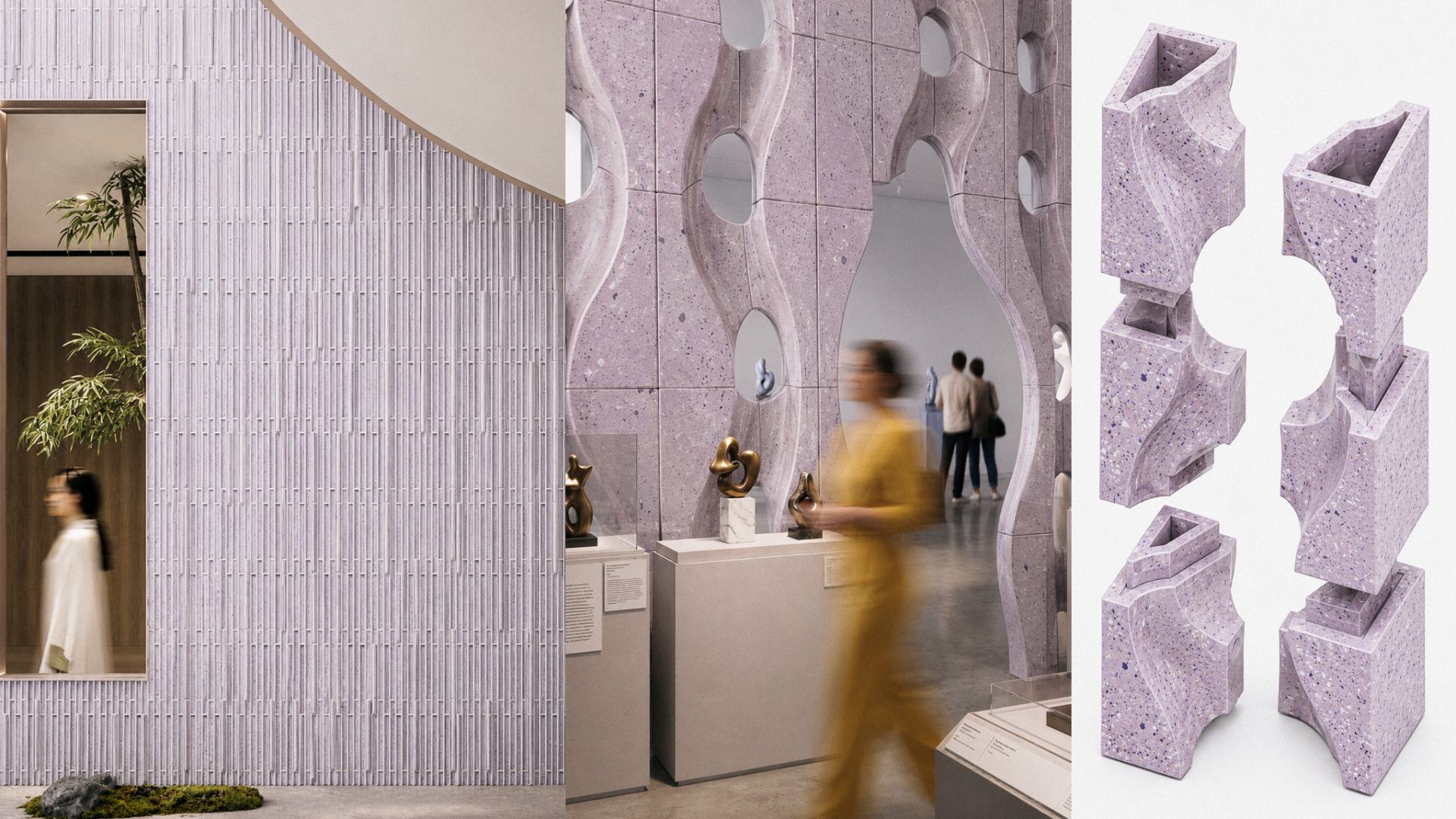
Porcelain in Presence returns the material to architecture as a slip-cast surface whose recycled origin is declared rather than hidden. To push recycled content as high as possible while maintaining castability, the material was engineered through three interacting principles: particle packing, dispersion and cohesion.
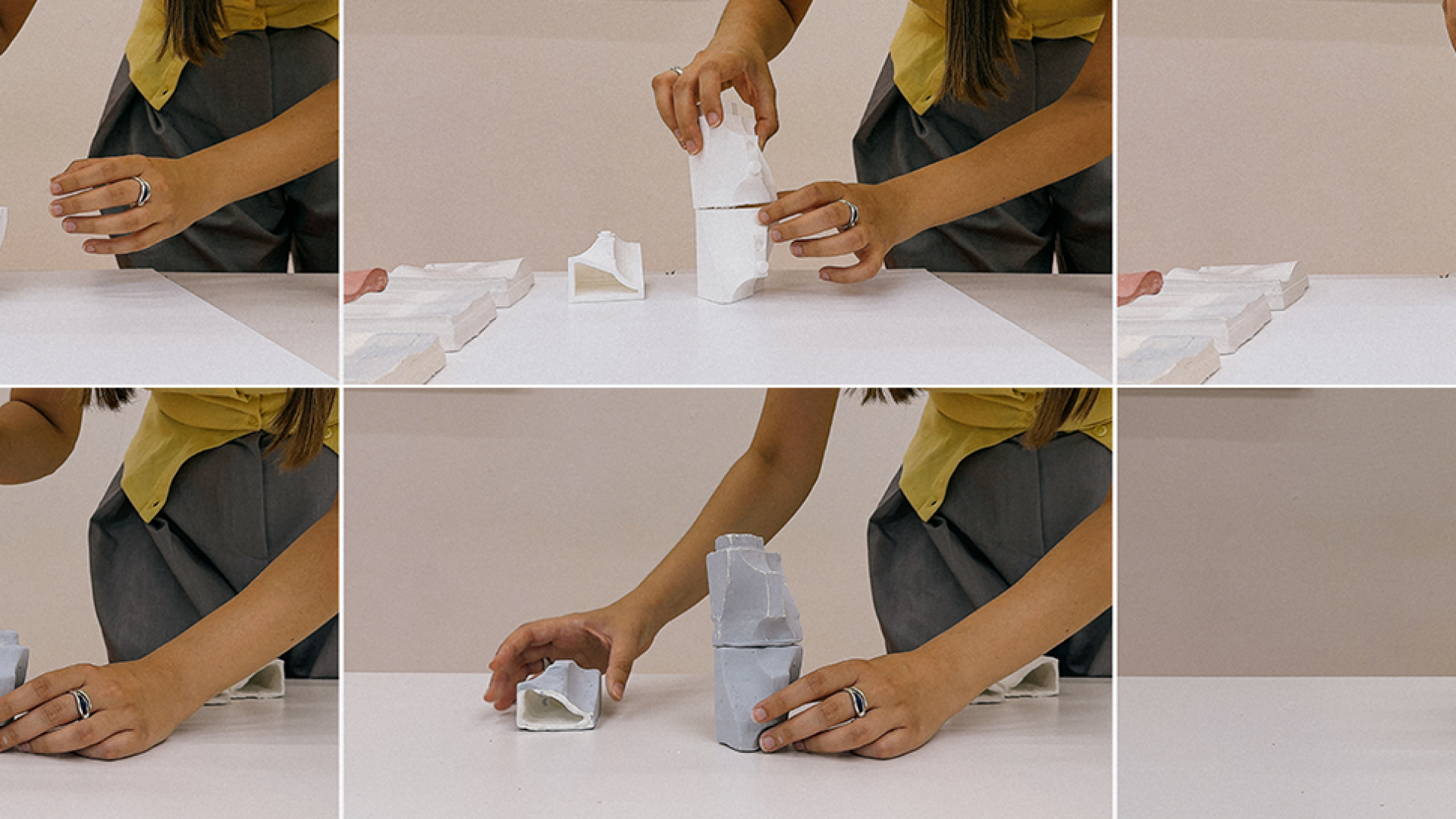
This led to two viable formulations: 20% recycled content offered an energy-efficient route with limited processing, while 50% maximised waste reuse while maintaining robust, repeatable casting. Slip casting then allows the material to move beyond flat tiles into double-curved reliefs, hollow sections, undercuts and interlocking architectural modules, so the recycled body becomes an articulated architectural component rather than a flat tile.
Perception and Acceptance
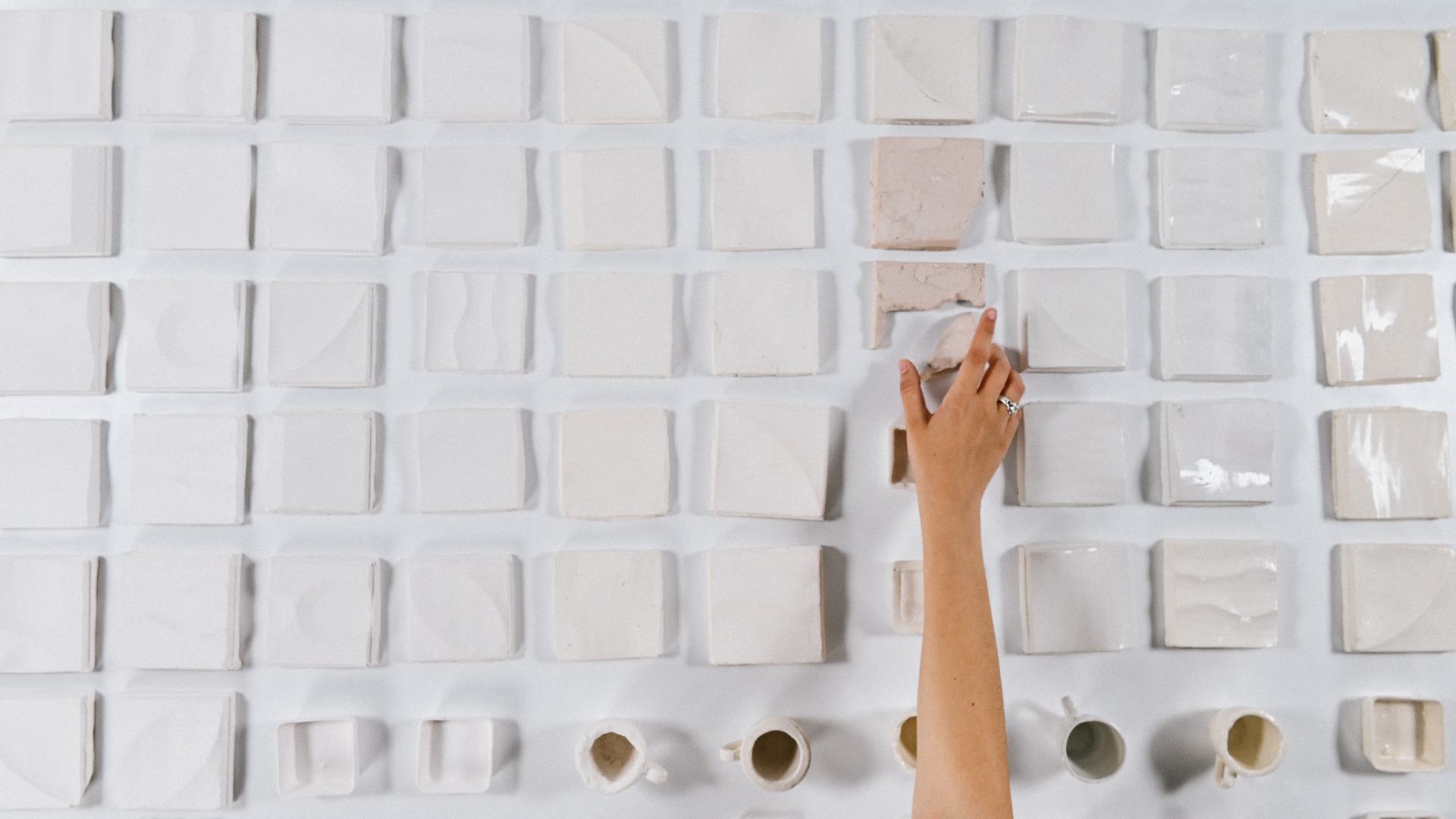
The barrier to high-value reuse proved interpretive as much as technical. Perception was first tested through a 3 × 3 factorial study, comparing three geometries and three levels of recycled content across nine tiles, before and after disclosure of their origin. The study then moved from low- to high-intimacy contexts, from architectural surfaces to direct food contact, using ceramic cups to test how hygiene, everyday use and social exposure shape acceptance. Disclosure shaped judgement more strongly than geometry or waste content, while acceptance shifted with context. Architectural surfaces were broadly accepted and 92% would take the recycled cup home, yet acceptance fell to 33% for a kitchen countertop and only 58% would tell a guest the cup’s origin.
technical. At the same time measured surface roughness did not predict perceived roughness: acceptance was shaped more by the meanings attached to the material's origin than by the surface itself.
Whether discarded matter reads as contaminated or authentic is not a property of the material. The hardest barrier is not using the recycled material, but negotiating its past.