17-25 October 2026

CyanoFabbrica

CyanoFabbrica

Hosted by Cinzia Ferrarri

This project is now archived and was part of DDW21

This project is part of
The Embassy of Rethinking Plastic
→
Syn 7002.
Syn 7002.
Cinzia Ferrari
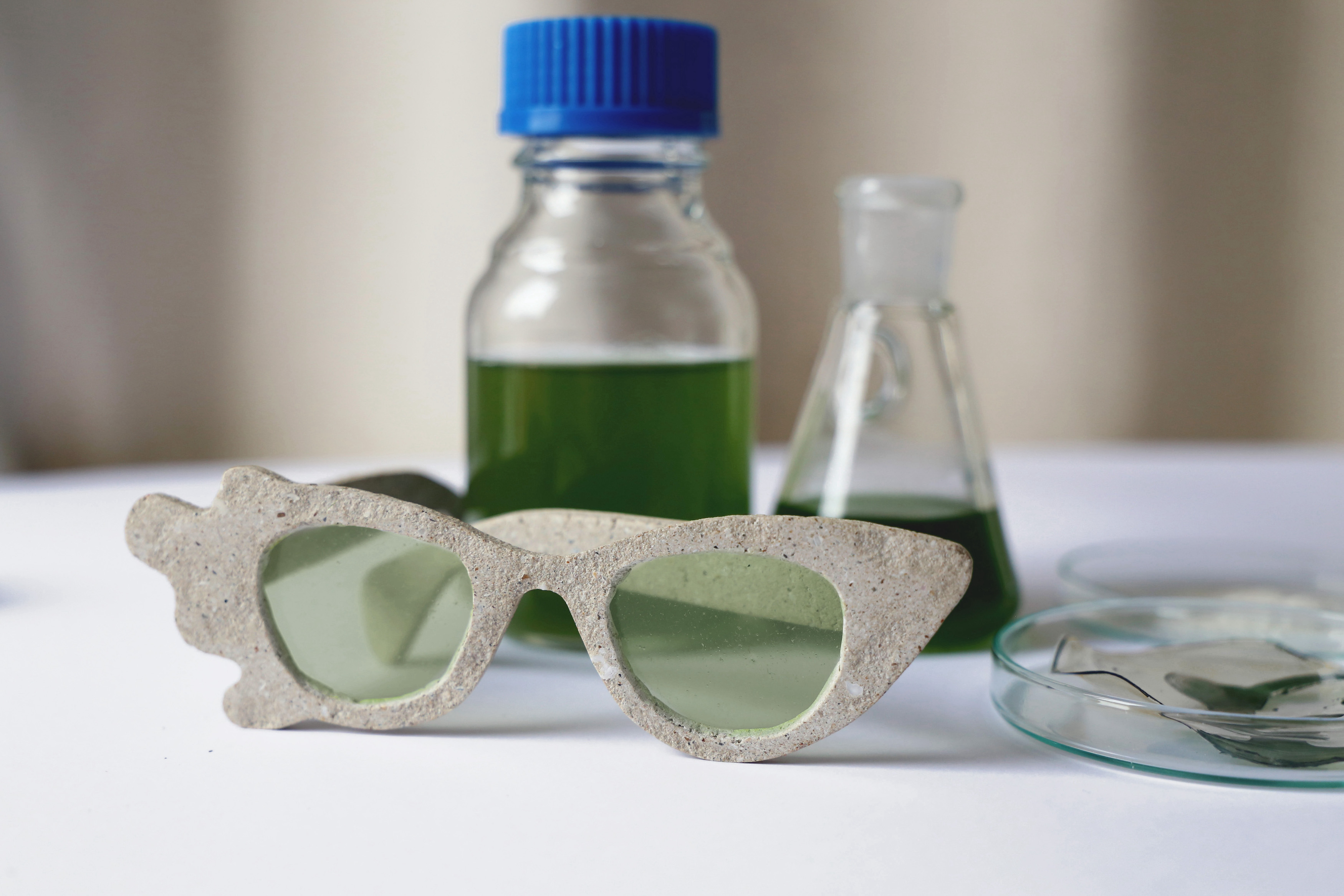
How will we make things in the future? Inspired by research from the University of Colorado at Boulder, CyanoFabbrica aims at harnessing cyanobacteria’s intrinsic ability to biomineralize for the design of novel biofabrication strategies.
CyanoFabbrica

I chose to make sunglasses frames as the output for my project, which combines my interest in transparency of design communications and innovation practices. The sunglasses sector is a field where greenwashing is common and undetected. It is also a market that is expected to grow, due to increasing concerns against UV rays and the growing popularity of glasses as a fashion item. My project aims to initiate new investigations and conversations around how to innovate the way we make, against wasteful processes and what is considered good enough. My fabrication process could be optimized to offset its emissions since the bacteria is kept in constant growth allowing photosynthesis to happen, and the product is designed to be remanufactured. At the end of its life, the sunglasses can be destroyed and used as a substrate for new products.

Scientific Research

Cyanobacteria are photosynthetic, single-celled organisms. They survived the five last mass extinctions, and can be found in almost all habitats. They are the first photosynthetic organisms from which oxygen originated. The geological and ecological significance of cyanobacterial calcification is immense: examples are stromatolites which are known to be the world's oldest known fossils, at approximately 3.5 billion years old. Cyanobacteria biomineralization is a relatively novel method. My project is inspired by research from the University of Colorado at Boulder (Heveran, C.M., et al., 2020, Biomineralization and successive regeneration of engineered living building materials, Matter, 2(2), pp.481-494). They demonstrated how to create strong bricks by inoculating a mineralizing cyanobacterium with a structural scaffold.

Design Process and Acknowledgements

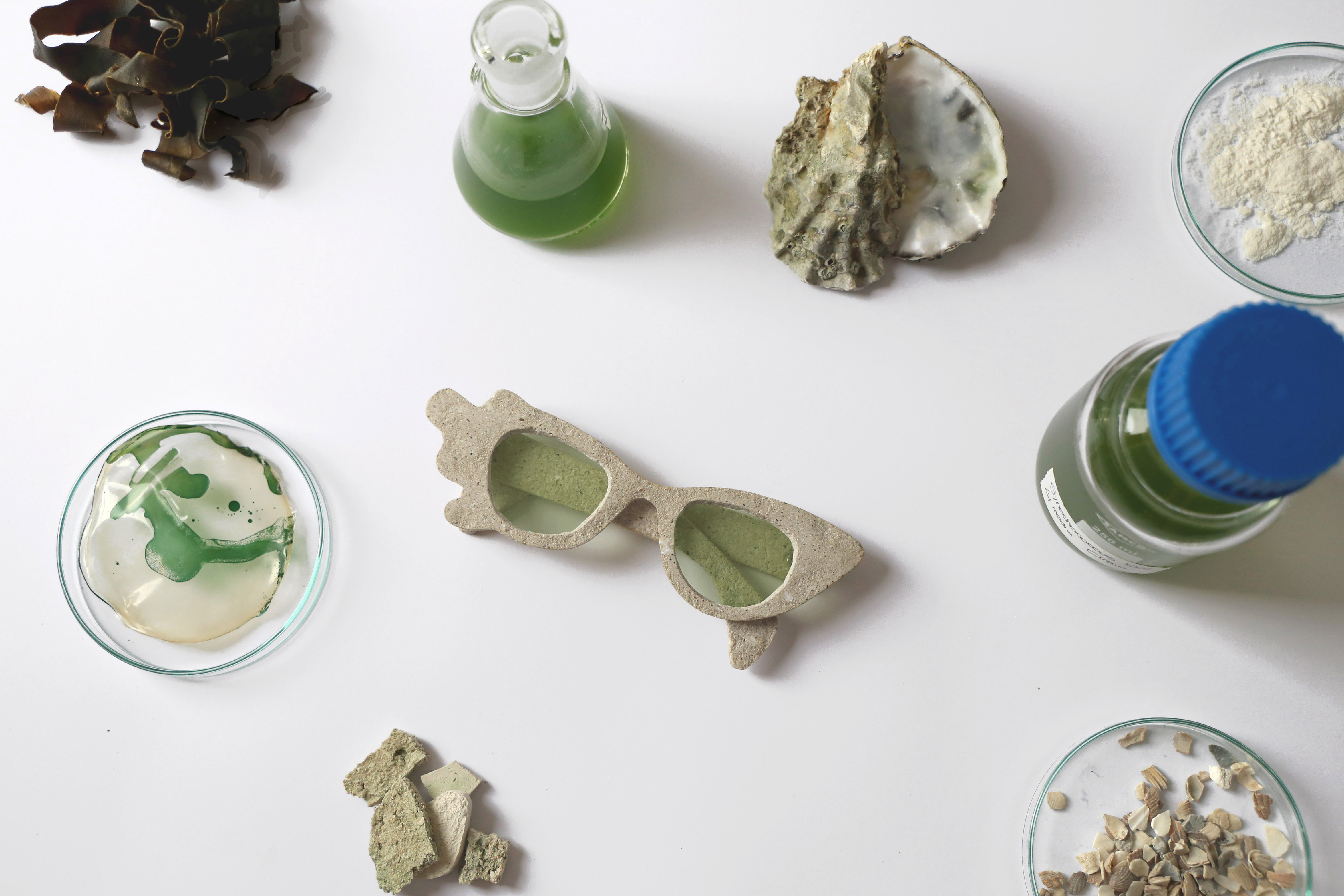
The organism and its needs played a fundamental part in my design approach, and contributed to the final aesthetics, which are partially dictated by the way this organism binds its substrate. The final shapes of the sunglasses are inspired by patterns viewed during microscopic observations of my cyanobacteria strains, merged with my personal design ideas for the frames. No two samples are alike and despite uniformity in the process, unruliness in the form is obvious, depending on the materialization coming from a living system. This is particularly noticeable in the pattern of the base, created by using biomineralized samples as a substrate, to demonstrate their remanufacturing property. The temples and front of the frame are made of biomineralized material, while cyanobacteria pigment phycocyanin was used as a print.  This project was conducted as part of my MA Biodesign, Central Saint Martins UAL. Tutors: Nancy Diniz, Alice Taylor, Victoria Geaney, Shem Johnson, Julian Jirau, Carole Collet. Special thanks: Dr. Megan Barnett, Prof. Saul Purton, Freddie Elborne (MONC).
Syn 7002 and its components.
Cinzia Ferrari
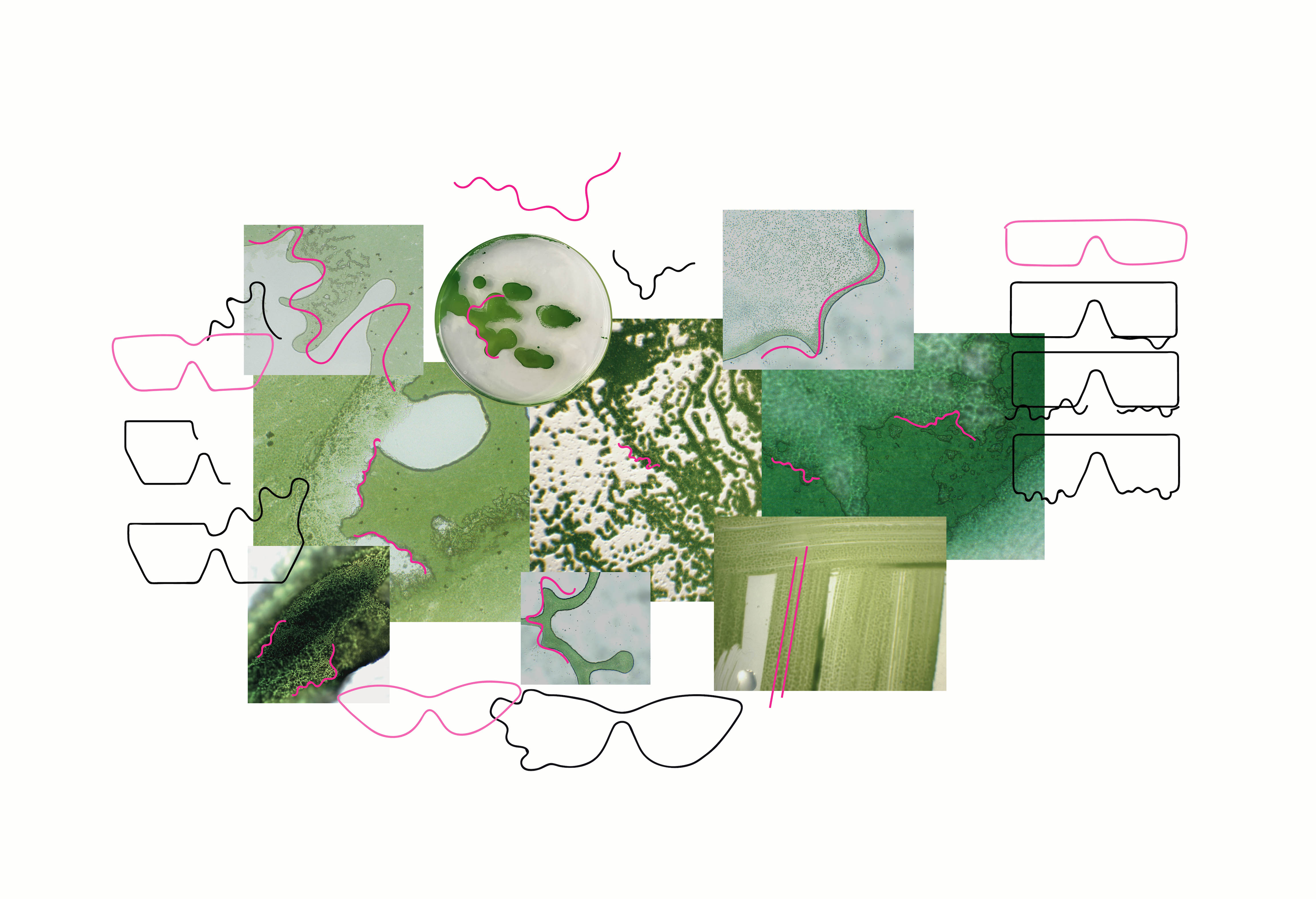
Shapes inspired by microscopic observations.
Cinzia Ferrari
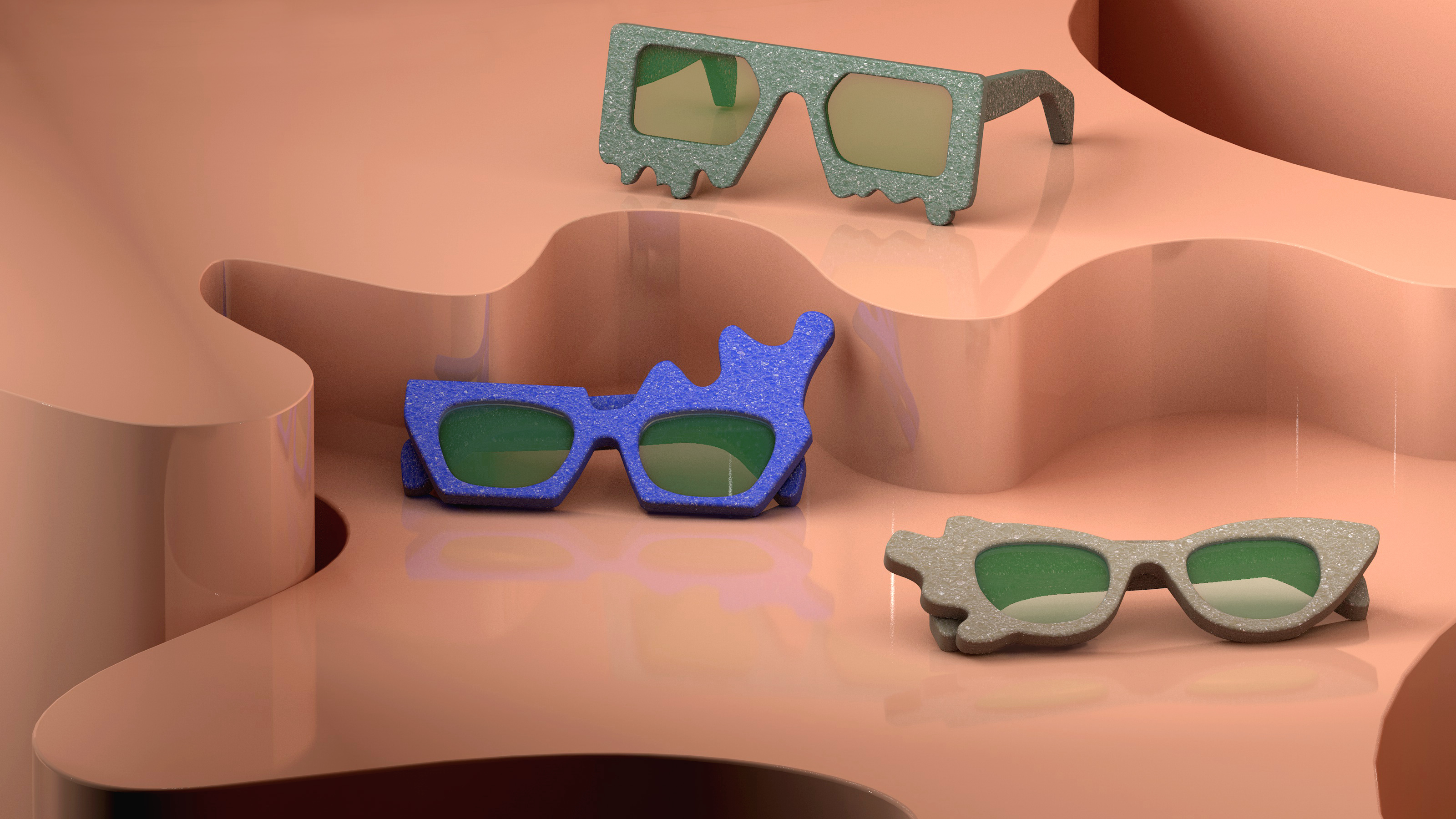
The whole CF collection.
Cinzia Ferrari
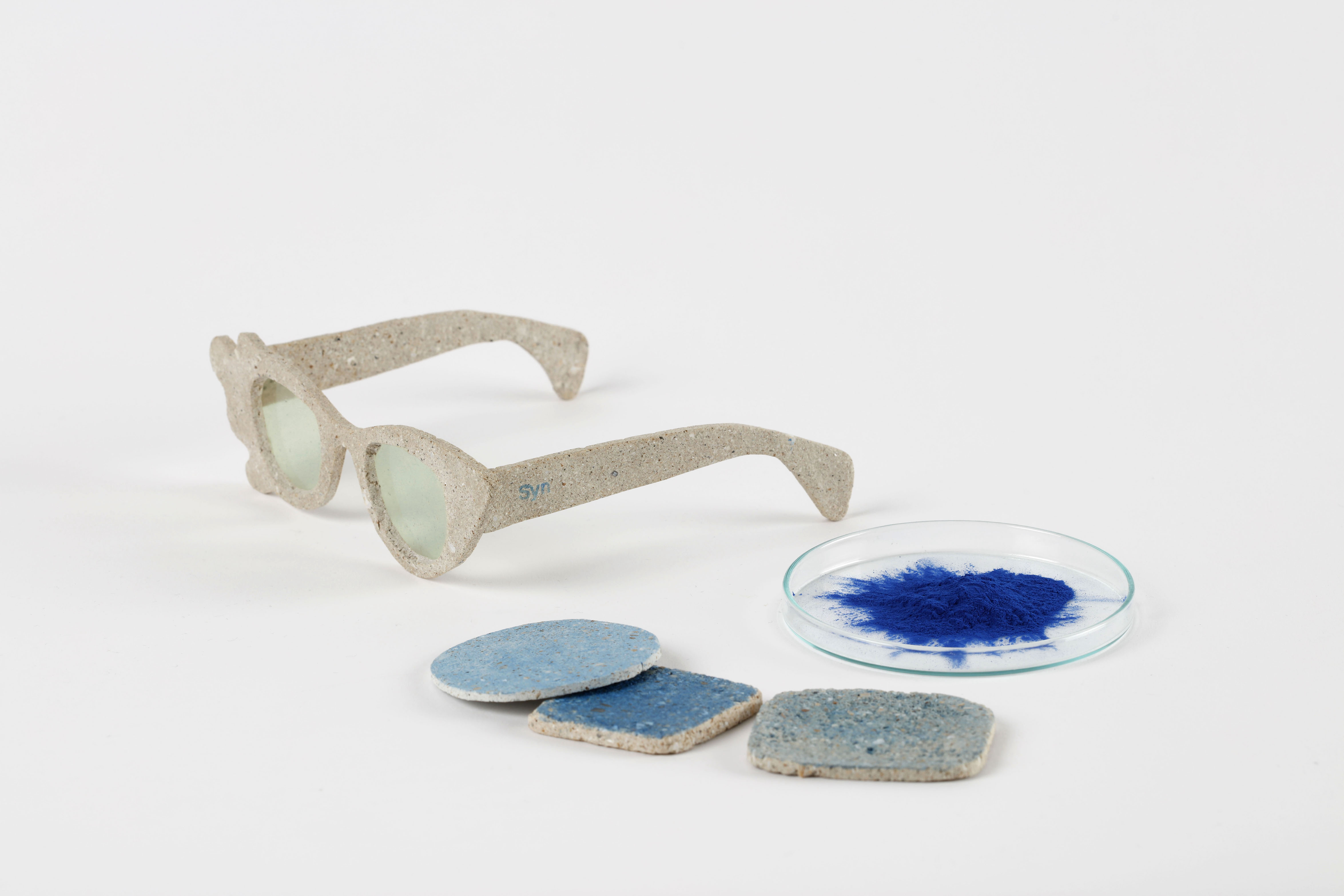
Pychocyanin pigment.

About Cinzia Ferrarri

CyanoFabbrica aims at harnessing cyanobacteria’s intrinsic ability to biomineralize for the design of novel biofabrication strategies. Her process could be optimized to offset its emissions and the product is designed to be remanufactured at the end of its life. Cyanobacteria are photosynthetic, sin