17-25 October 2026

Enigma

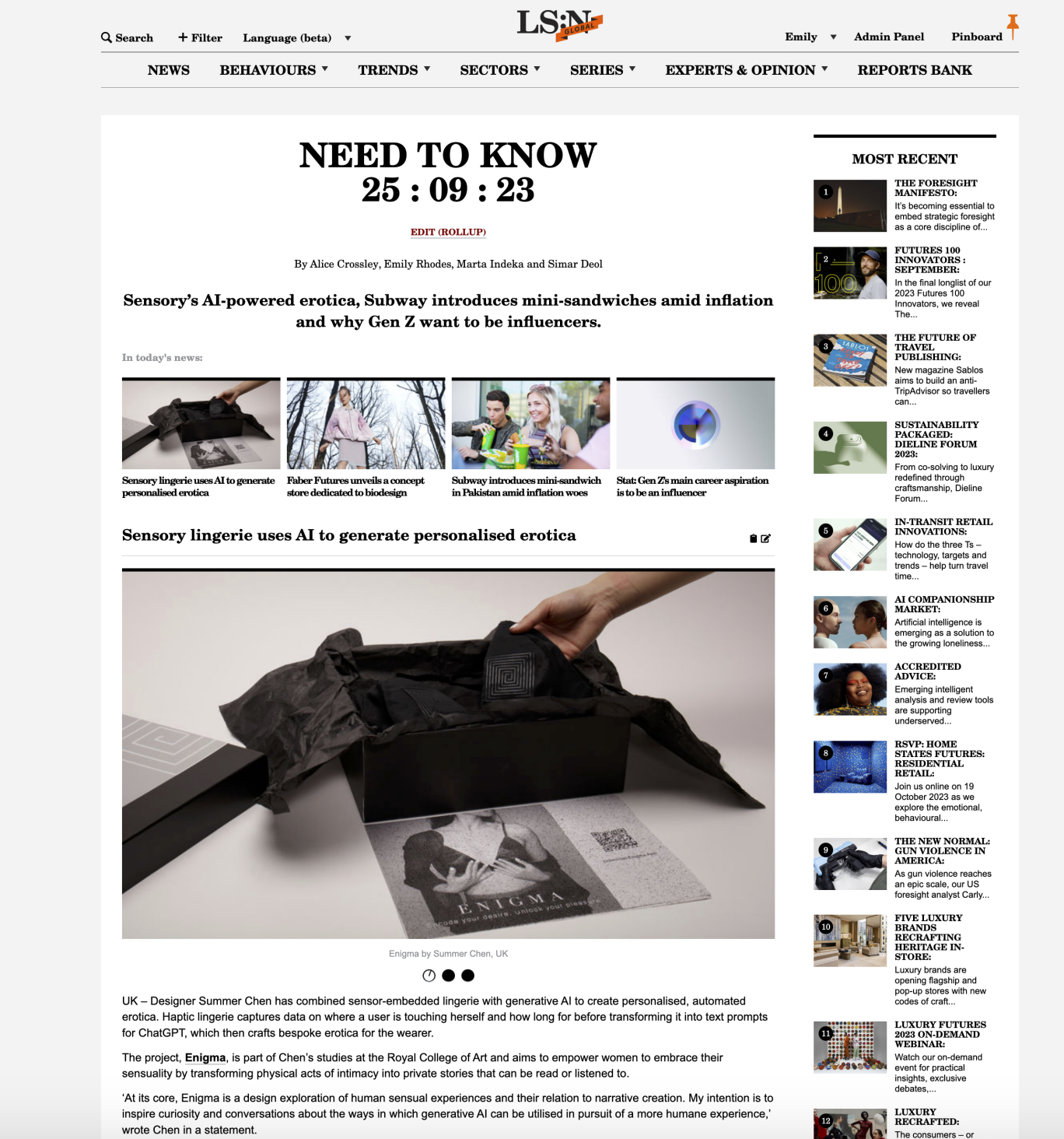
Enigma is a collection of interactive intimate wear that facilitates explorations of self-intimacy by writing personalised erotica with touch.

Hosted by Royal College of Art and Imperial College

This project is now archived and was part of DDW23

Event type

Exhibition

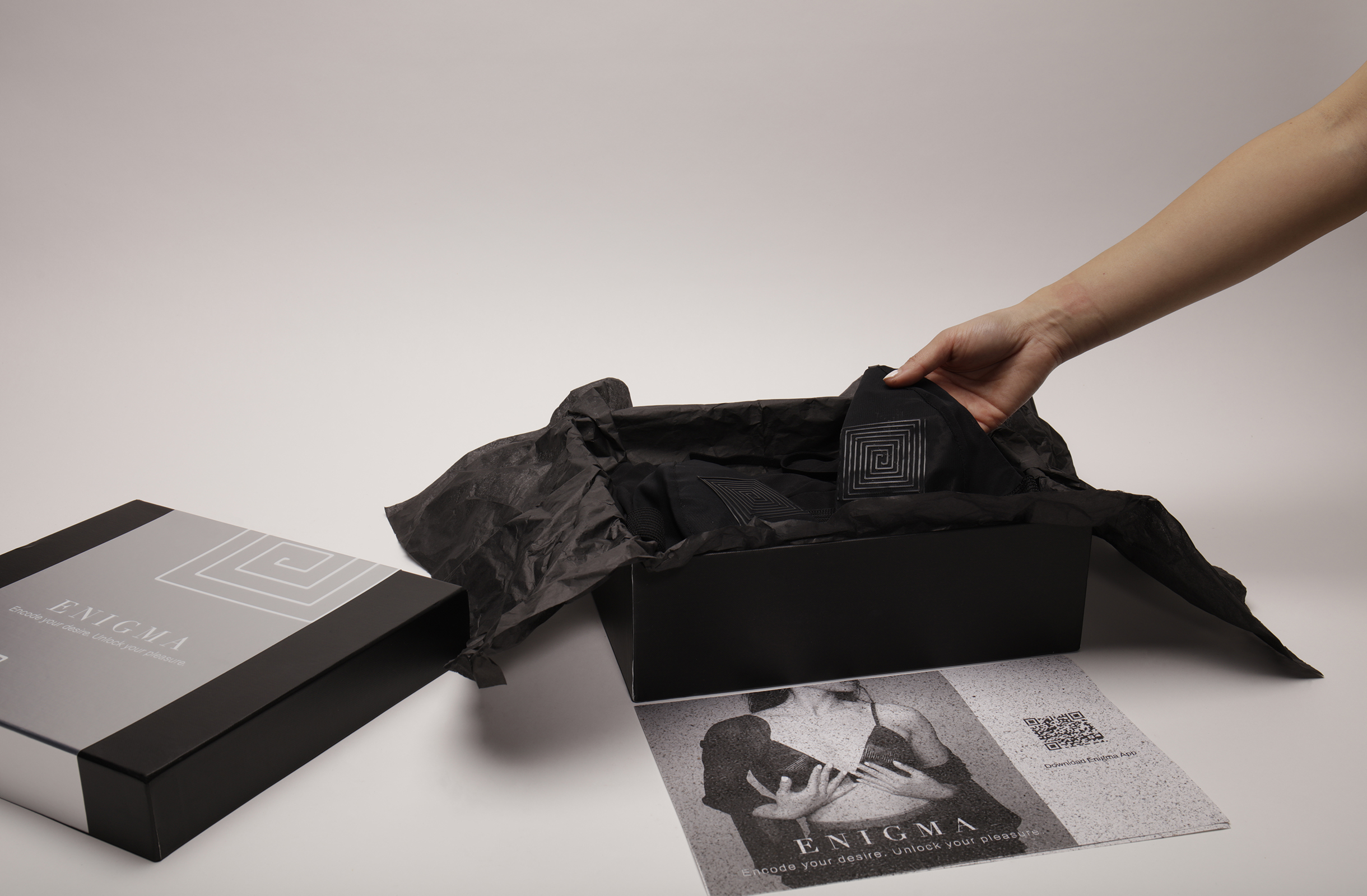
Enigma_Unboxing
Enigma_Unboxing
Jan Naraine
At its core, Enigma is a design exploration of human sensual experiences and their relation to narrative creation. My intention is to inspire curiosity and conversations about the ways in which generative A.I. can be utilised in pursuit of a more humane experience.
Why Erotica?

I chose erotica as Enigma’s form of literary expression for its inherent connection to intimate experiences, emotions, and the exploration of desire. The intimacy and personalization of erotica promote a deeper connection to the self. Writer Stella Fosse puts it like this: “As we write about erotic experience, we affirm our sensual connection with the world around us. We celebrate the best aspects of our erotic lives and explore our fantasies. This is so liberating, because anything can happen on the page. When we write erotica, we connect with the sensuality of everything that exists.” By interpreting bodily interactions as erotic narratives, I seek to normalise self-intimacy and sensual expression. Reading the stories our bodies tell lets us reflect on our relationship to desire and touch, fostering acceptance and positive self-image.

Why Lingerie?

I chose lingerie as the base material for Enigma’s somatic interface due to the sensual nature of its relationship with women, and certain physical properties of lingerie design. Lingerie can play a significant role in a woman’s navigation of self-intimacy and body positivity. The context in which it is worn is a private one, a comfortable one, an exciting one. And because it is often designed to feel as if a ‘second skin’, intimate wear serves as the perfect medium for interfacing between one’s body and the touch-to-text technological innovation that allows for this unique form of erotic writing.

Why Generative A.I.?

The use of generative A.I. in this project is deliberate for several reasons. First and foremost is its ability to quickly interpret somatic input as written narratives. By leveraging generative A.I. for this task, not only can Enigma provide real-time experiences but I hope it maintains the feelings of privacy and ownership that are crucial to the explorations I seek to inspire in women. In the end, it’s just you, your body, and you. The use of A.I. also enhances the project's accessibility and inclusivity. It does not require the user to possess writing skills or literary creativity: all you need is a body, and curiosity. Enigma allows women to express themselves in written form through touch and motion, democratising the creation of erotica and offering an avenue of written self-expression to a broader population. Generative A.I. is particularly suitable for this novel application due to its ability to create rich and meaningful outputs from relatively sparse prompts—in this case, the touch and movement data collected from the Enigma wear. A.I. tooling’s generative nature makes every narrative unique, mirroring the personal and individual nature of self-intimacy.
Enigma
Enigma
Yumeng Wang
Enigmaware
Enigmaware
Jan Naraine
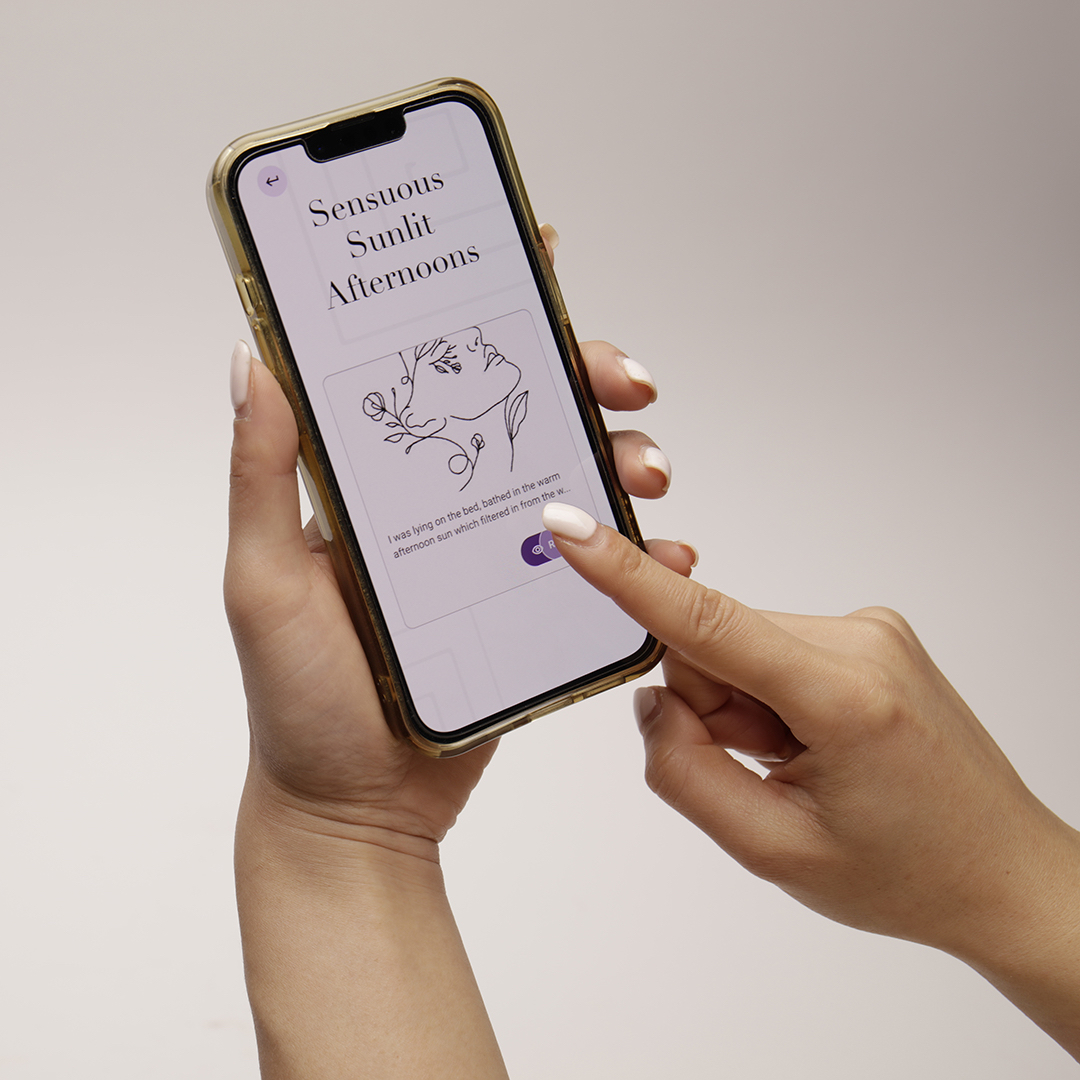
Enigma App
Enigma App
Jan Naraine
Design Prototypes
Design Prototypes
Jan Naraine
Participants of this exhibition

About Royal College of Art and Imperial College

The MA/ MSc Innovation Design Engineering (IDE) programme is a unique double Master’s Programme that has been run jointly between Royal College of Art and Imperial College London for 40 years. The programme aims to create a new type of innovator, one who will be a global leader in the integration of design, engineering, science and enterprise, and distinctively positioned to tackle the volatile, uncertain, complex and ambiguous challenges society and the planet face.

As featured in