17-25 October 2026

Spinning with bacteria: kombucha leather household

What can we make using only our hands, a sewing machine, and a handful of microbes?

Hosted by BioArt Laboratories

This project is now archived and was part of DDW23

Event type

Exhibition

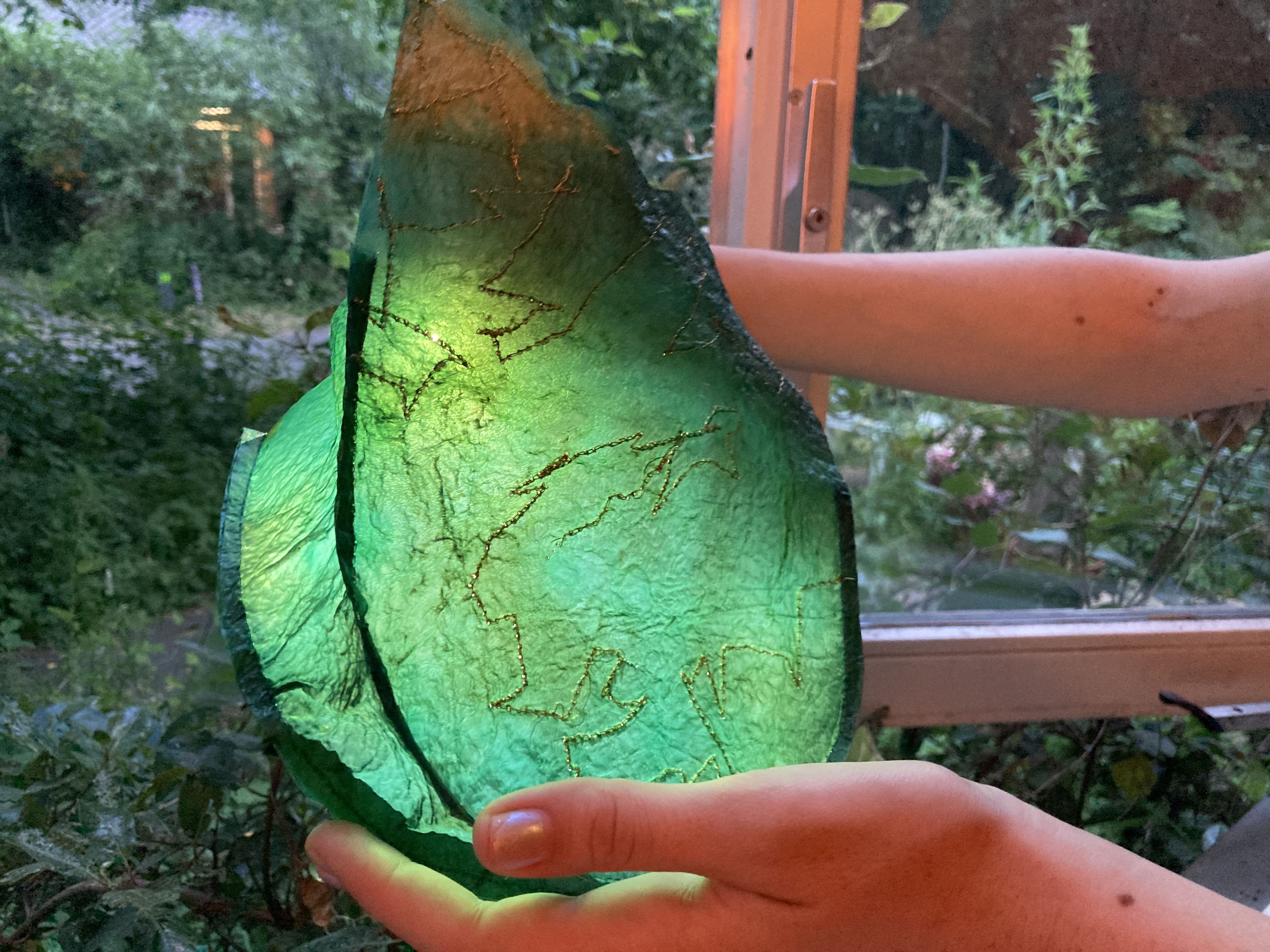
Light shining through the kombucha leather textile
Poorva Shrivastava
What can a seamstress and a biotechnologist make together, at home? MycoPunk presents a vegan, leathery material fermented from bacteria at home and sewn into various household items, including wallets and a lampshade. The exhibition is hosted by BioArt Laboratories for Dutch Design Week '23.
An unlikely collaboration

The story begins with an old wallet. Poorva's wallet had torn and she needed a new one. She didn’t want to buy it, out of a mixture of thriftiness, procrastination, and because none of the wallets she saw in shops captured her fancy or fit her style. A wallet seemed like a simple enough object to make at home. So she started fermenting her material. As a biotechnologist, she feels in awe of how we can tap into the millions of years of evolutionary knowledge of microorganisms to help us make interesting and functional materials. As a result, her student room in Wageningen looks like a little lab and is bursting with self-built 3D printers and low budget fermentation reactors. In a span of two-three weeks, she fermented a thick sheet of bacterial cellulose using a kombucha culture. After dyeing it a deep pink with hibiscus flowers, she took it to her housemate Clara. Clara is a seamstress who learnt sewing by creating her own stuffed toys as a child and making dreamy hats out of her relatives’ old clothes. She has an affinity for caring: caring for animals, for people, and for nature. A vegan leather wallet, completely compostable, seemed to fit the bill.

Crafting with kombucha

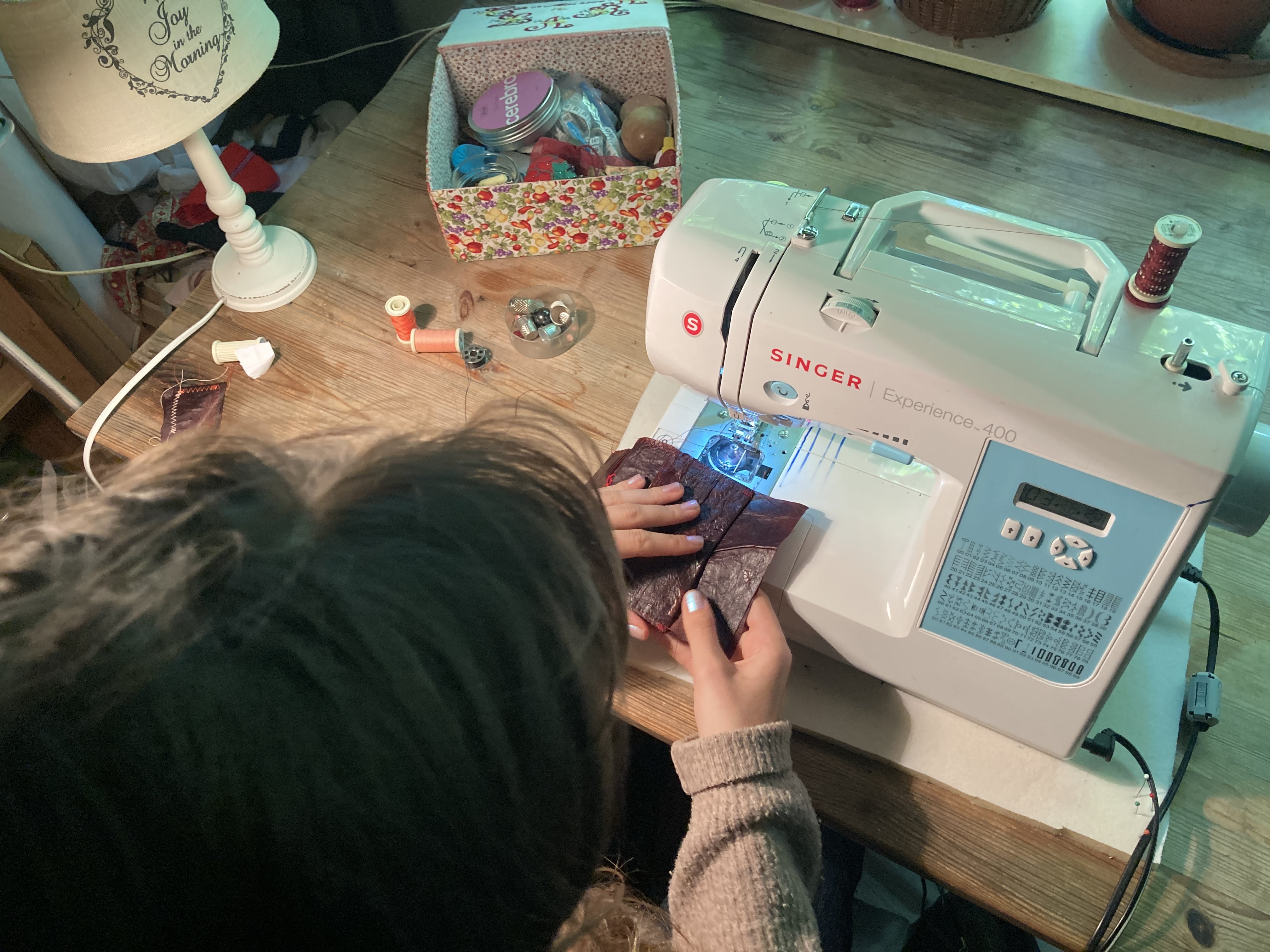
They coated the wallet with plant oils and waxes to make it water-repellant. The final product turned out to be tough, sturdy, beautiful, with a pleasant honey-lemon smell, and has been in daily use for months. Clara and Poorva started stitching more and more with the material, to show the range of folds, textures, and colours possible. Armed with a simple stitching machine and golden and silver thread found in a thrift shop, their house soon started blooming with turquoise and sea-green purses, with puckered textures reminiscent of the ocean. Next, they built a lampshade which beautifully transmits light, mimicking stained glass. Then followed other objects which they needed around the house.

A utopian vision of the world: MycoPunk

Poorva and Clara are part of the small collective ‘MycoPunk’, which is inspired by the utopian vision of SolarPunk. The MycoPunk vision of the future sees a society where people use a combination of open-source manufacturing methods like 3D printing combined with traditional knowledge like stitching clothes and fermenting microbes to produce the things they need, using the things they are already surrounded by. MycoPunk emphasizes open source knowledge, decentralized biotechology, and the adaptability of, access to, and ownership of tech by communities all over the world.
Clara Degez, seamstress, sews kombucha leather
Poorva Shrivastava
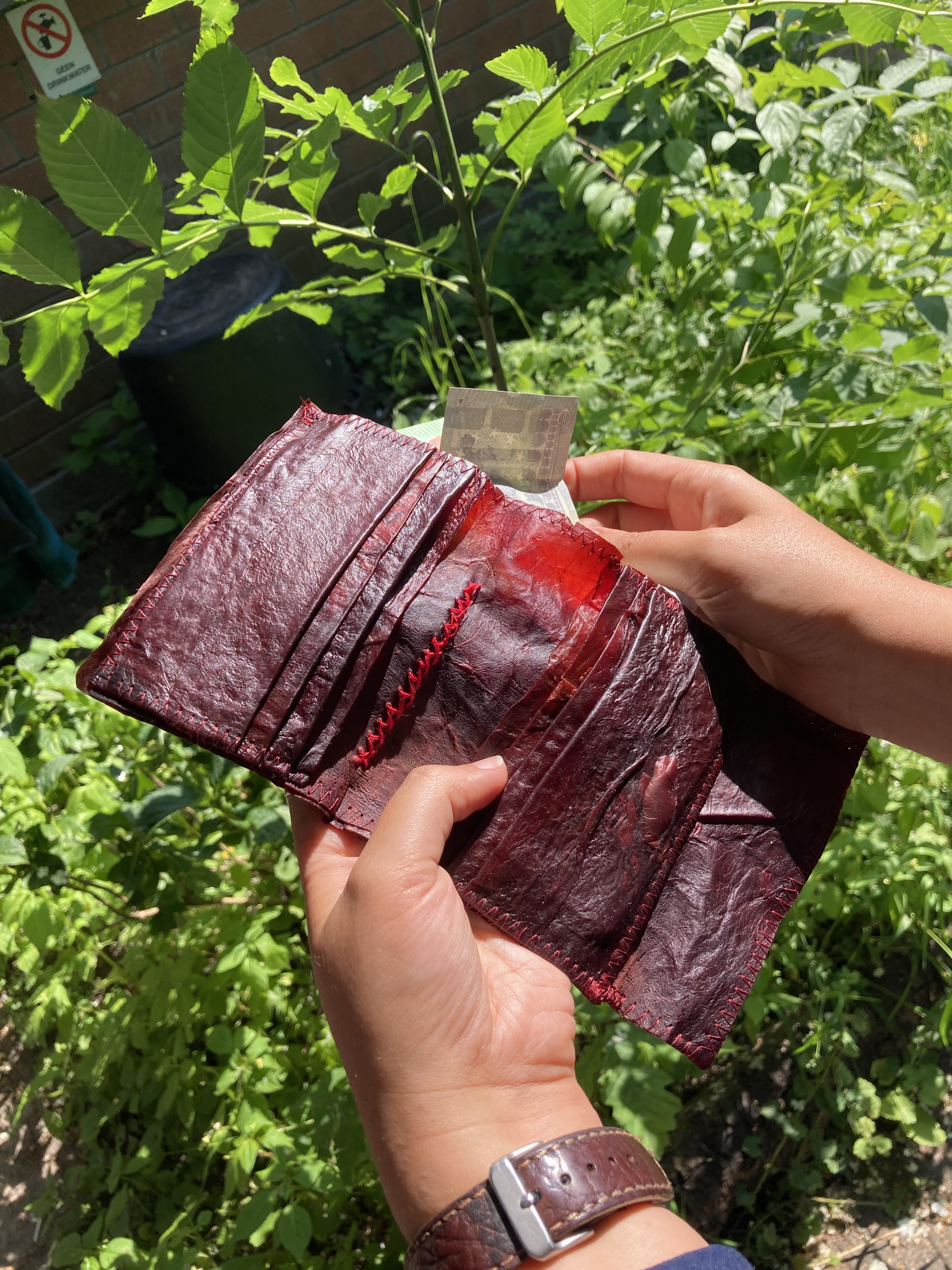
Poorva and Clara's first kombucha leather wallet
Clara Degez
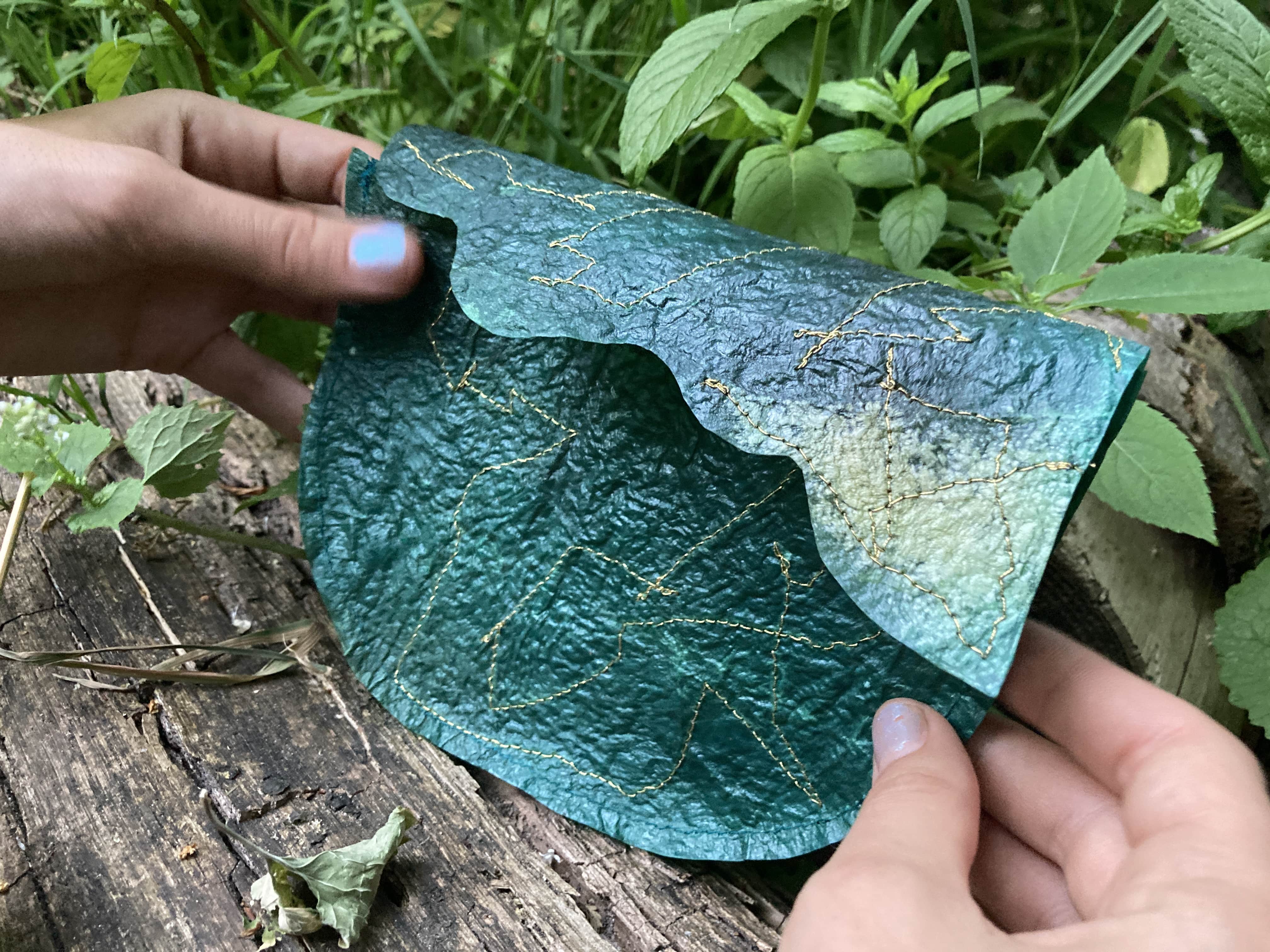
A sea-green handbag reminiscent of the ocean
Poorva Shrivastava
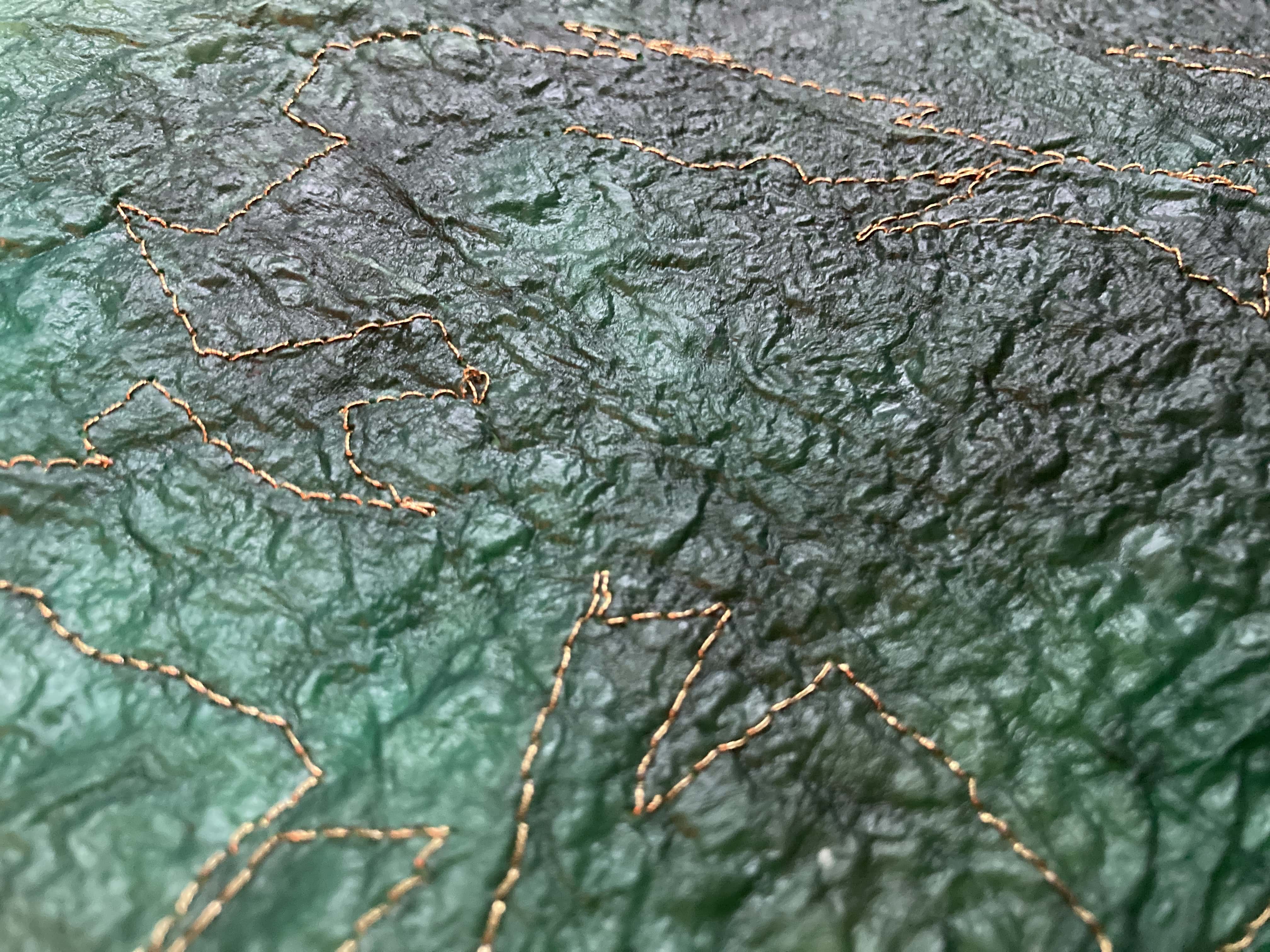
The organic textures of the kombucha material
Poorva Shrivastava

About BioArt Laboratories

MycoPunk is a collective working at the intersection of biotech, 3D printing, and materials design. MycoPunk was borne out of the collaboration between a biotechnologist and a 3D printing engineer. As a growing collective of people with similar vision, MycoPunk envisions a future society where people use open-source manufacturing methods like 3D printing, combined with the magic of microbes to produce the things they need - using local waste resources around them, anywhere in the world.