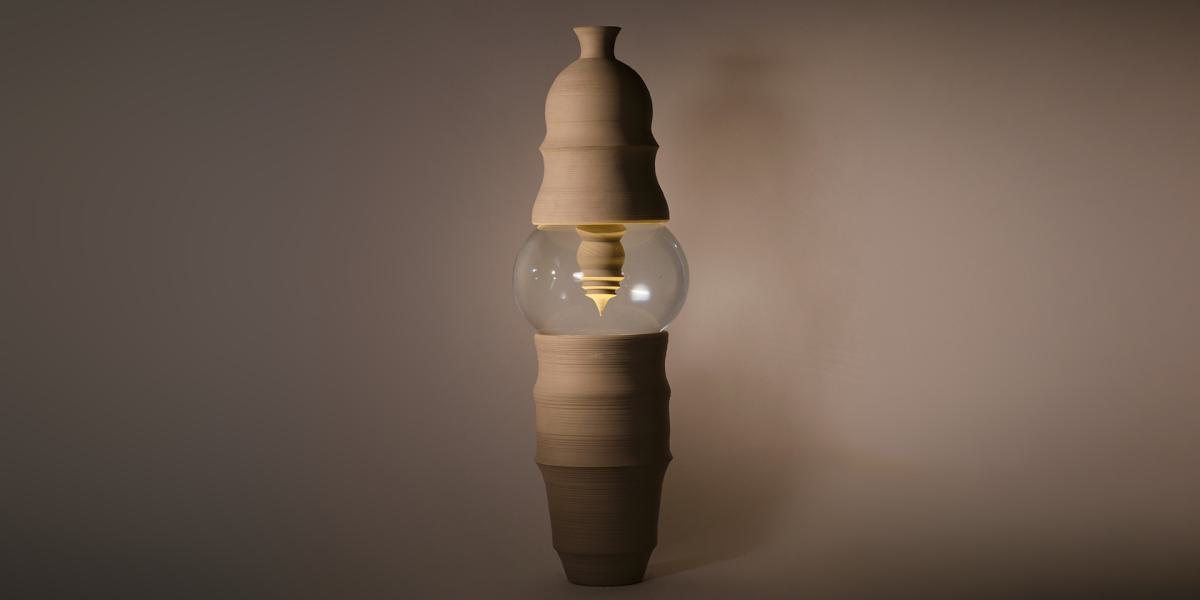
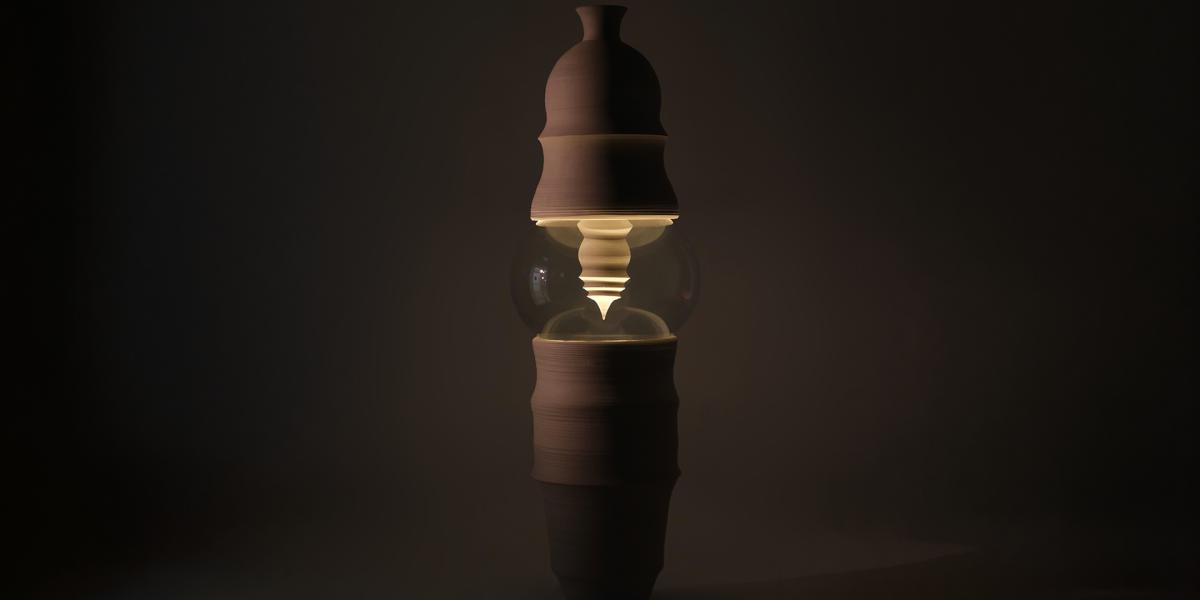
Suspended Axis brings ceramics and blown glass together with water and light. It explores the connection between two materials that behave very differently, while water and glass distort and invert the object, its shadow and the space around it.
Transparency
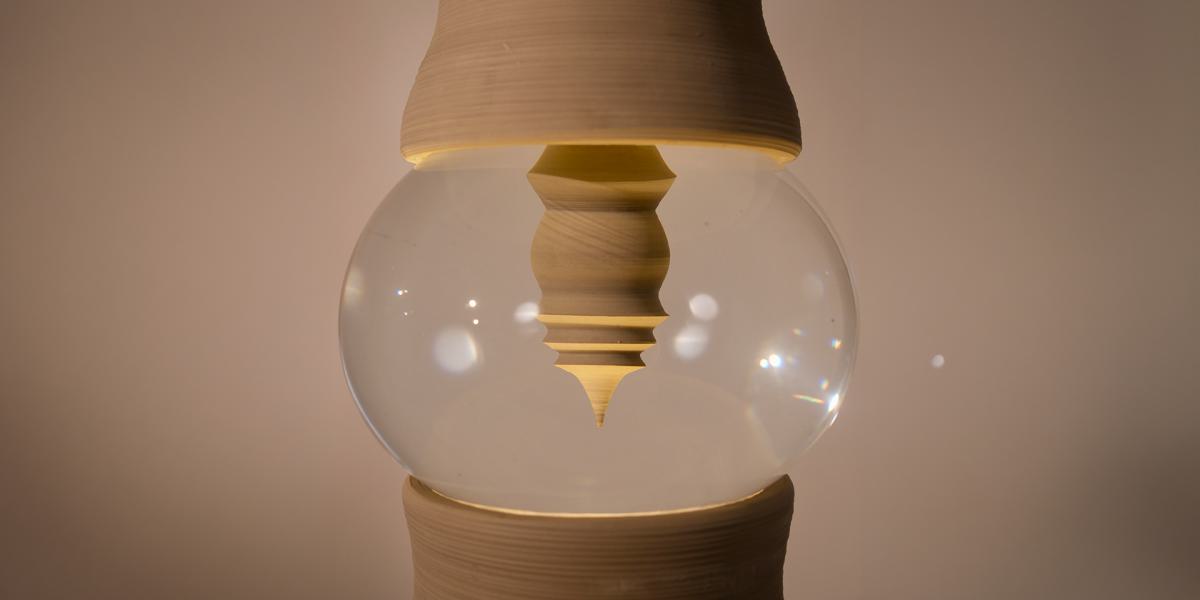
Transparency is used to change the form rather than simply reveal it. Water held inside the blown glass creates a lens, inverting the internal shape and its shadow while distorting parts of the surrounding space. Against the opaque ceramic, the glass appears lighter and less fixed. From different angles, edges overlap, forms shift, and details that seem clear from one position are altered from another. The glass also draws fragments of the surroundings into the object, placing them alongside its internal form. What is seen through the glass is therefore never quite separate from what is seen beyond it.
Material Research
Suspended Axis developed through the problem of achieving a precise fit between ceramics and blown glass when neither material can be brought to an exact final dimension from the start. The ceramic parts are wheel-thrown from recycled clay, combining clay bodies with different shrinkage rates, so their final size is only known after drying and firing. The glass is then blown by hand to meet the fired ceramic, shaped while hot and constantly moving. Each result is measured before the next step begins. Coldworking allows the meeting surfaces to be refined before assembly. Through repeated making, measuring and adjustment, the connection is gradually resolved rather than predetermined.
The Forms
The forms start with the ceramic vessel, chosen because it is easy to recognise. From a distance, the objects keep this familiar outline. Up close, the proportions are stretched vertically, with sharp edges and faceted surfaces drawn from architecture. Transparent sections reveal an internal form that would usually be hidden inside a ceramic object. At close range, this inner shape, its shadow and the space behind it are seen together, distorted by the glass and water. The surroundings become part of what is visible within the object, changing the clear reading of the ceramic vessel seen from a distance.