Dog Urine-marking Behaviour as an Urban Issue
"DOG-PEE", urine-marking behaviour, has increasingly been problematised in urban areas in Japan, contributing to restrictions on dog walking and access to certain streets, parks, and public spaces.
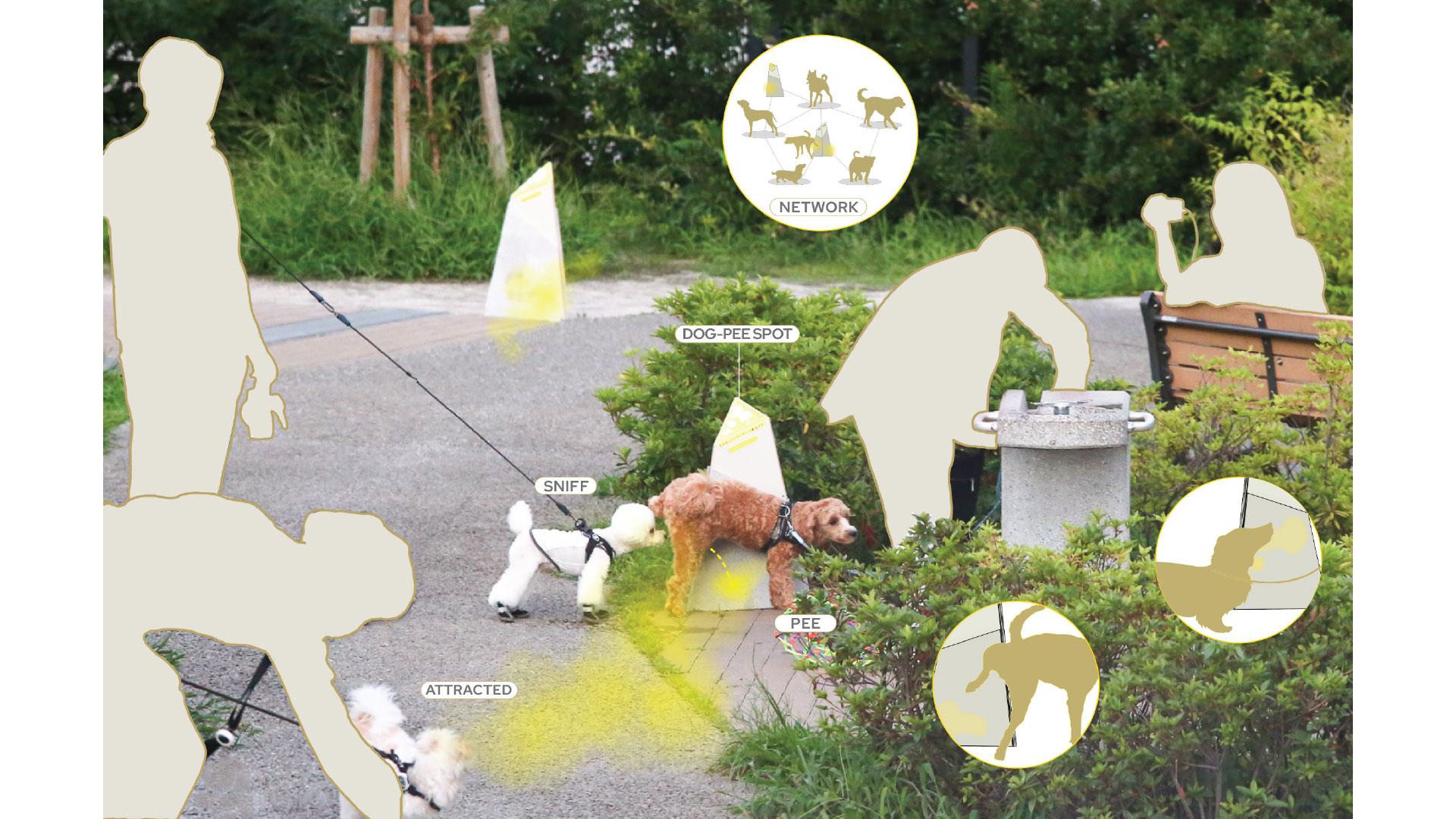
Urine marking is an important form of dog communication. Pheromone signals in urine can convey information about an individual’s sex, reproductive status, age, and identity. By sniffing traces left by other dogs and marking over them, dogs exchange information and establish relationships with one another.
In urban environments, however, repeated and concentrated urination can cause unpleasant odours, corrode public infrastructure, and damage vegetation through the accumulation of urine in soil. As a result, dog urine-marking behaviour is often treated primarily as a nuisance to be controlled or restricted in Japanese cities.
Urban Intervention and Resource Circulation through DOG-PEE SPOT
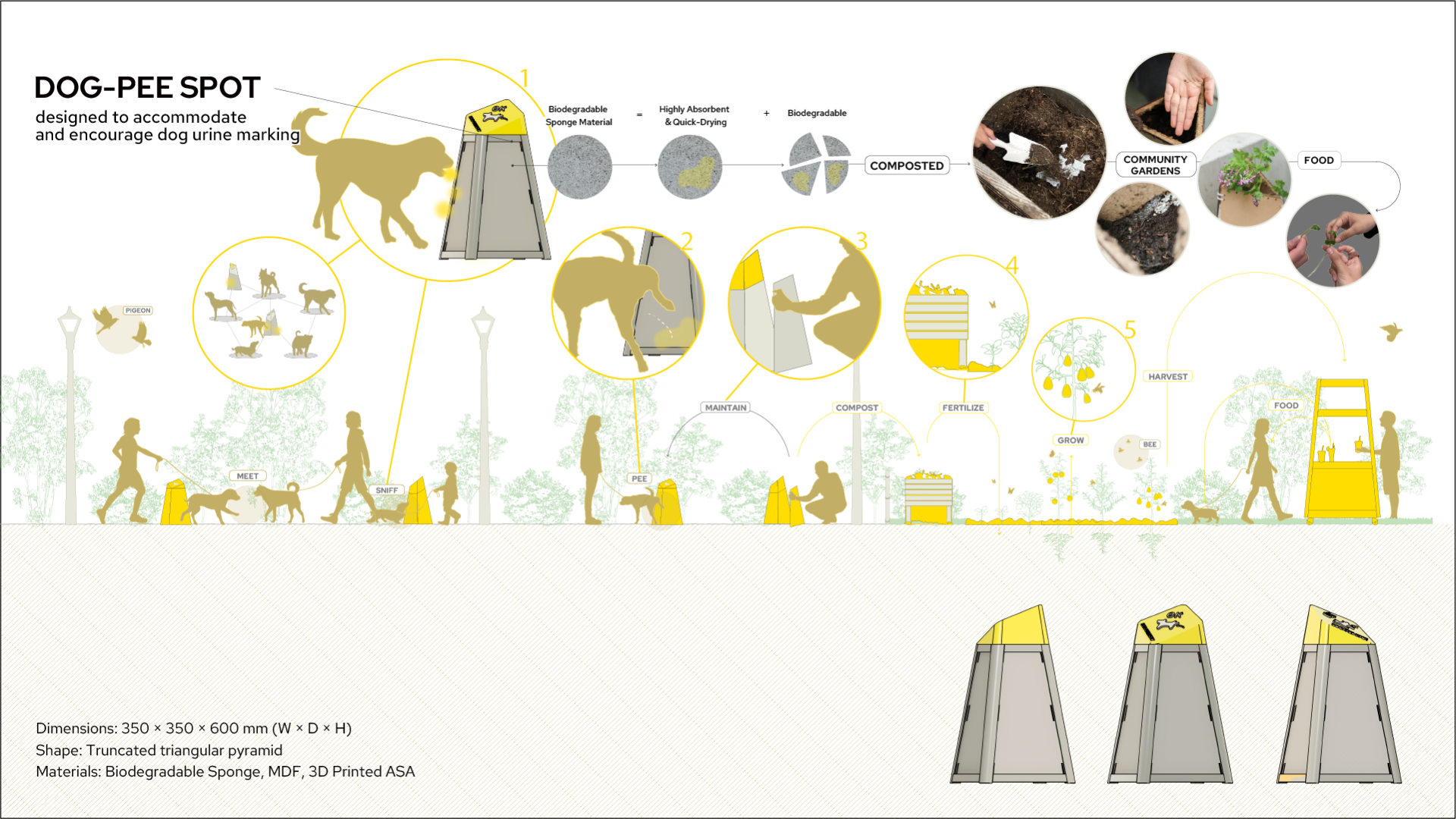
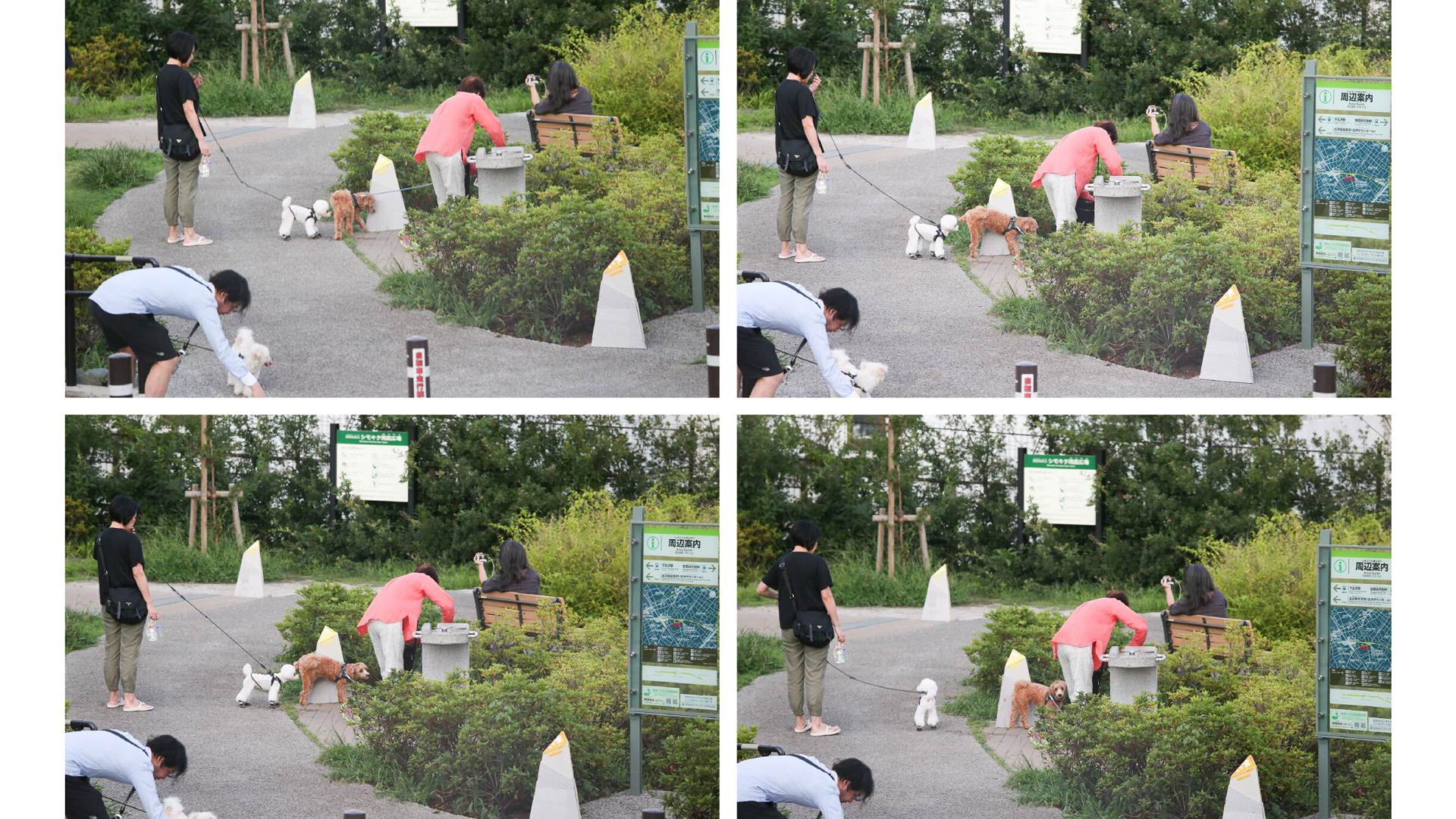
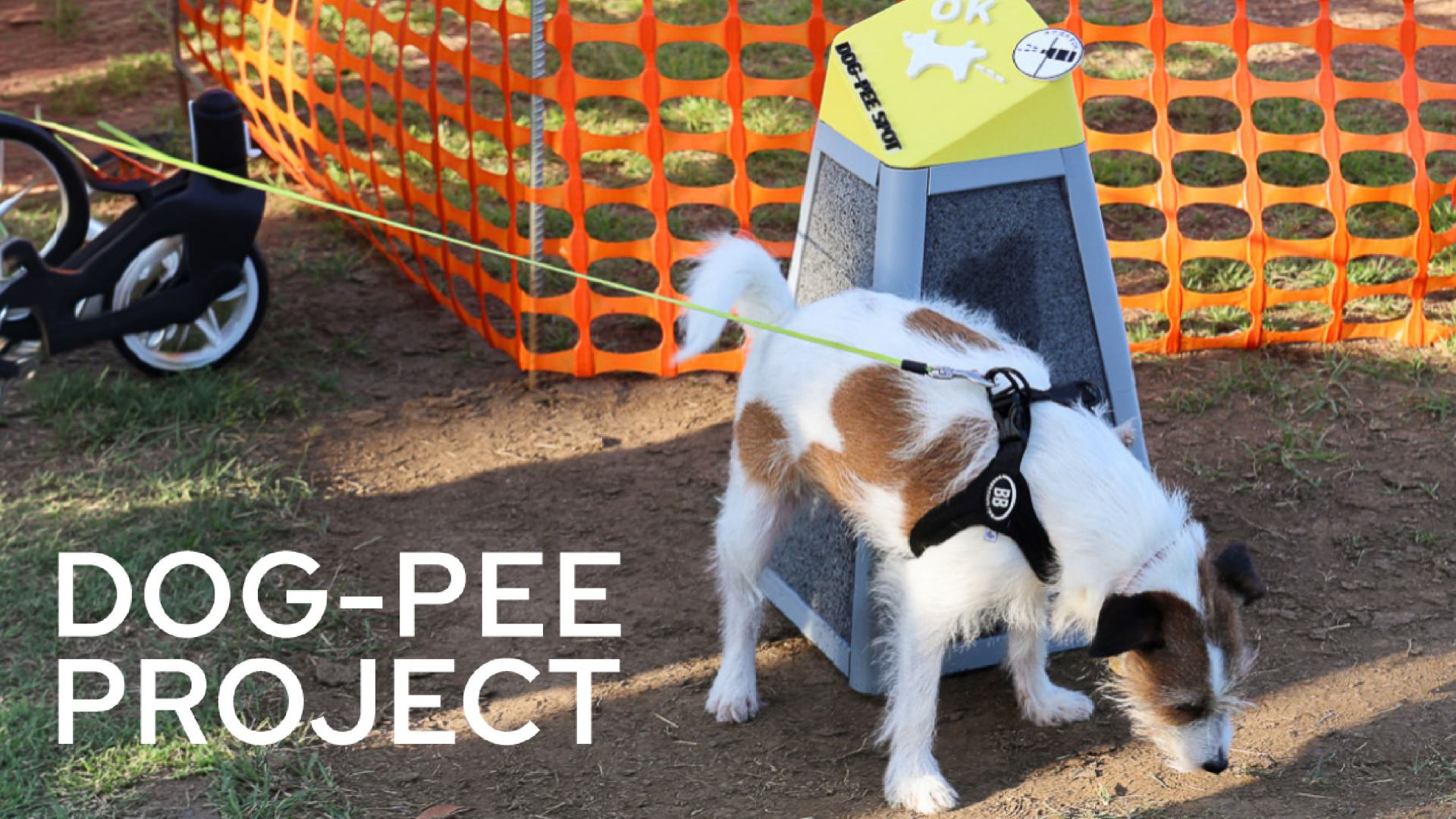
DOG-PEE SPOT is an urban intervention designed to mediate relationships among dogs, dog owners, citizens, and the urban environment. Rather than preventing urine marking, the product accepts this natural behaviour by providing a place where dogs can mark, while absorbing and retaining the urine.
By absorbing the urine with a biodegradable sponge and by preserving scent traces, the product facilitates odour-based communication among dogs. At the same time, the collected urine is explored as a potential resource for nitrogen that can be transformed into fertiliser and returned to local communities. By responding to the needs of both humans and dogs, DOG-PEE SPOT seeks to weave interspecies relationships into urban resource cycles.