Giving Water a Voice
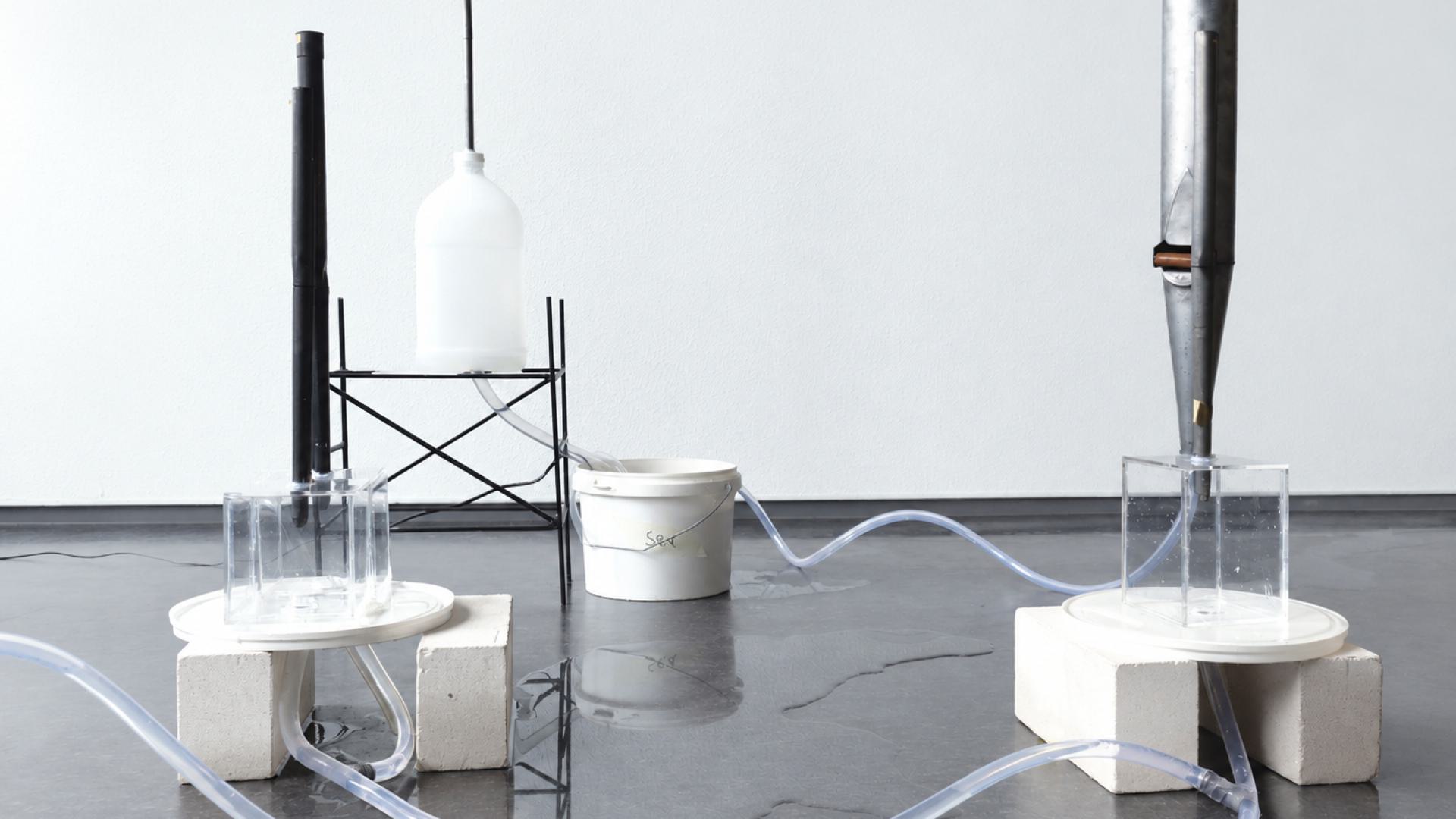
Hydraulic Harmonies is a sound installation that explores water and sound as interconnected forces. The installation is a speculative tidal organ: an instrument that is played by the movement of water itself. Inspired by the ancient Hydraulis, a waterpowered pipe organ, the work translates changes in water movement into resonant tones. Water flows through a sound collector, compressing air and sending it through acoustical pipes. In this process, water becomes both the performer and the medium of the work. The resulting polyphonic soundscape gives form to an otherwise largely inaudible process, inviting us to listen to water not simply as a resource or landscape, but as an active force with its own rhythms and temporalities.
The Biesbosch and Tidal Rhythms
The project is rooted in the Biesbosch wetlands in the south of the Netherlands, a landscape profoundly shaped by Dutch water management. The Delta Works have transformed and regulated the movement of water in the region in response to the threat of flooding. Today, plans to restore greater tidal dynamics in the Biesbosch point towards a changing relationship between infrastructure, landscape, and natural processes. Hydraulic Harmonies responds to this transition by speculatively imagining an organ embedded within the wetlands and played by the returning tides. During field research, larger pipes were tested in the Biesbosch and recorded over the course of a day. As the tide rose and fell, the changing water levels produced different frequencies: higher tones as water moved further into the pipes, and lower tones as the water receded.
Listening to Deep Time
The work reflects on tidal movement as a form of cyclical time, following the rhythms of the moon rather than the linear logic of productivity and progress. Its continuous, layered sound embraces simultaneity, repetition, and coexistence. Listening becomes an act of attention and care: an opportunity to acknowledge processes that usually remain beneath the surface and outside human perception. Through the voice of the pipes, water becomes a medium through which we can encounter planetary time and reconsider our relationship with the natural world.