Reweaving how value is distributed
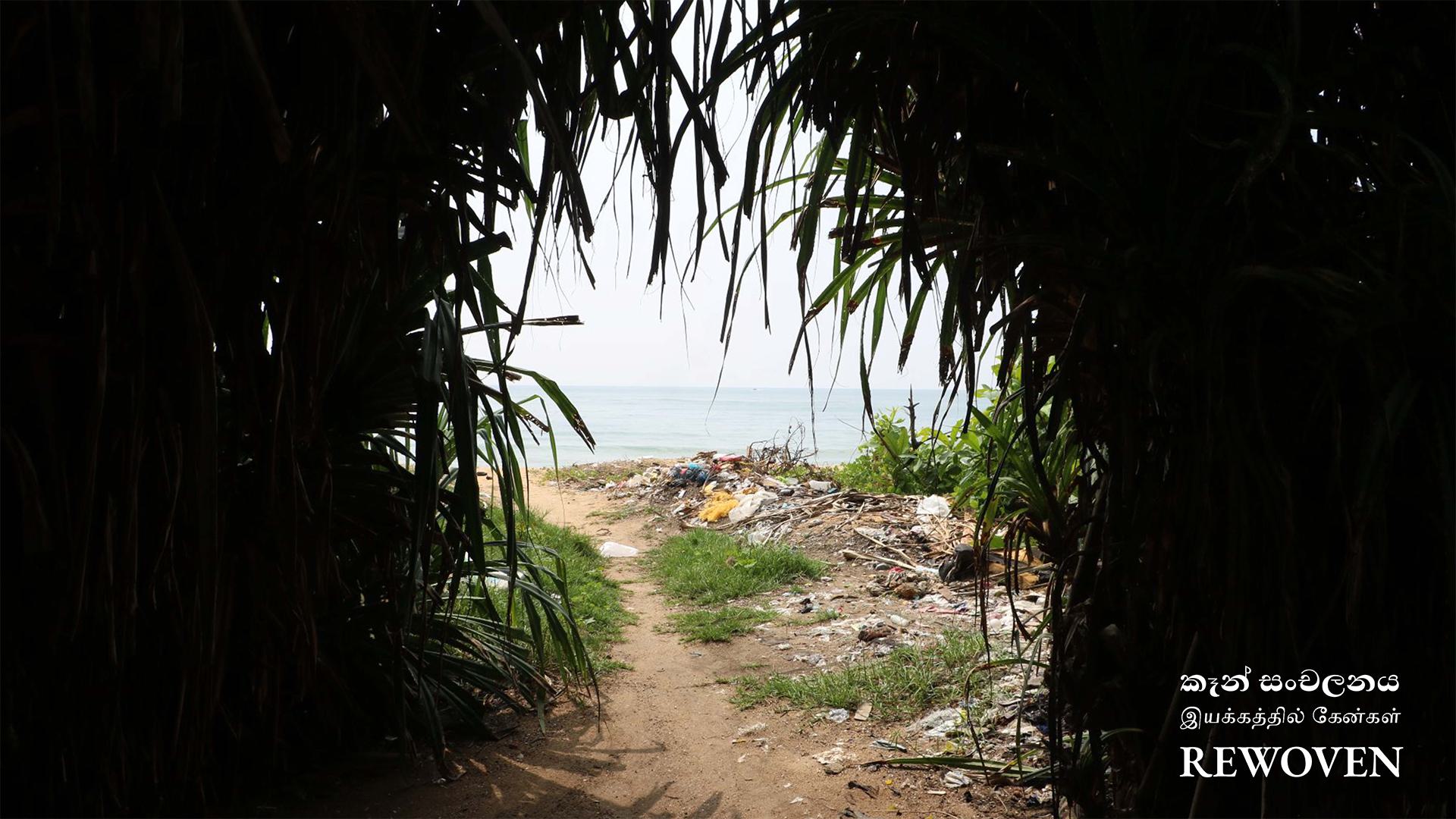
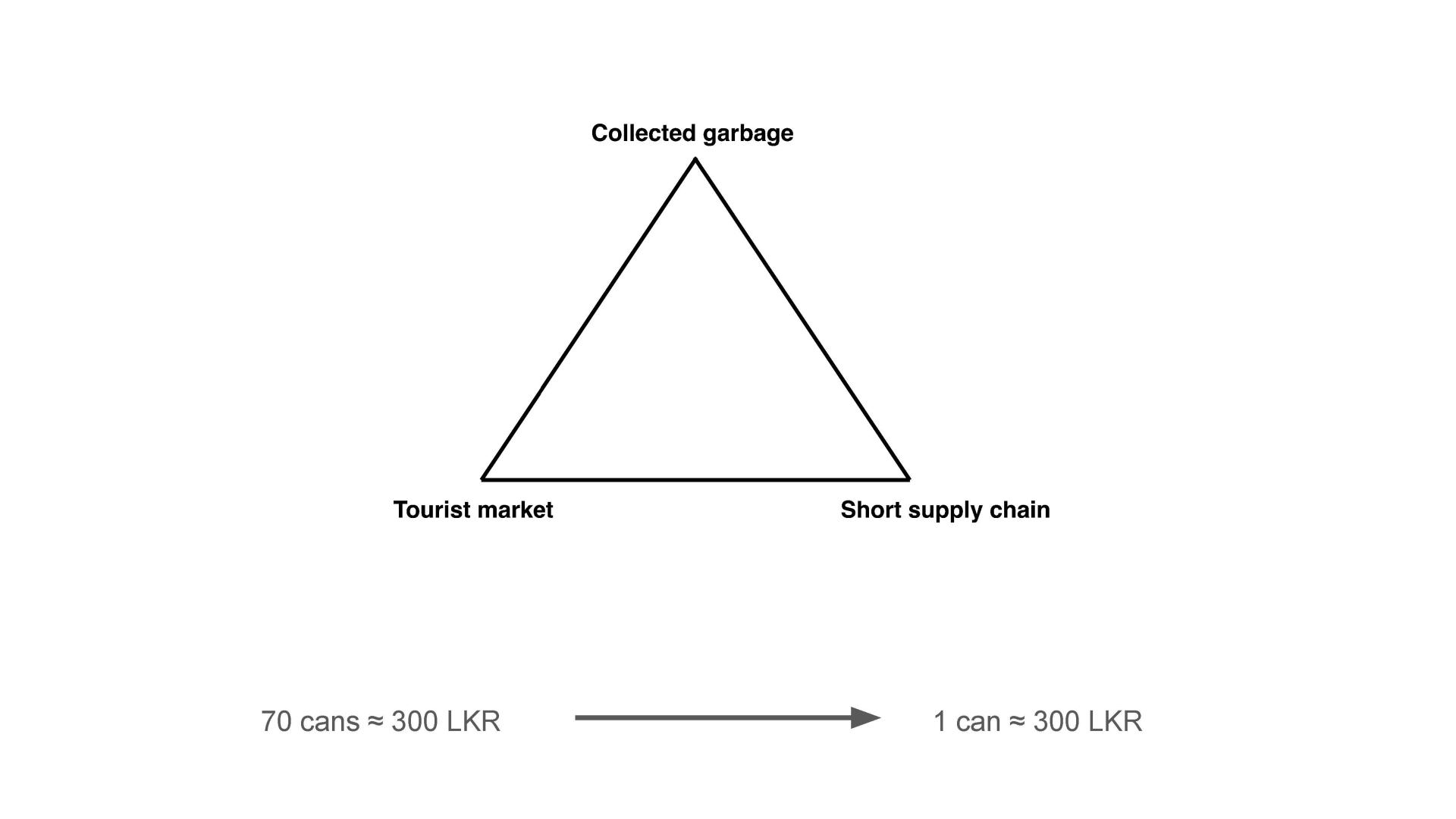
Along Sri Lanka’s coast, aluminium cans are already collected and recycled, largely by informal waste collectors. They pick them from beaches and sell them as scrap. The can moves on, but most of its value moves with it. REWOVEN asks a simple question: what if the material stays local for one more step? Material worth around 3 rupees as scrap can become a locally made product that sells for around 300 rupees.
Sourced, produced and sold locally on the beach
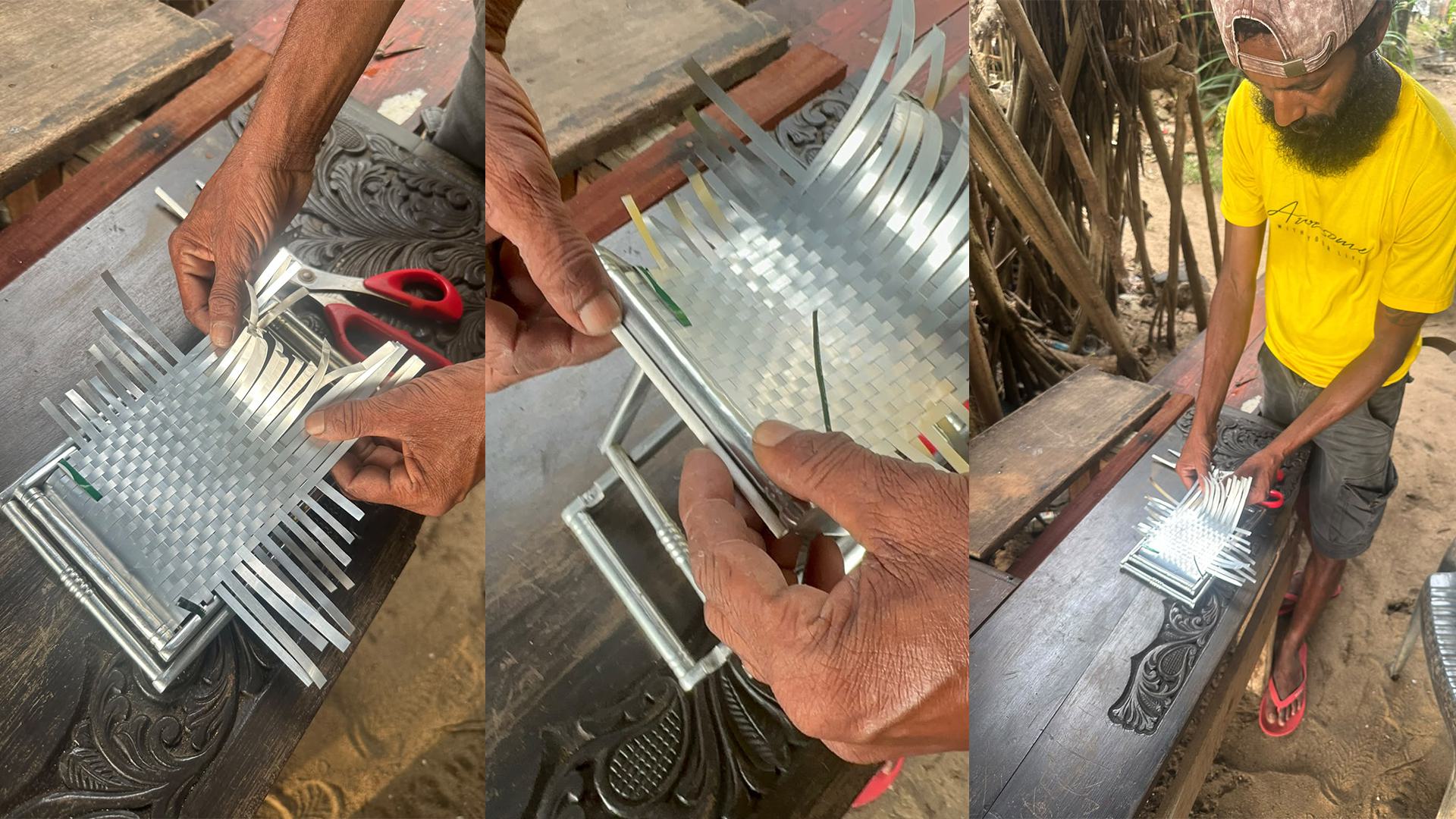
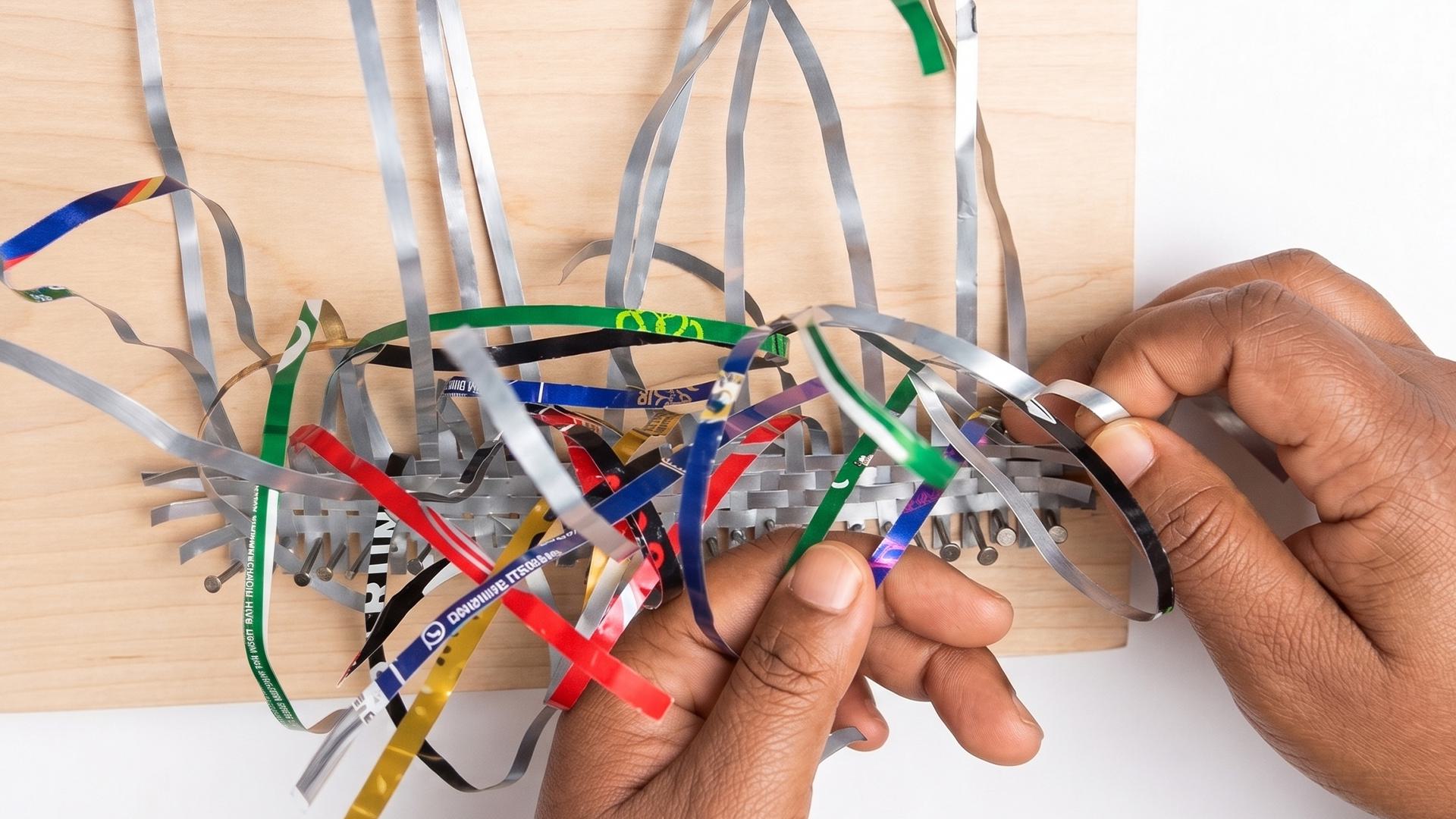
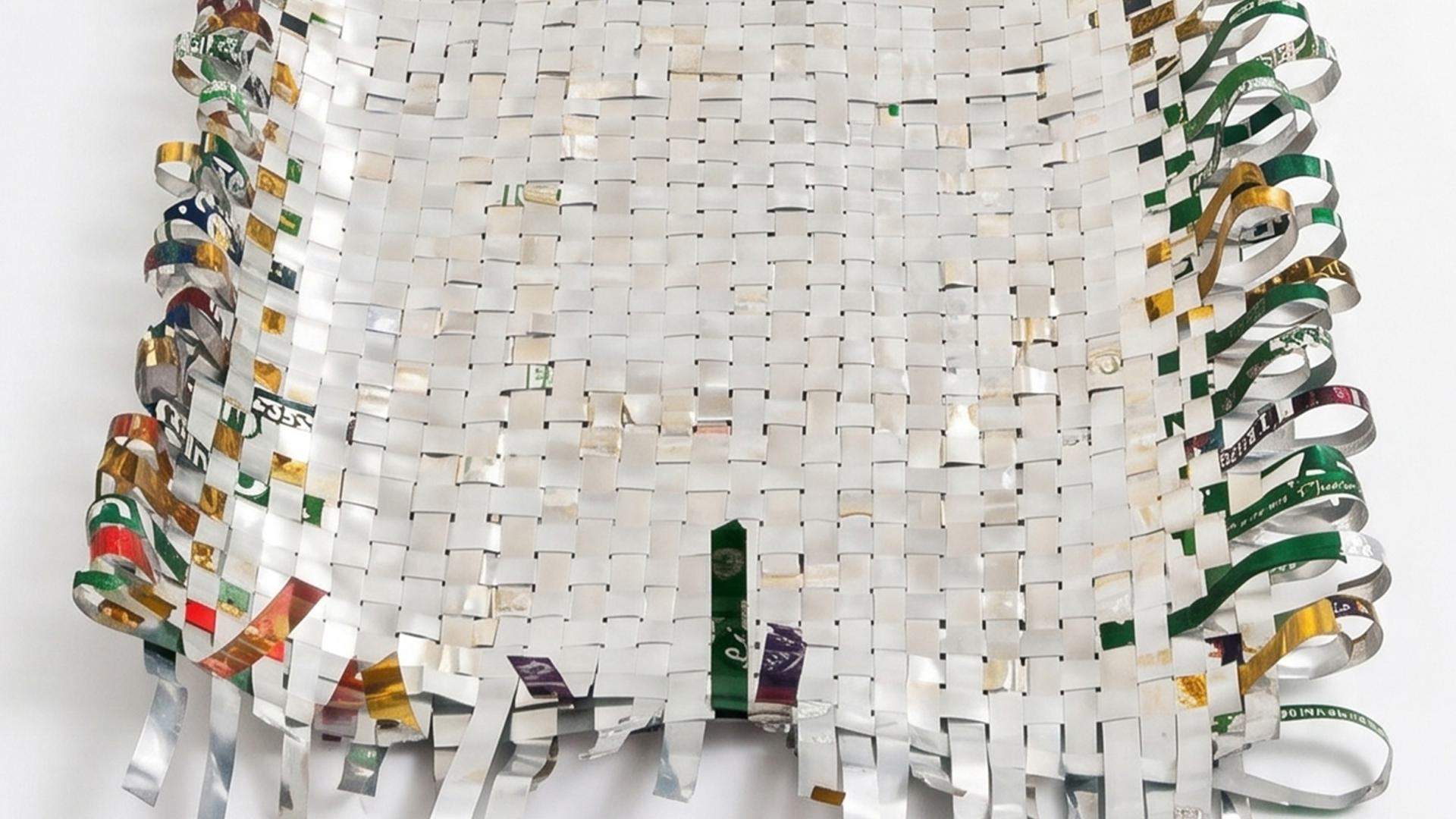
Discarded cans are cut into strips and woven by hand together with local makers and waste collectors. No complex machinery is needed. The first product is a coaster that can be made close to the beach and sold directly to tourists there. Through workshops and open production guides, the method can be repeated and adapted locally, so more of the making, knowledge and income stays in the community.
Weaving has a long tradition in Sri Lanka. REWOVEN connects this local craft culture to discarded aluminium, using an existing way of making as the basis for a new local product. The aim is not to make another generic tourist souvenir, but something rooted in the place where it is made and sold.
Redesigning the system
At Dutch Design Week, REWOVEN turns this system into an installation. Large aluminium weavings are framed and presented as valuable objects, alongside the coasters, aluminium miniature chairs and a short film following the material from discarded can to finished product. The installation makes the shift tangible: the same aluminium moves from waste, to material, to product, while more of its value stays where it was collected.
REWOVEN was initiated by The Academy Of Design in Colombo in response to a question from Lion Nation Foundation, developed by Studio Noud Sleumer together with local designers and makers, and supported by the Embassy of the Netherlands in Sri Lanka.